AXIAL SEAMOUNT ON THE BRINK — Oregon’s Hidden Offshore Volcano Builds Mounting Pressure
Several hundred miles off the coast of Oregon, beneath a ceiling of cold, lightless water, something is changing.
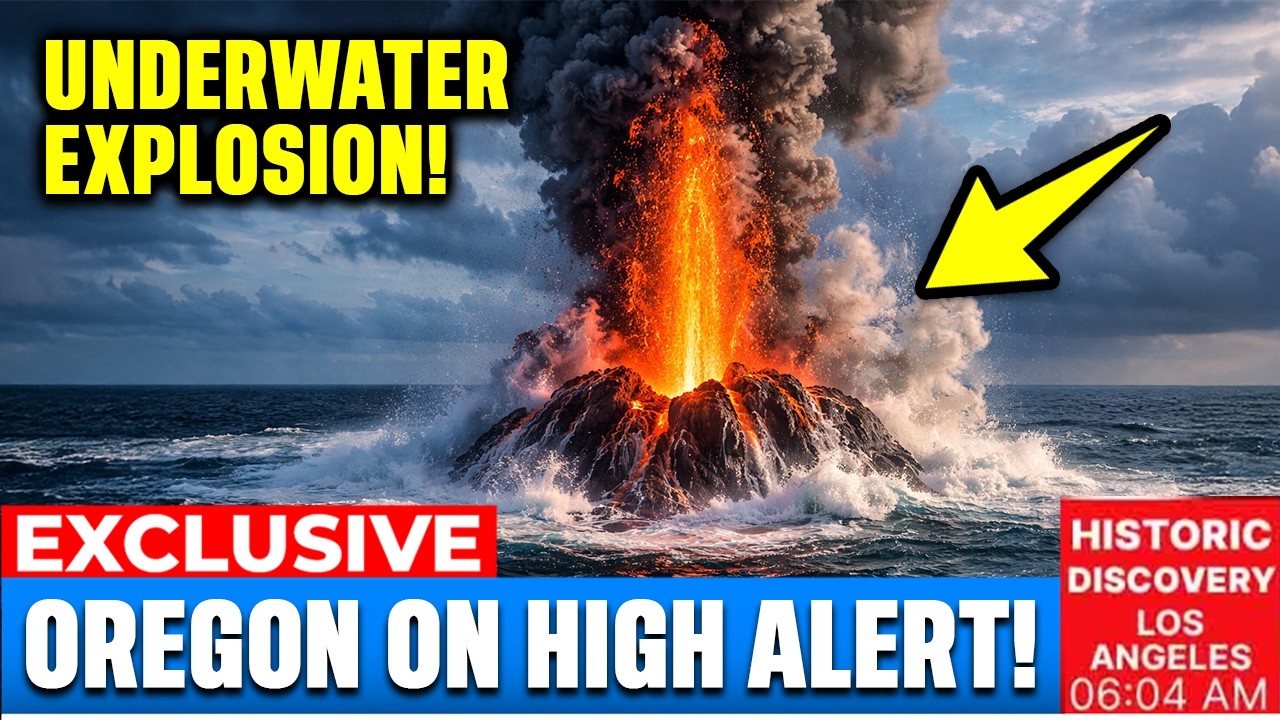
There is no plume of ash.
No crimson arc of lava splitting the horizon.
No trembling dishes rattling in seaside kitchens.
Up above, fishing boats move in patient lines.
Cargo ships trace their calculated routes.
The Pacific appears indifferent.
But nearly a mile below the surface, at a place known as Axial Seamount, instruments are registering numbers that have begun to unsettle even seasoned researchers.
Pressure is rising.
Axial Seamount is not a mythic monster lurking in maritime folklore.
It is one of the most closely monitored submarine volcanoes on Earth, perched along the Juan de Fuca Ridge, where tectonic plates slowly pull apart and magma ascends to fill the void.
It has erupted before—in 1998, in 2011, and again in 2015—each event anticipated, measured, and dissected by scientists who have turned this submerged giant into a natural laboratory.
And yet, familiarity has not bred comfort.
Over recent months, pressure sensors anchored to the seafloor have recorded steady inflation.
The volcano’s surface—an enormous underwater caldera—appears to be swelling, centimeter by centimeter, as magma accumulates in chambers below.
Seismic instruments have detected swarms of small earthquakes, subtle fractures as rock adjusts to the growing strain.
None of this is unprecedented.
In fact, it is precisely how Axial behaved before previous eruptions.
But that is exactly what makes the data difficult to ignore.
Inflation at Axial Seamount has long been treated almost clinically, as if the volcano were a patient in a controlled study.
Scientists have noted that the caldera tends to erupt once it reaches a certain threshold of uplift.
In 2015, researchers famously predicted an eruption within a narrow time window based on pressure build-up—and they were correct within weeks.
It was hailed as a breakthrough in volcanic forecasting.
Now, the instruments suggest the volcano is approaching similar levels again.
The caldera floor has risen close to the benchmark that preceded earlier outbursts.
The comparison is tempting.
The narrative writes itself: pressure builds, rock fractures, magma escapes, the seafloor splits, and the Pacific absorbs another quiet eruption in the dark.
But nature does not always repeat its scripts so neatly.
Some researchers caution that inflation alone does not guarantee imminent eruption.
Magma systems are complex.
Pathways can clog.
Pressure can redistribute.
The volcano may stall, releasing energy in smaller pulses rather than a singular dramatic event.
Others note that the rate of uplift this time appears subtly different—faster in some intervals, slower in others—hinting at a more complicated process unfolding beneath the crust.
And then there is the simple fact that Axial Seamount sits in a place few people can visualize.
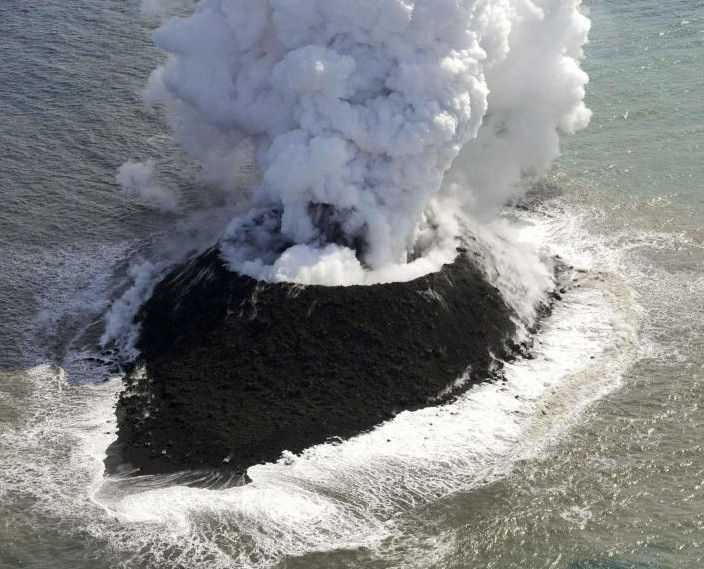
A mile of water is an effective curtain.
Whatever happens there will not produce the cinematic spectacle of a stratovolcano like Mount St.
Helens.
There will be no towering ash cloud, no evacuation sirens echoing across towns.
If Axial erupts, it will do so in darkness, its lava quenched instantly by frigid seawater, its drama witnessed primarily by robotic cameras and data streams.
That invisibility is both reᴀssuring and unnerving.
On one hand, submarine eruptions at Axial have historically posed little direct threat to coastal communities.
The depth of the water dampens explosive force.
Tsunami risk from Axial’s past eruptions has been considered minimal.
The volcano’s activity is part of the slow, relentless construction of oceanic crust.
On the other hand, the ocean floor remains one of the least understood frontiers on the planet.
Each eruption rewrites the seafloor’s architecture, altering hydrothermal vent systems that host unique ecosystems.
Superheated fluids, rich in minerals, gush from fissures, sustaining organisms that thrive without sunlight.
An eruption could extinguish entire vent communities in one region while birthing new ones elsewhere.
Destruction and creation, unfolding beyond human sight.
There is also the broader tectonic context.
The Juan de Fuca Ridge is a spreading center, but it is connected to the complex dynamics of the Pacific Northwest.
The Juan de Fuca Plate is being forced beneath the North American Plate along the Cascadia Subduction Zone—a boundary capable of producing mᴀssive earthquakes.
Axial Seamount is not directly responsible for those megathrust events.
Still, in the public imagination, any sign of restlessness beneath the Pacific can blur into a larger, more ominous narrative.
Is the rising pressure merely a local event, confined to a mid-ocean ridge volcano behaving exactly as geology predicts? Or does it serve as a reminder that the Earth’s crust in this region is anything but static?
Data from the Ocean Observatories Initiative—an expansive network of cabled instruments—streams continuously from Axial’s slopes and caldera.
Scientists can monitor tilt, seismicity, temperature, and pressure in near real time.
Graphs update.
Alerts trigger.
The volcano is arguably more transparent than many of its terrestrial counterparts.
Yet even with this technological intimacy, uncertainty persists.
In recent weeks, clusters of microearthquakes have flickered across monitoring screens.
Individually insignificant, collectively suggestive.
They trace lines that could mark magma’s ascent.
Or they could represent routine adjustments in stressed rock.
The distinction often becomes clear only in hindsight.
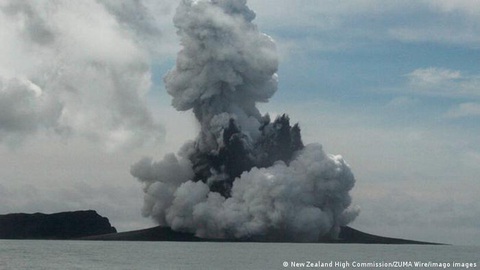
When Axial erupted in 2015, the event was preceded by a crescendo of seismicity.
Then, over the course of days, thousands of earthquakes rippled outward as magma forced its way through fissures.
Lava flows reshaped the caldera floor.
Hydrothermal vents were buried.
Others were born.
If a similar sequence is underway now, it may already be in motion.
Some researchers speak cautiously, emphasizing that Axial’s behavior remains within expected bounds.
Inflation has not yet surpᴀssed previous pre-eruption peaks.
Earthquake rates, while elevated at times, have not reached the intense swarms seen immediately before past events.
From a strictly scientific standpoint, there is no declaration of imminent eruption.
But volcanology has a long history of humbling predictions.
Forecasting relies on patterns.
Patterns rely on precedent.
And precedent can fail.
It is possible that Axial Seamount will continue inflating for months, even years, without releasing its stored magma.
It is possible that pressure will plateau and gradually subside.
It is also possible that, at some unpredictable threshold, fractures will link, magma will surge, and the seafloor will split open in a chain of glowing fissures invisible to the human eye.
In that scenario, the eruption would likely unfold quietly relative to land-based analogues.
Instruments would capture the drama in spikes and tremors.
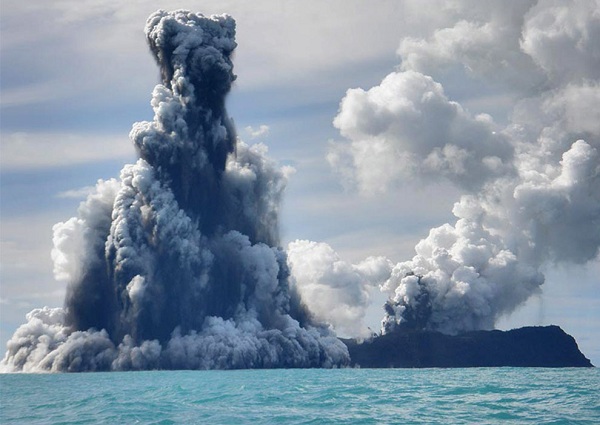
Robotic vehicles might later survey fresh lava fields still warm beneath the Pacific.
Headlines would describe the event as a scientific milestone, perhaps even a validation of predictive models.
Yet beneath the technical language lies a more visceral reality: a vast reservoir of molten rock, pressing upward, testing the strength of stone.
There is something inherently unsettling about forces that operate beyond sight and sound.
Axial Seamount does not roar.
It does not send smoke signals.
Its warnings arrive as lines on a chart, as incremental measurements that demand interpretation.
The tension is intellectual rather than sensory.
For coastal residents of Oregon, daily life continues undisturbed.
There are no evacuation maps pinned to refrigerators.
No emergency broadcasts interrupting television programs.
The volcano’s restlessness is a topic for research vessels and academic conferences.
Still, the idea lingers: beneath a seemingly placid ocean, pressure builds.
If history is any guide, Axial Seamount will erupt again.
The only questions are when, and how clearly the signs will reveal themselves beforehand.
Each cycle offers scientists a rare opportunity to test models of magma dynamics and crustal deformation.
Each cycle also underscores the limits of certainty.
The Earth does not owe us transparency.
For now, the data continues to stream.
Caldera uplift inches closer to prior thresholds.
Earthquakes flicker and fade.
Researchers watch, compare, debate.
Some see a volcano following its script.
Others sense subtle deviations that complicate the forecast.
Perhaps the most disquieting aspect is not the prospect of eruption itself, but the ambiguity.
Axial Seamount sits in darkness, swelling almost imperceptibly, its future suspended between routine geologic process and sudden release.
The Pacific remains calm above it.
And somewhere below, rock bends, fractures whisper, and molten pressure waits for its moment—if it chooses to take one at all.


