Forbidden Affair, Fatal Decision: How a Pastor’s Mistress Landed Behind Bars
What started as a relationship built in secrecy ultimately concluded in a courtroom, with a prison sentence handed down for a crime the judge described as “senseless.”
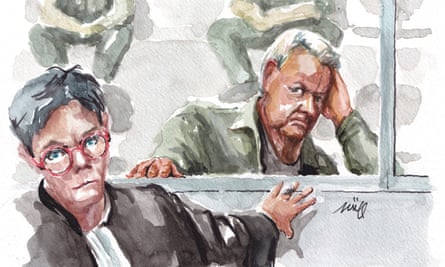
In an emotional hearing, the defendant stood before the court and addressed the victim’s family.
Her voice carried regret as she expressed what she called “godly sorrow.”
She apologized directly to the Perry family, acknowledging that her words could never erase their pain.
She insisted she never intended for events to unfold the way they did and asked for grace and mercy from the court.
But apologies could not outweigh the evidence.

According to trial testimony, the woman purchased a firearm in Sherwood, Arkansas. Surveillance footage captured her presenting identification, signing paperwork, and completing the transaction legally. After obtaining the weapon, she drove more than two hours to Memphis, Tennessee.
The court found those actions significant.
The judge emphasized the deliberate nature of the journey: a firearm purchased, a long drive across state lines, and a visit to the victim’s home. Once there, she reportedly sat and spoke with him before shooting him multiple times, emptying the clip. When law enforcement arrived, she was found attempting to take her own life.

Though the defense argued that she suffered from major depressive disorder and suicidal ideation, the jury rejected the claim that her mental health negated intent.
Expert testimony acknowledged her depression but also affirmed that individuals with such diagnoses can still act sequentially, intentionally, and deliberately. The judge agreed, noting that her conduct demonstrated planning and purpose.
The victim, identified in court as a pastor, had been involved in a relationship with the defendant.

The judge did not ignore that dynamic, acknowledging that the pastor had broken her heart and treated her poorly. Yet the court made one point unequivocally clear: heartbreak does not justify homicide.
“A broken heart does not justify someone dying,” the judge stated.
The fatal encounter reportedly escalated after the pastor declined to walk her to her car.
What might seem like a minor slight became, in the court’s words, a tragic and disproportionate response. Instead of walking away from a relationship that had ended, the defendant chose confrontation—and ultimately violence.
The courtroom also heard details about others present in the home at the time of the shooting.

While additional charges were filed related to those individuals, the court ruled that certain sentencing enhancement factors requested by the prosecution did not apply.
For example, the presence of additional people in the home was not sufficient to automatically increase the penalty under the specific statutes considered.
However, one enhancement factor was undeniable: the use of a firearm during the commission of the offense. Both prosecution and defense acknowledged its applicability.
The judge determined this factor warranted weight in calculating the sentence.
In considering punishment, the court reviewed statistical data indicating that 19 years is a typical sentence for a standard Range I offender convicted of second-degree murder.
Given the nature and circumstances of the crime—particularly the deliberate travel, the multiple gunsH๏τs, and the ultimate loss of life—the judge concluded that a lengthy sentence was appropriate.
The killing was described repeatedly as senseless.
Typically, when relationships collapse, individuals part ways. In this case, the defendant allowed emotional devastation to turn into irreversible violence.

The story reverberated beyond the courtroom because of who the victim was. As a pastor, he held a position of spiritual leadership and community trust. The revelation of an affair added another layer of complexity, exposing personal failures alongside the criminal act.
For many observers, the case became a cautionary tale about secrecy, emotional dependency, and the destructive consequences of unresolved conflict.
In her final remarks, the defendant asked for forgiveness. She expressed sorrow for the pain inflicted on the family and on her own loved ones.
Yet the court’s responsibility was not to weigh remorse alone, but to balance justice with law.
The sentence reflected that balance.

This case underscores how quickly emotional turmoil can escalate when boundaries collapse and accountability disappears.
Affairs conducted in secrecy often carry hidden costs—but in this instance, the cost was measured in a human life and years behind bars.
In the end, the judge’s words lingered heavier than the defendant’s apology: heartbreak is painful, betrayal cuts deep—but neither justifies pulling a trigger.
Justice, though imperfect, had spoken.


