Behind the Mansion Doors: The Rise and Fall of Jeffrey Epstein
For years, Jeffrey Epstein moved through some of the most powerful social circles in the world with an air of untouchable confidence.
Behind the polished façade of wealth, philanthropy, and elite connections, federal prosecutors say, was a calculated pattern of exploitation that targeted some of the most vulnerable people imaginable.
The allegations against him were not only criminal—they were described by investigators as deeply predatory, manipulative, and sustained over decades.
Epstein first drew major national attention in the mid-2000s when police in Palm Beach, Florida, began investigating claims that he had Sєxually abused underage girls at his mansion.
What started as isolated reports quickly evolved into a disturbing pattern.
Teenagers—some as young as 14—were allegedly recruited with promises of money for what were described as “mᴀssages.”
According to court documents and victim testimony, those encounters often escalated into Sєxual abuse.
Prosecutors later alleged that Epstein paid the girls hundreds of dollars and encouraged them to bring friends, creating what authorities called a pipeline of exploitation.
In 2008, Epstein reached a controversial plea agreement in Florida state court.
He pleaded guilty to solicitation of prosтιтution, including from a minor, and served 13 months in jail under a work-release program that allowed him to leave custody for much of the day.
The deal drew fierce criticism years later, with many arguing that it allowed him to avoid more serious federal charges and shielded potential co-conspirators.
The agreement would eventually be scrutinized at the highest levels of the Justice Department.
But Epstein’s legal troubles did not end there.
In July 2019, federal prosecutors in New York charged him with Sєx trafficking and conspiracy to commit Sєx trafficking.
The indictment alleged that from at least 2002 to 2005, he operated a scheme to recruit and abuse dozens of underage girls in New York and Florida.
According to the charges, Epstein used his wealth and influence to lure victims into his homes, where abuse allegedly occurred in lavishly decorated rooms staffed by employees who, prosecutors said, sometimes facilitated the operation.
The federal indictment described a pattern that was both systematic and chilling.
Young girls were allegedly identified, groomed, and brought into Epstein’s orbit with financial incentives.
Some were paid to recruit others.
Prosecutors claimed he maintained detailed records, stored cash in safes, and kept pH๏τographs and compact discs in locked spaces within his properties.
When agents raided his Manhattan townhouse, one of the largest private residences in the city, they reported discovering stacks of images, some labeled in ways that raised further suspicion.
Epstein’s lifestyle added another layer of intrigue.

He owned multiple luxury properties, including a private Caribbean island in the U.S.
Virgin Islands, a sprawling ranch in New Mexico, a Palm Beach estate, and the Manhattan mansion.
He traveled on private jets and cultivated relationships with politicians, royalty, academics, business executives, and celebrities.
That network of ᴀssociations fueled intense public speculation once his arrest made global headlines.
While many individuals who crossed paths with Epstein have denied wrongdoing, the scope of his social reach raised pressing questions about how he retained access to elite spaces after his 2008 conviction.
The most shocking turn in the saga came in August 2019.
Just weeks after his federal arrest, Epstein was found unresponsive in his cell at the Metropolitan Correctional Center in New York.
Authorities ruled his death a suicide.
The circumstances surrounding his death—malfunctioning cameras, guards who reportedly failed to conduct regular checks—sparked widespread outrage and conspiracy theories.
Many of his accusers were left without the closure of a public trial.
Even after his death, legal proceedings continued.
Civil lawsuits were filed against his estate.
Survivors sought accountability and financial resтιтution.
In 2021, his longtime ᴀssociate Ghislaine Maxwell was convicted in federal court on charges of Sєx trafficking and conspiracy for helping recruit and groom underage girls for Epstein’s abuse.
Prosecutors described Maxwell as a key facilitator who gained victims’ trust and normalized inappropriate behavior before Epstein’s involvement.
She was later sentenced to 20 years in prison.
The portrait painted in court filings, investigative reports, and victim testimony is one of manipulation layered with power.
Survivors have described feeling isolated, intimidated, and unsure of who would believe them given Epstein’s wealth and influence.
Some said they feared retaliation.
Others recounted being made to feel complicit in their own abuse through payments and emotional coercion.
Advocates for victims say such tactics are common in trafficking cases, where perpetrators exploit economic vulnerability and psychological pressure.
Epstein consistently denied the most serious allegations during his lifetime.
After his 2019 arrest, his legal team indicated he intended to fight the charges.
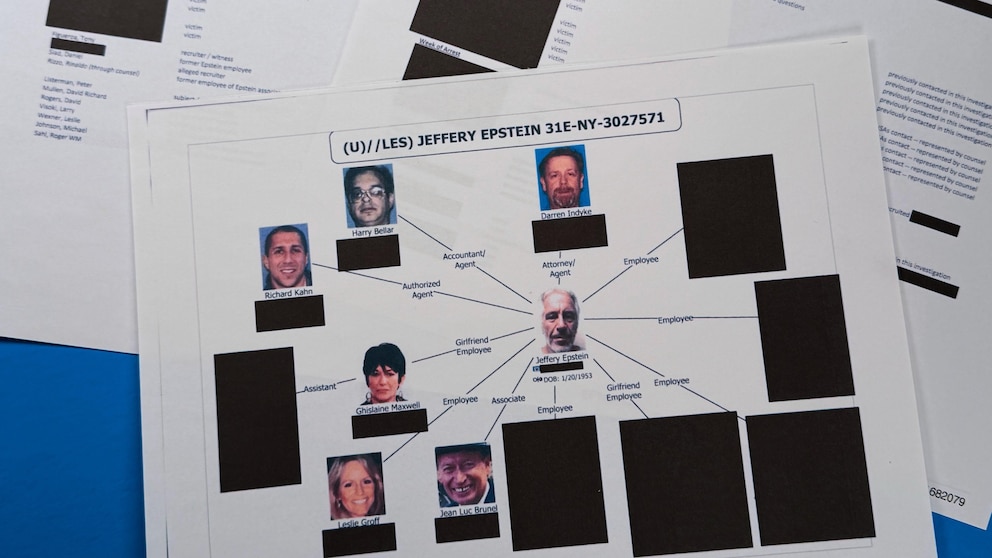
But the weight of evidence described by prosecutors—including flight logs, financial records, and testimony—suggested that the case would have been both complex and explosive had it reached trial.
The broader implications of the case continue to reverberate.
Lawmakers have pushed for reforms to prevent similar plea agreements in federal cases involving minors.
There has also been renewed focus on how wealth and influence can distort the criminal justice system.
The initial 2008 plea deal, negotiated behind closed doors, became a symbol for critics who argue that powerful defendants often receive preferential treatment.
For the survivors, the story is not about political intrigue or celebrity ᴀssociations.
It is about the trauma they say they endured and the long-term consequences that followed.
Many have spoken publicly in recent years, describing years of silence and shame before seeing the case taken seriously at the federal level.
Their accounts have helped shift public understanding of trafficking and exploitation, emphasizing that such crimes often occur in plain sight and are masked by status and respectability.
Jeffrey Epstein’s name has become synonymous with one of the most notorious Sєx trafficking scandals in modern American history.
The allegations against him were not fleeting accusations; they were supported by multiple investigations, sworn testimony, and ultimately a federal indictment.
Though he died before facing trial, the proceedings against Maxwell and ongoing civil litigation have kept the case in the spotlight.
In the end, the story is not just about one man’s alleged crimes.
It is about systemic failure, about how exploitation can flourish when warning signs are ignored, and about the resilience of those who refused to remain silent.
The legal record now stands as a stark account of abuse intertwined with power—a reminder that accountability can be delayed, but the truth, once brought to light, has a way of enduring.


