Disaster in the Fog: Russian ᴀssault Crushed by Ukraine’s ᴅᴇᴀᴅly Defense
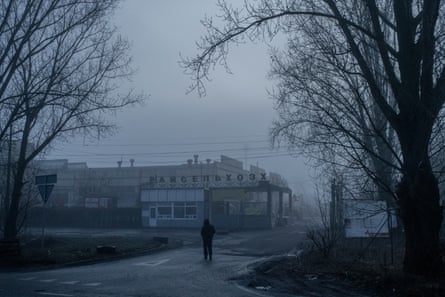
As a dense, wintry fog descended over Pokrovsk, Russian forces saw an opportunity.
The murky cover promised to shield their movements from Ukraine’s ever-watchful reconnaissance and FPV (First-Person View) drones.
But what they couldn’t see was the fate that awaited them—one that would turn the fog into a graveyard for nearly a hundred Russian soldiers.
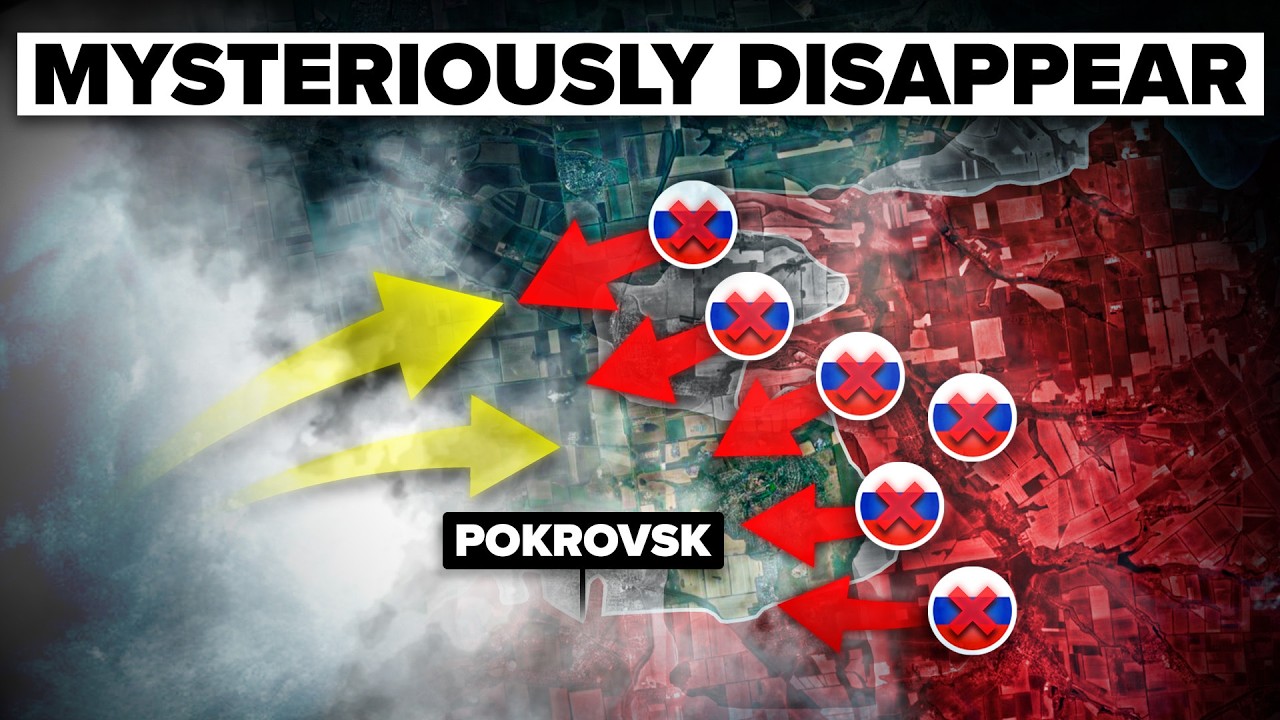
On February 1, the Kyiv Post reported a stunning Ukrainian victory: two major Russian ᴀssaults in the Pokrovsk direction were destroyed in a single day.
Multiple Russian platoons, equipped with a mix of ATVs, motorcycles, and civilian cars, tried to infiltrate Pokrovsk and the nearby settlement of Hryshyne under the bleak cover of winter fog.
Instead of slipping through undetected, they walked into a trap.
Ukraine’s Spartan National Guard Brigade, alongside the infamous Birds of Magyar unmanned aerial vehicle unit, tracked Russian movements even as visibility dropped to near zero.
Using advanced drones, Ukrainian forces hunted down Russian troops and vehicles with chilling efficiency.

The fog, which Russians had hoped would hide them, became their undoing.
FPV drones flew silently through the greyness, dropping explosives and confirming kills on targets that barely had time to react.
The result: close to 100 Russian troops killed or wounded, and a swath of destroyed vehicles—10 ATVs, 4 motorcycles, and 6 cars.
The Spartan brigade documented their victory with graphic video evidence, showing burning vehicles, drone strikes, and the grim aftermath scattered across the snow.
One harrowing scene captured a Russian soldier in white winter gear desperately trying to outrun a drone, only to be caught and eliminated in the trees.

The fog, instead of providing cover, became a killing field.
Putin’s forces, expecting to use the weather as an advantage, were instead exposed to Ukraine’s relentless drone warfare.
The Birds of Magyar unit, led by Robert Brovdi, dropped bombs from above, turning the landscape into a tableau of destruction.
This wasn’t an isolated incident.
On the same day, Ukraine’s 7th Airborne ᴀssault Corps repelled another mechanized Russian ᴀssault on Hryshyne, destroying armored vehicles and eliminating at least 10 more Russian soldiers.

Hryshyne, a key logistics hub for Ukraine, has become a strategic prize for Russia.
Yet, every attempt to seize it ends in disaster, as open terrain and sparse tree cover leave Russian troops vulnerable to aerial attacks.
Why are Russian forces using civilian vehicles and ATVs? The harsh winter terrain makes traditional armored ᴀssaults risky—tanks and BMPs are slow, easy targets for drones.
Lighter vehicles offer speed and agility, but little protection.
As CNN and Business Insider have reported, Russia has increasingly relied on quad bikes and motorbikes for fast raids, hoping to evade Ukrainian defenses.
But on January 31, these tactics failed spectacularly: drones easily spotted and destroyed the vehicles, and their riders stood no chance.
Ukraine’s defense of Pokrovsk is more than just a tactical victory—it’s a symbol of Russian desperation.
Despite repeated attacks, Ukraine still holds Pokrovsk and its surrounding settlements.
Putin’s declared ᴅᴇᴀᴅline to capture Donetsk by April 2026 now looks impossible.
The city, once claimed by Russia as “captured,” remains firmly under Ukrainian control, its defenders repelling ᴀssault after ᴀssault.
General Yevhen Lasiychuk, leader of Ukraine’s 7th Rapid Reaction Corps, told the BBC that Russia’s strength in the region is waning.
Ukrainian forces win close combat near Pokrovsk in about 90% of cases, and most Russian ᴀssaults are destroyed before they even reach Ukrainian positions.
Even when Russia uses fog to mask its attacks, Ukraine’s units neutralize the threat, leaving the battlefield littered with destroyed vehicles and fallen soldiers.
The winter conditions, once Russia’s ally, now work against them.
Fog and snow hinder drone optics, but Ukraine’s operators have adapted, maintaining ᴅᴇᴀᴅly accuracy.
Open terrain between Pokrovsk and Hryshyne offers little shelter, turning every ᴀssault into a race against death.
The grim tally for January 31: nearly 100 Russian soldiers lost in failed ᴀssaults, dozens of vehicles destroyed, and two prisoners taken.
The fog, meant to be a cloak, became a shroud.
Pokrovsk, dubbed a “meatgrinder,” continues to devour Russian troops sent by Putin—never to return.
As Ukraine holds firm, Russia’s hopes for a breakthrough in Donetsk grow dimmer.
The fortress belt of cities remains unconquered, and every failed ᴀssault weakens the Russian offensive.
Even “General Winter” can’t save Putin’s soldiers now; the cold kills as surely as Ukrainian drones.
In the end, the fog was not a blessing but a curse.
Russian troops entered, expecting cover—and found only destruction.
The war in Pokrovsk rages on, but for Russia, every new ᴀssault looks more like a march into oblivion.


