I have always believed that the true value of a guitar is not measured by the wood, the strings, or even the craftsmanship alone, but by the moments it survives and the souls it channels.
Looking at the ten most expensive guitars in the world feels less like browsing collectibles and more like reading chapters from music’s most turbulent autobiography.
Each one is a silent witness to cultural shifts, personal demons, and flashes of brilliance that defined entire generations.
Jerry Garcia’s Wolf stands at number ten, and it feels almost impossible to separate this guitar from the spirit of the Grateful ᴅᴇᴀᴅ itself.
Crafted in 1973 by master luthier Doug Irwin, Wolf was born from Garcia’s desire for something utterly personal, something that could keep up with the endless improvisation of psychedelic rock.

The curly maple body and purpleheart center block gave it a tone that felt alive, while its onboard effects loop and active electronics placed it years ahead of its time.
When Garcia added the now-famous wolf sticker, the guitar stopped being just an instrument and became a character.
After his death, its value transformed from musical to mythical, eventually selling for $1.
9 million in 2017, with proceeds donated to the Southern Poverty Law Center.
It became a symbol not only of art, but of conscience.
At number nine, Jimi Hendrix’s 1968 Fender Stratocaster carries the weight of a nation’s unrest.
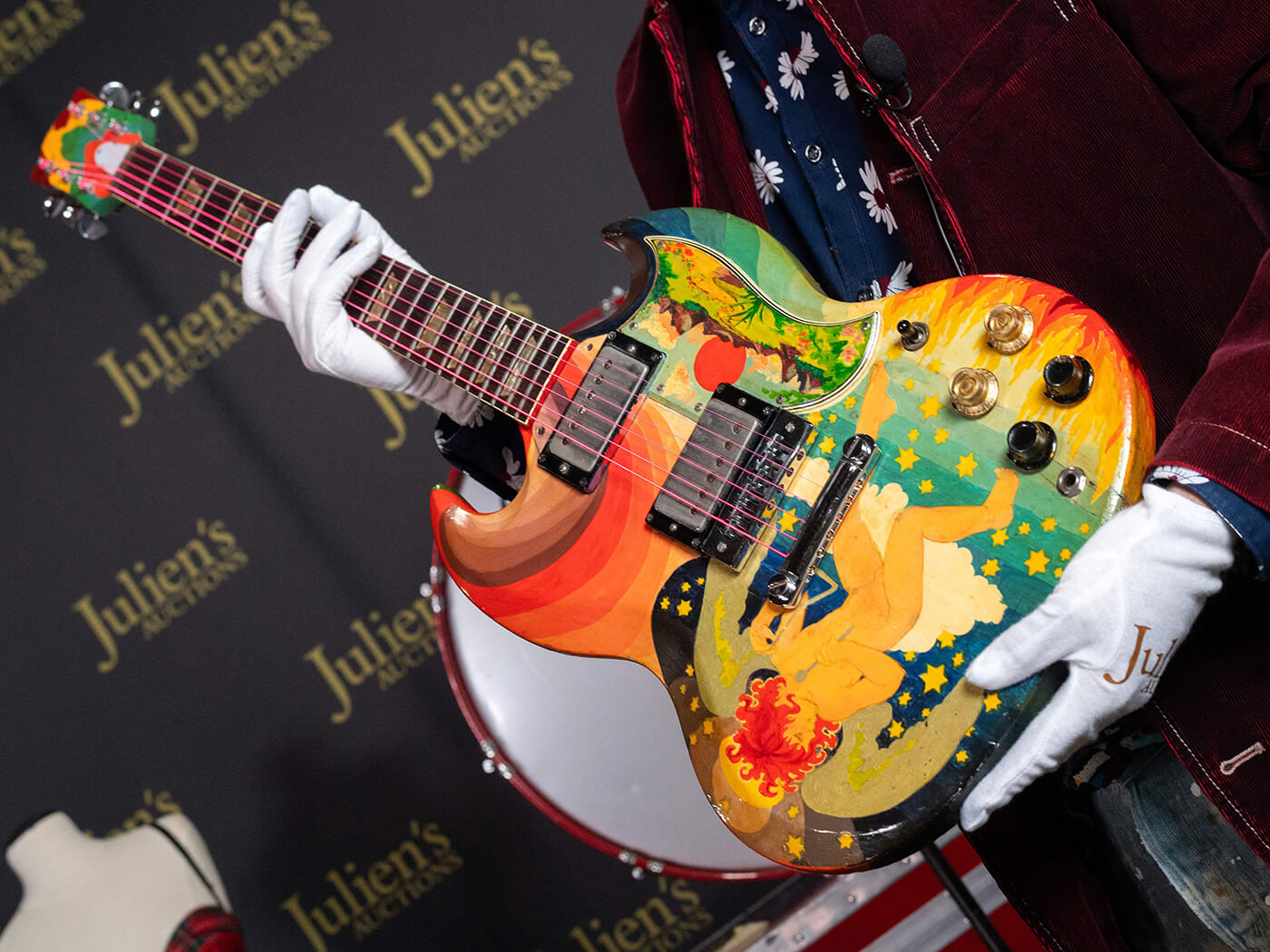
This Olympic white Strat was the weapon Hendrix used to close Woodstock with a version of “The Star-Spangled Banner” that sounded like bombs falling and sirens screaming.
Designed for right-handed players, the guitar was flipped and restrung, mirroring Hendrix himself—someone who never fit into conventional forms.
When it sold privately in 1998 for $2 million and later found a home at the Museum of Pop Culture in Seattle, it cemented its place as a relic of protest, innovation, and raw electricity.
Number eight belongs to a guitar haunted by blues.
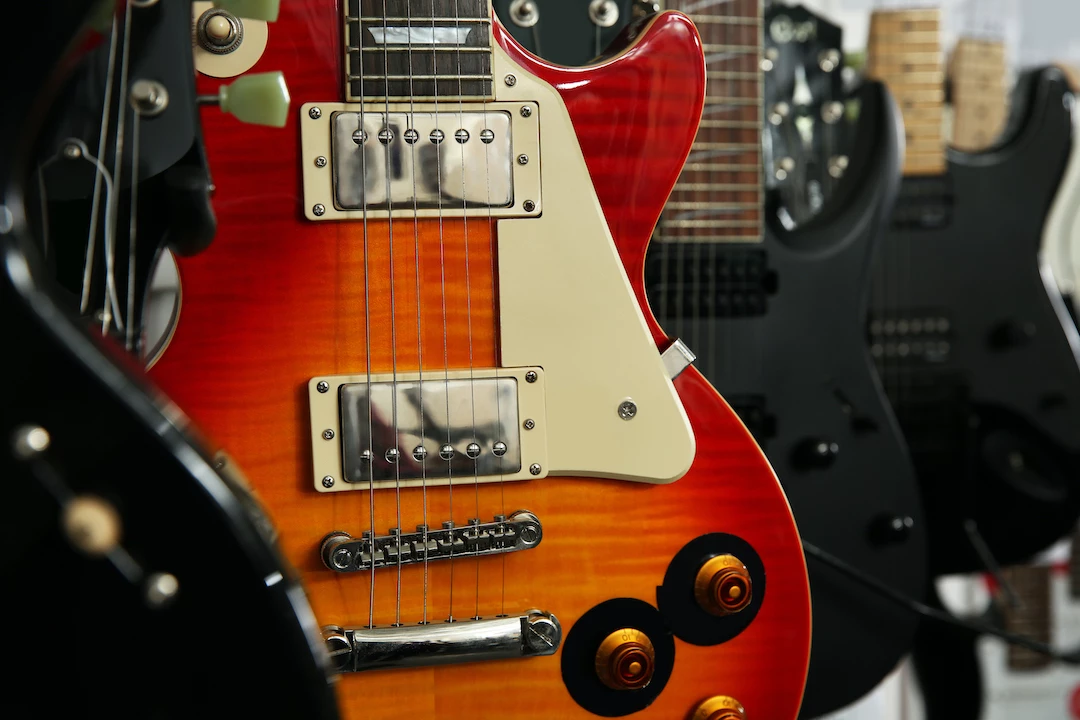
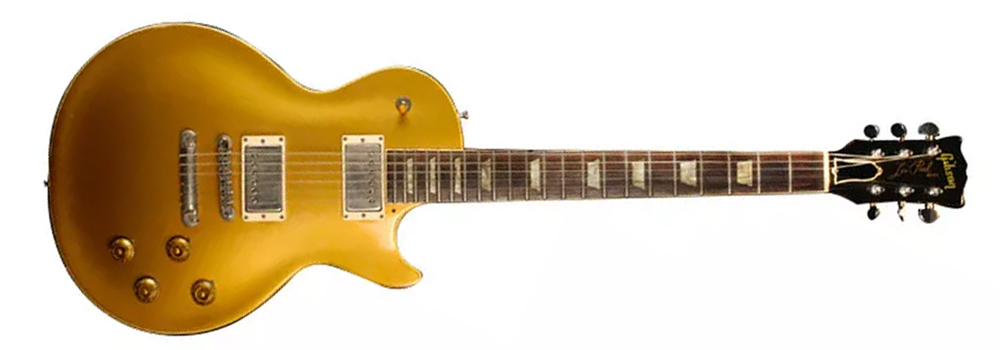
The 1959 Gibson Les Paul Standard once owned by Peter Green and later Gary Moore carries a sound no one planned.
An accidental reversal of the neck pickup’s polarity created a nasal, aching tone that became its signature.
That flaw became its soul.
Pᴀssed between two giants of British blues, the guitar absorbed decades of sorrow, fire, and virtuosity.
When Kirk Hammett acquired it in 2014 for around $2 million, it felt less like a purchase and more like guardianship of a cursed treasure.
John Lennon’s Gibson J-160E at number seven feels almost like a lost manuscript rediscovered.

Bought in 1962 and used to write some of the Beatles’ earliest hits, the guitar vanished in 1963 and remained missing for over half a century.
Its reappearance in San Diego stunned the music world, with experts matching wood grain patterns to old pH๏τographs to confirm its idenтιтy.
When it sold for $2.
41 million in 2015, it wasn’t just an auction—it was the return of a missing piece of musical DNA.
At number six, the Reach Out to Asia Fender Stratocaster tells a different story, one rooted in generosity rather than rebellion.
Signed by nineteen legends including Eric Clapton, Jimmy Page, and Brian May, the guitar was created to raise funds for victims of the 2005 Indian Ocean tsunami.
It never needed to be played on stage; the signatures alone carried global weight.
When it sold for $2.
7 million in Doha, it became proof that music’s influence can extend far beyond sound.
Eddie Van Halen’s miniature Kramer Frankenstrat from the “H๏τ for Teacher” video crashes in at number five with pure excess and speed.
Built to embody Eddie’s vision of the ultimate hybrid guitar, it fused Fender-style bodies with Gibson pickups and a Floyd Rose tremolo.
Though small in size, its impact was enormous.
Selling for $3.
93 million in 2023, it captured the unapologetic flash of the 1980s in a single object.
Number four, David Gilmour’s Black Strat, feels like a lifelong companion rather than a tool.
Purchased in 1970, it evolved alongside Pink Floyd’s sound, modified repeatedly as Gilmour searched for perfection.
From “Time” to “Comfortably Numb,” its voice became inseparable from emotional restraint and atmosphere.
When it sold for $3.
97 million in 2019 to support climate charities, it closed a chapter that had lasted nearly four decades.
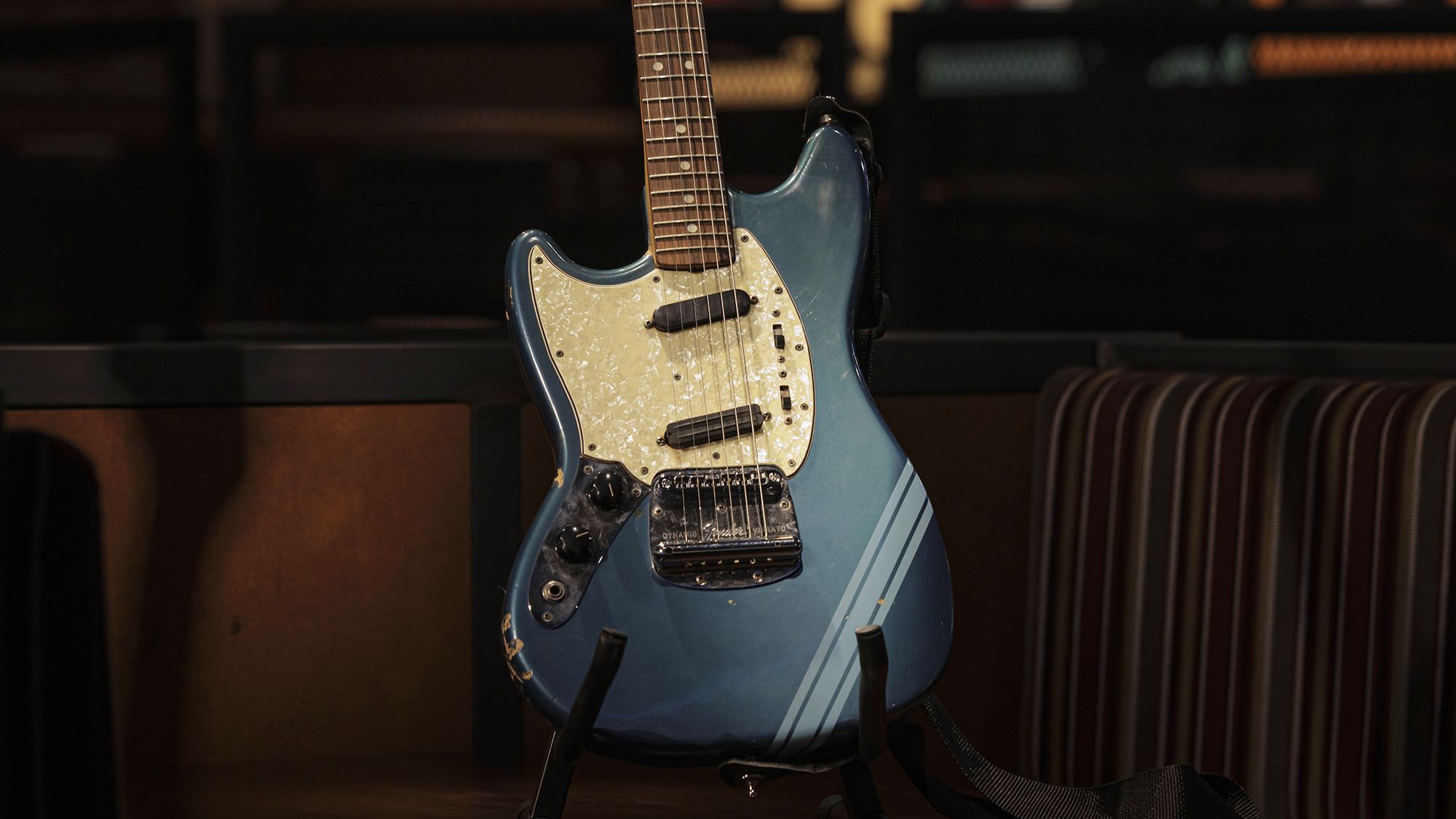
At number three, Kurt Cobain’s Fender Mustang from the “Smells Like Teen Spirit” video represents the moment underground music detonated into the mainstream.
This sky-blue, left-handed 1969 Mustang didn’t just appear on MTV—it rewired youth culture.
Selling for $4.5 million in 2022, it became a monument to Generation X’s disillusionment.
Number two feels almost unbearably intimate.
Cobain’s Martin D-18E from MTV Unplugged is tied to one of the most vulnerable performances ever recorded.
Modified with a pickup and marked with personal stickers, the guitar captured a man laying himself bare just months before his death.
When it sold for $6.
01 million in 2020, it wasn’t shock—it was reverence.
At number one stands the Rickenbacker Electro Spanish Ken Roberts, a guitar older than rock itself.
Built in the 1930s, it is widely considered the first commercially produced electric guitar with a full-scale length.
Its reported $7.
5 million private sale remains unverified, but its influence is undeniable.
Without it, the sound of the modern world might never have existed.
These guitars are not expensive because they are rare.
They are expensive because they survived history—and changed it.


