THEOLOGICAL EARTHQUAKE: ANCIENT ETHIOPIAN TEXTS IGNITE CONTROVERSY WITH A STUNNING INTERPRETATION THAT COULD REDEFINE CORE CHRISTIAN BELIEFS!
Headlines claiming that “Jesus didn’t die for sin” and that a secret hidden in the Ethiopian Bible has finally been revealed are designed to provoke strong reactions.
Such statements challenge one of the central teachings of Christianity and suggest that a long-suppressed truth has come to light.
However, when examined carefully, there is no credible evidence that the Ethiopian biblical tradition denies the redemptive significance of Jesus’ death.
To understand why these claims are misleading, it is important to look at the Ethiopian Bible, the theology of the Ethiopian Orthodox Church, and the broader context of Christian teaching about atonement.
The Ethiopian Orthodox Tewahedo Church is one of the oldest continuous Christian traditions in the world.
Christianity became established in the Kingdom of Aksum in the 4th century, and the church developed independently from many Western Christian insтιтutions.

Over time, it formed its own biblical canon and liturgical traditions.
The Ethiopian Bible includes more books than the standard Protestant Bible and differs slightly from Roman Catholic and Eastern Orthodox canons.
These differences, however, are not new discoveries.
They have been known and studied for centuries.
One of the distinctive features of the Ethiopian canon is the inclusion of texts such as 1 Enoch and Jubilees.
The Book of Enoch is an ancient Jewish text written centuries before the time of Jesus.
It contains apocalyptic visions, descriptions of angelic beings, and reflections on divine judgment.
Although it influenced early Jewish and Christian thought and is quoted in the New Testament letter of Jude, it does not present a hidden biography of Jesus or deny his crucifixion.
The Book of Jubilees retells and expands upon parts of Genesis and Exodus, but it does not offer an alternative account of Jesus’ mission or death.
The central teachings of the Ethiopian Orthodox Church affirm that Jesus Christ is both fully divine and fully human.
The church proclaims that he was crucified, died, and rose again.
The crucifixion is commemorated with deep reverence in Ethiopian liturgy, art, and devotion.
The idea that Jesus’ death has saving significance is clearly present in Ethiopian theology.
Where confusion sometimes arises is in the way different Christian traditions describe the meaning of Jesus’ death.
In many Western Protestant traditions, the doctrine of subsтιтutionary atonement is strongly emphasized.
According to this view, Jesus died in place of sinners, bearing the penalty for sin in a legal or judicial sense.
This framework highlights themes of guilt, punishment, and forgiveness.
Eastern Christian traditions, including Ethiopian Orthodoxy, often place greater emphasis on other aspects of salvation.
They may focus more on the concept of Christ’s victory over death, the restoration of human nature, or the healing of humanity’s broken relationship with God.

In this perspective, Jesus’ death and resurrection defeat the power of death and corruption, allowing humanity to share in divine life.
While this emphasis differs in tone from certain Western presentations, it does not deny that Jesus’ death addresses the problem of sin.
Rather, it frames salvation in a broader and more transformative way.
The notion that “Jesus didn’t die for sin” likely arises from misunderstanding these theological nuances.
When a tradition speaks less about legal penalty and more about spiritual transformation, it can be misinterpreted as rejecting the concept of atonement.
However, Ethiopian theology does not dismiss sin as irrelevant.
Instead, it understands sin as part of a larger human condition that includes mortality, corruption, and separation from God.
Jesus’ work is seen as overcoming all of these dimensions.
Another factor contributing to sensational claims is the modern fascination with hidden knowledge.
Stories suggesting that ancient manuscripts contain secrets suppressed by mainstream Christianity attract attention.
Yet the Ethiopian biblical canon has never been hidden.
Its manuscripts have been preserved, copied, and studied for centuries.
Scholars of early Christianity and Ethiopian history have long been aware of its contents.
If the Ethiopian Bible truly contained a doctrinal statement explicitly denying that Jesus’ death had redemptive meaning, this would have been identified and debated in academic scholarship long ago.
There is no record of such a discovery.
The church’s public teaching, liturgical texts, and theological writings consistently affirm the importance of the crucifixion.
It is also important to remember that Christianity has always encompᴀssed a diversity of theological expressions.
Early church fathers described the meaning of Jesus’ death in multiple ways: as sacrifice, ransom, victory, example, and restoration.
These images are not mutually exclusive.
They reflect attempts to articulate the profound significance of the crucifixion in different cultural and philosophical contexts.
Throughout Christian history, theological language has evolved.
Western medieval theology often used legal metaphors drawn from Roman law.
Eastern theology frequently employed medical or restorative metaphors.
Both traditions seek to express the transformative impact of Jesus’ life, death, and resurrection.
Differences in emphasis do not amount to denial.
The Ethiopian Orthodox Church’s liturgy offers clear evidence of its beliefs.
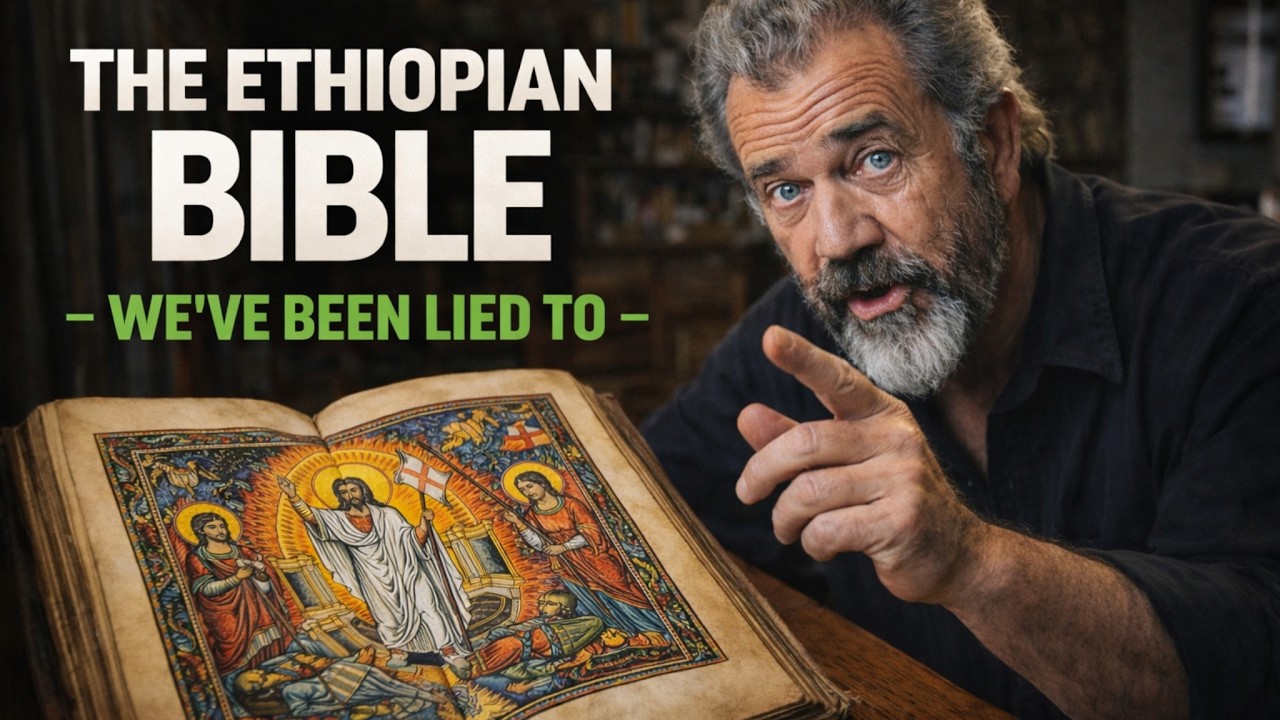
Holy Week observances include solemn commemorations of Christ’s suffering and death.
Hymns and prayers speak of redemption, forgiveness, and victory.
Artistic depictions of the crucifixion are central to Ethiopian Christian iconography.
These practices would make little sense if the church believed that Jesus’ death was unrelated to salvation.
When evaluating dramatic claims about religious texts, it is essential to rely on documented scholarship rather than viral headlines.
Academic research on Ethiopian manuscripts continues in universities and research insтιтutes around the world.
Scholars translate, analyze, and compare texts to understand their historical development.
No reputable study has concluded that Ethiopian Christianity rejects the redemptive significance of the crucifixion.
The persistence of such headlines reflects broader cultural dynamics.
In an age of rapid information sharing, provocative statements spread quickly.
Complex theological discussions are reduced to simplified slogans.
Nuance is lost, and differences in emphasis are exaggerated into contradictions.
Understanding the Ethiopian Bible within its historical and theological context reveals continuity rather than rupture.
The church’s broader canon enriches Christian tradition by preserving ancient writings.
It offers valuable insight into early Jewish and Christian thought.
However, it does not overturn foundational Christian teachings about Jesus.
In conclusion, there is no credible evidence that the Ethiopian Bible contains a secret teaching that Jesus did not die for sin.
The Ethiopian Orthodox Tewahedo Church affirms the crucifixion and resurrection as central to salvation.
While its theological language may emphasize restoration and victory over death, these themes complement rather than contradict the idea of redemption from sin.
Claims suggesting otherwise rely on sensational framing rather than careful study.
The Ethiopian Christian tradition stands as one of the world’s oldest expressions of faith in Jesus Christ, and its scriptures and liturgy consistently affirm the transformative power of his death and resurrection.


