The “Ninth Pᴀssenger” of Noah’s Ark: Myth, Mystery, or Misinterpretation?
Few stories are as widely known as that of Noah and the great flood described in Book of Genesis.
According to the biblical account, eight people entered the ark: Noah, his wife, his three sons, and their wives.
Together, they survived a divine judgment meant to cleanse the earth of corruption.
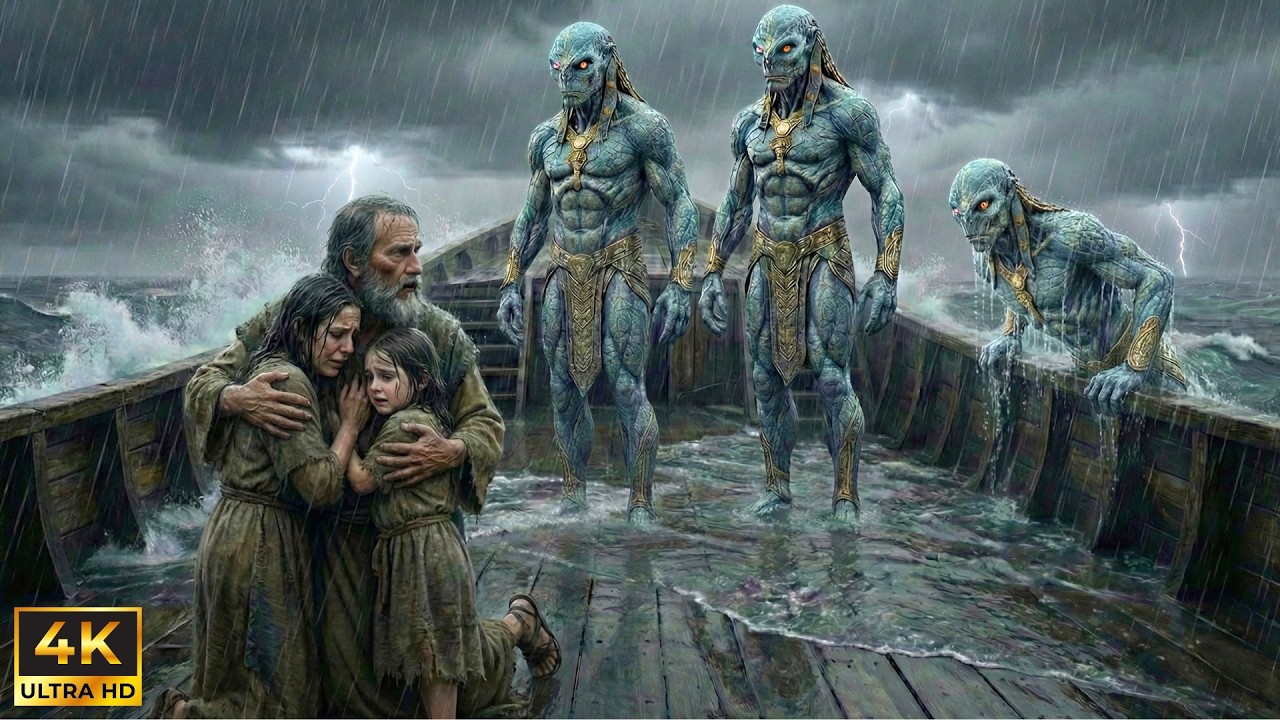
But outside the canonical Bible, alternative traditions tell a far more mysterious—and unsettling—story.
Some apocryphal and mystical writings suggest that something else may have been present aboard the ark.
Not invited.
Not acknowledged.
Yet somehow… there.
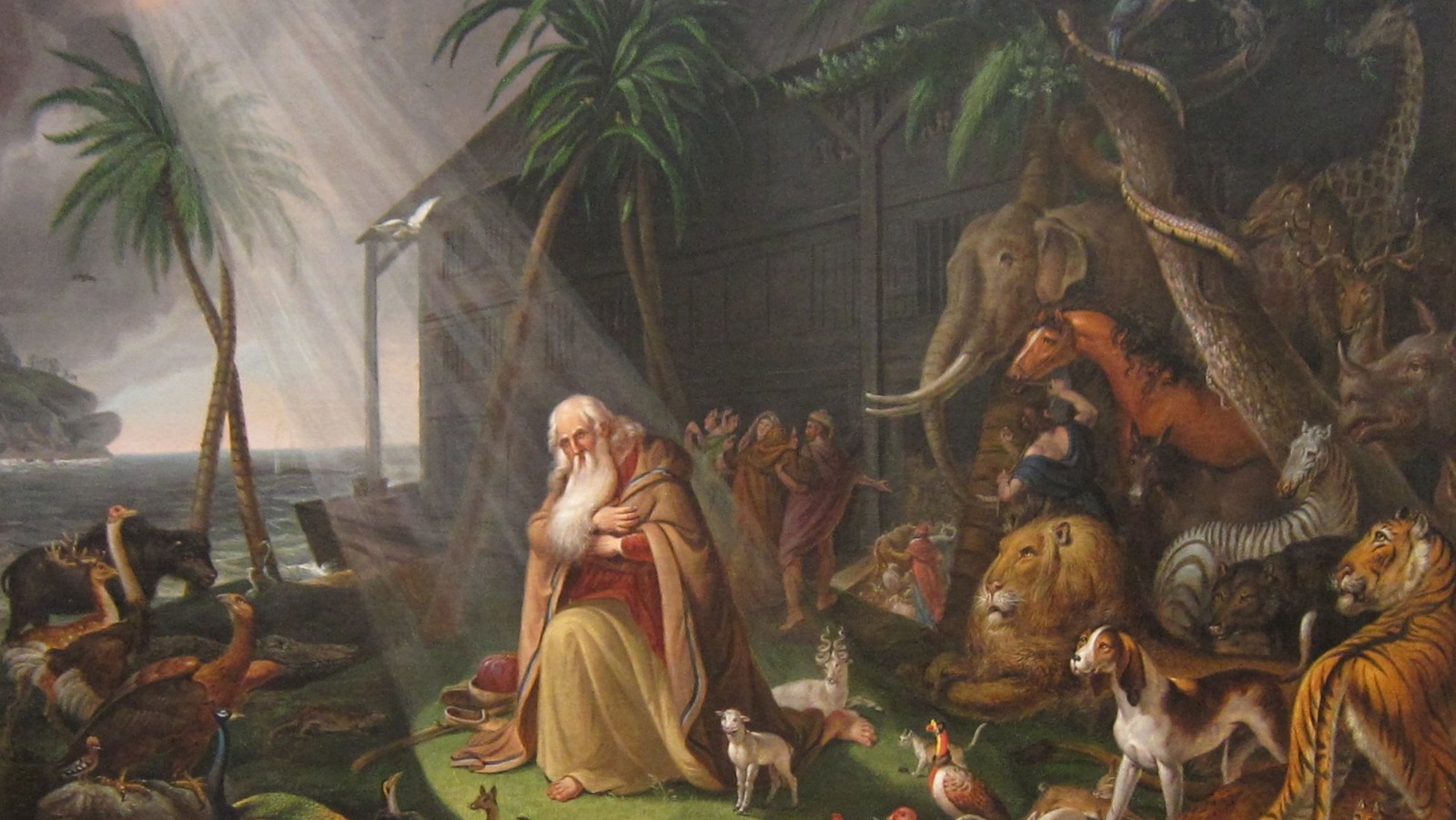
This idea, often referred to as the “ninth pᴀssenger,” does not come from mainstream scripture.
Instead, it emerges from scattered interpretations found in texts like Book of Enoch, Book of Jubilees, and certain Gnostic writings such as the Apocryphon of John.
These sources are not considered authoritative in most Jewish or Christian traditions, but they offer insight into how ancient communities wrestled with questions of evil, survival, and divine justice.
At the center of these interpretations is a troubling question:
If the flood was meant to eliminate corruption from the world, why does evil still exist afterward?
To answer that, some traditions developed symbolic narratives—one of which is the idea of a hidden presence on the ark.
In certain interpretations, this “pᴀssenger” is linked to the Nephilim—beings described in Genesis as the offspring of divine beings and humans.
Other versions suggest a fallen angel, such as Azazel, or even a symbolic embodiment of evil itself.
These interpretations are not historical claims, but theological explorations.
They attempt to explain something deeply human: the persistence of darkness in a world that was supposedly renewed.
From a symbolic perspective, the “ninth pᴀssenger” represents the idea that evil cannot simply be erased.
Instead, it exists as part of the human condition—something that must be confronted, not eliminated.
This aligns with later philosophical and psychological interpretations, including those influenced by Carl Jung, who described the “shadow” as an inseparable part of the human psyche.
In this view, the ark becomes more than a vessel of survival.
It becomes a metaphor.
A contained world where opposites coexist—good and evil, order and chaos, light and darkness.
The flood may have reset civilization, but it did not erase the fundamental tension within humanity itself.
Some ancient traditions even reflect this idea through storytelling details—strange noises, unexplained presences, or symbolic figures that hint at something beyond the visible narrative.
These elements are not meant to be taken literally, but to provoke reflection.
Why does humanity repeat its mistakes?
Why does corruption return, even after moments of renewal?
Rather than offering a literal explanation, the “ninth pᴀssenger” serves as a narrative device—an attempt to grapple with these enduring questions.
It’s also important to separate myth from doctrine.
Mainstream Jewish and Christian teachings do not support the idea of a hidden being on Noah’s Ark.
The biblical account remains clear and consistent: eight people survived, and the flood marked a new beginning.
The additional interpretations come from later traditions that expand, reinterpret, or symbolically explore the original story.
And that distinction matters.
Because while these alternative narratives can be fascinating, they should be understood as part of a broader tradition of storytelling—not as suppressed or “forbidden” truths removed from scripture.
In reality, they reveal something equally compelling: how different cultures and thinkers have tried to understand the nature of evil, free will, and human imperfection.
Across mythologies worldwide, similar themes appear.
Stories of great floods often include elements that survive destruction—whether as chaos, knowledge, or lingering darkness.
These parallels suggest a shared human concern: that even after starting over, something within us remains unchanged.
The “ninth pᴀssenger,” then, is not necessarily a being.
It is an idea.
An idea that challenges the notion of a perfect reset.
That reminds us that the struggle between good and evil is not confined to ancient stories—it continues within each individual.
In that sense, the ark is not just a relic of the past.
It is a reflection of the present.
A reminder that survival is not the same as transformation—and that the most difficult battles are often the ones we carry with us.


