The Battle of Midway, fought from June 4 to June 7, 1942, stands as one of the most significant naval battles in history.
This clash not only marked a turning point in the Pacific Theater of World War II but also showcased the strategic brilliance and bravery of the American forces.
At the heart of this battle were the aircraft carriers of the United States Navy, which played a pivotal role in the outcome of the conflict.
As waves of American torpedo bombers and dive bombers launched their ᴀssaults against the Japanese fleet, the stakes could not have been higher.
The fate of nations hung in the balance, and the outcome would shape the course of the war in the Pacific.

Prelude to Battle
In the early months of 1942, the Japanese Imperial Navy had achieved a series of stunning victories across the Pacific.
Following the attack on Pearl Harbor, Japanese forces swiftly captured territories throughout Southeast Asia and the Pacific Islands.
By June 1942, they set their sights on Midway Atoll, a small but strategically vital location that could serve as a base for further operations against the United States.
However, American intelligence had cracked Japanese codes, providing crucial information about their plans.
This intelligence allowed the U.S. Navy to prepare for the impending ᴀssault.
The Forces at Play
The Japanese fleet, led by Admiral Isoroku Yamamoto, was confident in its superiority.
It included four aircraft carriers: Akagi, Kaga, Sōryū, and Hiryu, along with a formidable escort of battleships and cruisers.
In contrast, the United States Navy, under the command of Admiral Chester W. Nimitz, fielded three carriers: USS Enterprise, USS Hornet, and USS Yorktown.
Despite being outnumbered, American forces were determined to defend Midway and turn the tide of the war.
The Battle Begins
On June 4, 1942, the battle commenced with a surprise attack by Japanese bombers targeting Midway Island.
However, American forces were ready.
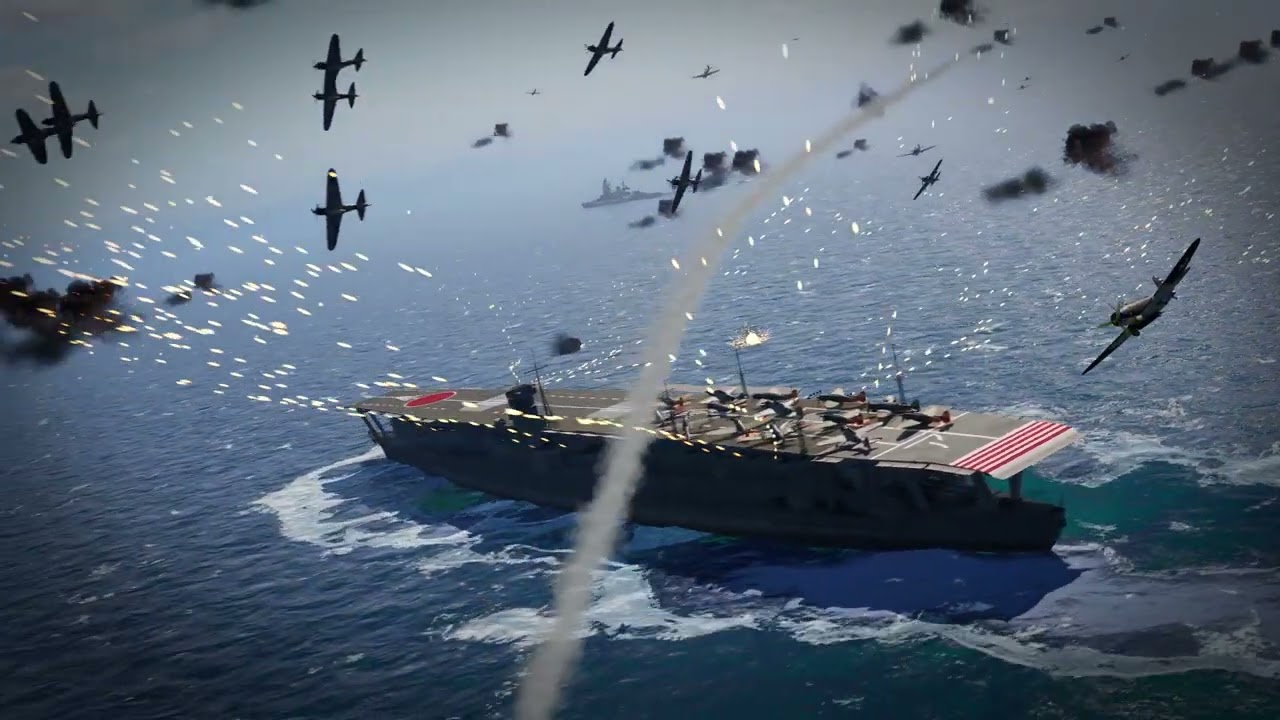
As the Japanese launched their initial strikes, American aircraft took to the skies, engaging in fierce dogfights.
The skies above Midway became a chaotic battleground, with planes from both sides clashing in a ᴅᴇᴀᴅly ballet.
The Turning Point
The tide began to turn when American dive bombers, taking advantage of a crucial moment when Japanese carriers were rearming their planes, launched a devastating attack.
In quick succession, they struck the Akagi, Kaga, and Sōryū, causing catastrophic damage.
The explosions that rocked these carriers were not just the destruction of ships; they symbolized the shifting balance of power in the Pacific.
With their carriers burning and sinking, the Japanese fleet began to falter.
The Aftermath
By June 7, the battle had concluded.
The United States had sunk four Japanese carriers while losing only one of its own, the USS Yorktown.
This victory was a monumental achievement for the U.S. Navy and a devastating blow to Japanese naval power.
The loss of these carriers crippled Japan’s ability to project power in the Pacific and marked the beginning of a series of American offensives that would eventually lead to victory in the war.
Legacy of Midway
The Battle of Midway is remembered not only for its immediate impact but also for its lasting legacy.
It demonstrated the importance of intelligence, strategy, and the effective use of aircraft carriers in modern naval warfare.
The lessons learned during this battle would influence naval tactics for decades to come.
Moreover, it served as a rallying point for American morale, proving that the tide of war could be turned.
Conclusion
In retrospect, the Battle of Midway was more than just a military engagement; it was a defining moment in the struggle for control of the Pacific.
The bravery of American pilots and the strategic foresight of military leaders played a crucial role in this victory.
As we reflect on this pivotal battle, it is essential to honor the sacrifices made by those who fought and to recognize the enduring significance of their actions in shaping the course of history.
The legacy of Midway continues to resonate, reminding us of the complexities of war and the resilience of the human spirit in the face of adversity.
In the end, the Battle of Midway was not just a victory for the United States; it was a turning point that would alter the trajectory of the Second World War and the future of the Pacific region.
The lessons learned and the sacrifices made during this battle remain a testament to the courage and determination of those who fought in one of the most critical conflicts of our time.


