The Ethiopian Bible and the Forgotten Texts That Reframe the Story of Jesus
One of the most surprising facts in Christian history is this: there has never been a single, universally identical Bible.
The Protestant canon contains 66 books. The Catholic Bible includes 73. Eastern Orthodox traditions recognize several additional writings. But the Ethiopian Orthodox Tewahedo Church—one of the oldest Christian communities in the world—preserves a broader canon traditionally counted at 81 books.
This is not a fringe movement. Christianity reached the ancient Kingdom of Aksum (in modern-day Ethiopia and Eritrea) by the 4th century. The Book of Acts itself mentions an Ethiopian official baptized by the Apostle Philip. By the time much of Europe was still religiously fragmented, Ethiopia had already established Christianity as a state faith.
When scriptures were translated into Ge’ez, the classical liturgical language of Ethiopia, they included texts that later disappeared from most Western Bibles. Among them: 1 Enoch, Jubilees, and the Ascension of Isaiah.
These books were not treated as curiosities. In Ethiopia, they were copied, read in churches, and preserved for centuries.
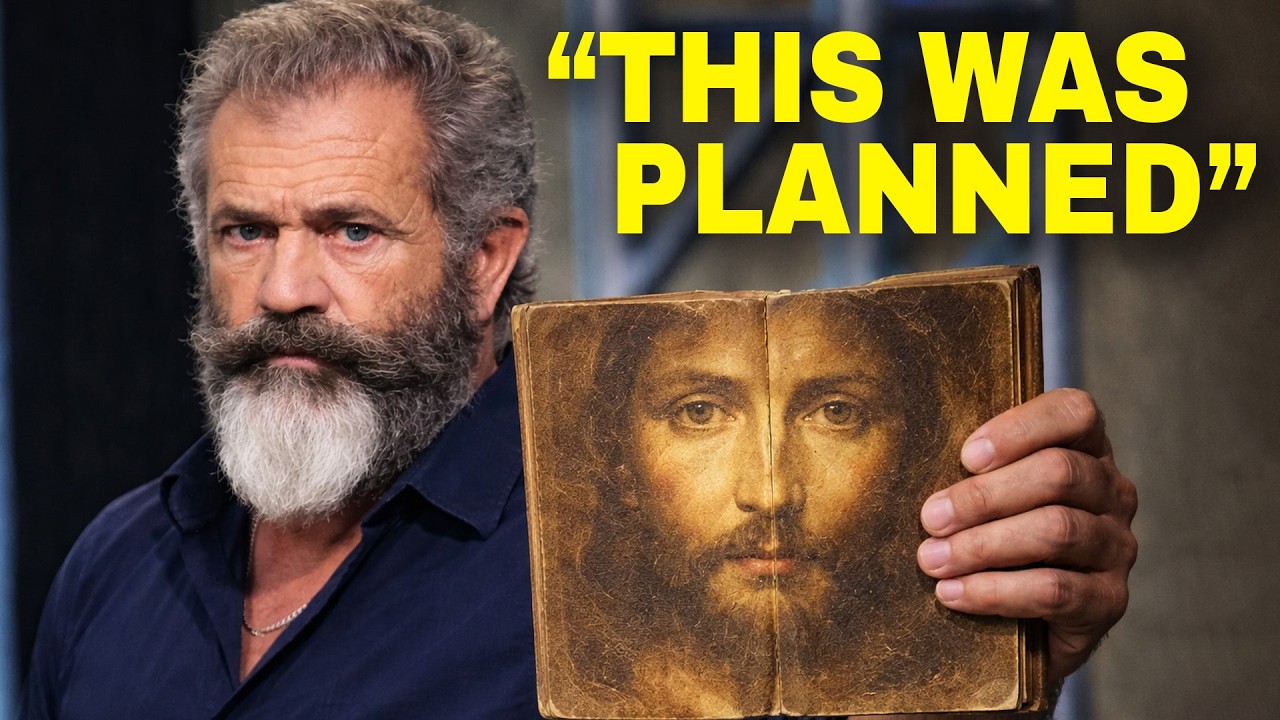
The Book of Enoch is perhaps the most discussed of these texts. Attributed to Enoch, the great-grandfather of Noah, it expands dramatically on the brief Genesis statement that “Enoch walked with God; then he was no more.”
In 1 Enoch, fallen angels—called the Watchers—descend to Earth, teach forbidden knowledge, and produce the Nephilim. The text also introduces a striking figure: a pre-existent, heavenly “Son of Man” who sits on a throne of glory and judges the earth.
That phrase—“Son of Man”—is the very тιтle Jesus uses most frequently in the Gospels.
This connection has drawn serious scholarly attention. The Epistle of Jude in the New Testament directly quotes 1 Enoch. Early Christian writers such as Tertullian regarded it highly. Later theologians were more cautious, and as the Western canon solidified, Enoch was excluded.
For centuries, the only complete version survived in Ethiopia.
Then, in 1947, fragments of Enoch were discovered among the ᴅᴇᴀᴅ Sea Scrolls at Qumran. These Aramaic manuscripts predate Christianity. The discovery confirmed that Enoch was widely read in Jewish communities before and during the time of Jesus.
That does not mean the text “changes everything we know.” But it does show that early Jewish and Christian theology developed within a much richer literary environment than many modern readers realize.

Another preserved Ethiopian text, the Ascension of Isaiah, presents a dramatic vision of a divine figure descending through multiple heavens before entering the world in human form.
The canonical Gospels focus on Jesus’ birth, ministry, death, and resurrection. The Ascension of Isaiah expands the cosmic backdrop—describing layered heavens, angelic hierarchies, and a hidden descent through spiritual realms.
These themes echo ideas later expressed in Christian creeds, such as the phrase “He descended into hell.” While not included in most Western Bibles, the text reflects early theological imagination about the scope of Christ’s mission.
It suggests that early Christians were grappling not only with historical events, but with cosmic meaning.
The formation of the biblical canon was gradual and complex. There was no single council that instantly finalized the list of books. Instead, regional churches debated authorship, theological consistency, and widespread usage.
By the late 4th century, influential leaders such as Athanasius listed the 27 New Testament books recognized today. Regional councils in Hippo (393 CE) and Carthage (397 CE) reinforced those selections.
Different Christian communities, however, preserved different traditions. Ethiopia—geographically isolated and culturally distinct—maintained its wider collection.
This is not evidence of conspiracy. It is evidence of history unfolding across languages, empires, and continents.
Ethiopia’s monasteries became guardians of ancient manuscripts. Remote sites such as Debre Damo preserved texts through centuries of invasion, political upheaval, and isolation.
Some Ethiopian Gospel manuscripts have been radiocarbon dated to the 4th–6th centuries, making them among the oldest surviving complete Christian books in the world.
Today, scholars estimate that hundreds of thousands of Ethiopian Christian manuscripts exist, many still uncatalogued.
This preservation effort has become urgent in recent years due to conflict in northern Ethiopia, where churches and monasteries have suffered damage and looting. Digitization projects led by international insтιтutions are racing to safeguard these irreplaceable texts.
Interest in these writings has resurfaced in part because of renewed cultural attention to early Christian themes. Mel Gibson has spoken about wanting his planned resurrection film to explore the spiritual dimension between crucifixion and resurrection—a concept long embedded in Christian tradition.
Whether or not filmmakers draw directly from Ethiopian canonical texts, the broader theological landscape they represent is gaining visibility.
The Ethiopian Bible does not overthrow Christian belief. It expands the context. It reminds us that early Christianity was not monolithic. It was multilingual, geographically diverse, and intellectually dynamic.
The question is not whether something was “hidden.” These texts were never lost in Ethiopia.
The real question is this: what happens when a global audience rediscovers a tradition that never stopped preserving them?


