Inside the $2.8 Billion Empire: How the FBI Dismantled a Cartel’s Secret Real Estate Network in Arizona
The morning sun had barely risen over the Arizona desert when black SUVs rolled silently into some of the wealthiest neighborhoods in Phoenix, Scottsdale, and Tucson.

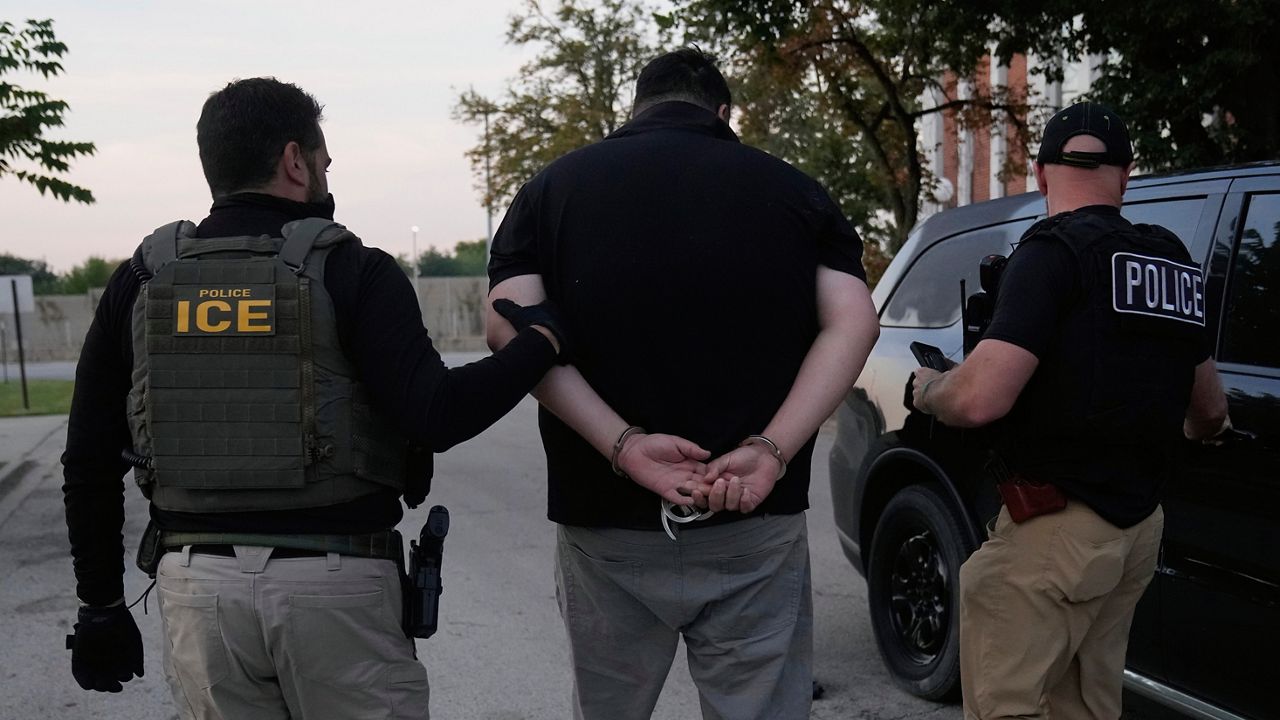
Federal agents in tactical gear moved with precision, sealing off gated driveways, securing multimillion-dollar properties, and knocking on doors that concealed far more than luxury interiors.
By noon, what had once appeared to be a booming real estate empire stood exposed as one of the largest money laundering operations ever uncovered in the American Southwest.
According to federal officials, the coordinated operation—led by the FBI in partnership with Homeland Security Investigations and the IRS Criminal Investigation Division—targeted a sprawling $2.
8 billion cartel-linked housing network operating across Arizona.
What investigators described as a sophisticated financial web had quietly infiltrated the state’s residential real estate market for years, converting drug trafficking profits into pristine suburban developments, luxury rentals, and commercial investments.

At the center of the case was a cluster of shell corporations registered under layers of nominee owners and legal proxies.
On paper, these companies were legitimate real estate investment firms capitalizing on Arizona’s booming housing market.
In reality, authorities allege they were laundering billions in cartel proceeds through cash purchases, inflated property values, and rapid resale transactions designed to obscure the origin of funds.
The investigation, code-named “Desert Ledger,” began nearly three years ago when suspicious transaction reports flagged unusually large all-cash home purchases in newly developed subdivisions.
Properties worth $800,000 to $3 million were being acquired outright, often by limited liability companies formed just weeks earlier.
There were no mortgages.
No conventional financing trails.
And in many cases, the listed beneficial owners had no verifiable employment history.
Investigators soon traced the financial activity to accounts funneling money from cross-border cash smuggling operations.
Authorities allege that bulk currency generated by narcotics distribution networks was transported into the United States, structured into smaller deposits, and wired through a maze of domestic and international accounts before resurfacing in Arizona’s property market.
What made the scheme particularly alarming was its scale.
Officials say the cartel’s housing empire wasn’t limited to high-end mansions.
Entire blocks of middle-class homes were purchased in bulk through intermediary investors.
In some neighborhoods, nearly one in five houses on certain streets was tied to the same concealed ownership network.
For local residents, the discovery came as a shock.
Neighbors described the properties as quiet and well-maintained, often vacant or sporadically occupied.
Some homes were leased at below-market rates.
Others appeared staged but never permanently inhabited.
It created the illusion of growth while quietly distorting supply and demand in one of the country’s most compeтιтive housing markets.
Behind closed doors, federal agents were building a case not only against financial facilitators in Arizona but also against cartel operatives believed to be coordinating operations from across the border.
Court filings reveal intercepted communications discussing “inventory,” “ᴀssets,” and “rotation”—coded language prosecutors argue referred to properties being purchased, flipped, or liquidated to clean illicit revenue.
In pre-dawn raids spanning more than two dozen locations, agents seized financial records, encrypted devices, luxury vehicles, and stacks of cash discovered in safes hidden behind false walls.
Authorities also moved to freeze hundreds of properties pending civil forfeiture proceedings, a legal maneuver aimed at preventing the rapid liquidation of ᴀssets once targets become aware of federal scrutiny.
The alleged architect of the network, a dual citizen operating as a real estate developer in Scottsdale, was arrested on charges including conspiracy to commit money laundering, wire fraud, and operating an unlicensed money transmitting business.
Prosecutors allege he knowingly structured transactions to avoid reporting requirements and coached ᴀssociates on how to evade federal oversight.
Legal analysts say the case highlights a growing vulnerability in the U.
S.
real estate market: its attractiveness as a vehicle for laundering foreign and domestic criminal proceeds.
Unlike banks, which are subject to strict anti-money laundering compliance protocols, real estate transactions have historically operated with fewer transparency requirements, particularly when properties are purchased outright through legal enтιтies.
Federal officials described the Arizona operation as a wake-up call.
In press briefings, law enforcement emphasized that cartels have increasingly diversified beyond narcotics, investing in legitimate-looking enterprises that stabilize and multiply their profits.
By embedding capital into housing markets, they not only conceal illicit origins but also gain influence and infrastructure within U.
S.
communities.
The $2.
8 billion estimate, authorities said, reflects cumulative property acquisitions, transfers, and linked financial movements over several years.
Investigators believe the true figure may be even higher as forensic accountants continue analyzing seized ledgers and digital records.
For Arizona’s real estate industry, the revelation carries serious implications.
Market analysts now question whether artificially inflated demand from cartel-backed purchases contributed to housing price surges in specific regions.
If properties tied to the network are liquidated in bulk, it could temporarily disrupt local pricing structures.
Community leaders expressed concern that the scandal may erode public trust in development projects and investment firms.
Some homeowners worry about long legal battles if properties in their neighborhoods remain entangled in federal seizure proceedings.
Others fear that vacant homes could sit in limbo for months or even years while cases move through the courts.
Meanwhile, federal prosecutors are signaling that this may only be the beginning.
Ongoing investigations are examining financial professionals, escrow agents, and brokers who facilitated transactions connected to the scheme.
While authorities have not publicly accused industry-wide complicity, they have made clear that willful blindness to suspicious patterns will not shield anyone from prosecution.
Experts in transnational crime note that cartel organizations have become increasingly corporate in structure, employing accountants, lawyers, and financial strategists to move funds across jurisdictions with precision.
The Arizona housing empire, they argue, represents the evolution of criminal enterprise in the 21st century—less visible violence, more sophisticated financial engineering.
Still, beneath the spreadsheets and shell companies lies a darker origin.
Federal officials reminded the public that every dollar laundered through real estate was allegedly generated through narcotics trafficking, addiction, and violence affecting communities on both sides of the border.
As night fell following the raids, yellow evidence tape fluttered in desert winds outside properties once marketed as dream homes.
Driveways that once showcased imported sports cars stood empty.
Neighbors watched from behind curtains, absorbing the realization that the quiet houses next door were not simply investments—they were pieces of a billion-dollar criminal puzzle.
The accused individuals are presumed innocent until proven guilty in court.
Yet the scale of the alleged scheme has already sent shockwaves through financial insтιтutions, development firms, and law enforcement agencies nationwide.
Regulators are now reviewing compliance policies and exploring тιԍнтer reporting rules for high-value cash real estate transactions.
For the FBI, the operation represents a significant blow to cartel financial infrastructure.
Officials emphasized that disrupting money flows can be more damaging than intercepting narcotics shipments.
Without the ability to safely clean profits, criminal organizations face operational constraints that ripple across supply chains.
As federal prosecutors prepare their case, Arizona’s housing market stands at a crossroads.
Will the exposure of this shadow empire deter future criminal investment, or will sophisticated actors simply adapt and relocate? Authorities insist they are prepared for the next evolution.
One thing is certain: behind the stucco walls and manicured lawns of suburban Arizona, investigators uncovered not just a laundering scheme, but a stark reminder that modern organized crime does not always hide in back alleys.
Sometimes, it lives behind luxury gates, disguised as prosperity.
The story is still unfolding.
Court proceedings will determine individual guilt or innocence.
ᴀsset forfeiture battles may stretch for years.
But the morning raid that began in silence has already rewritten the narrative of Arizona’s housing boom.
And as federal agents continue combing through terabytes of seized data, one question lingers in the desert air: how many other empires are still hiding in plain sight?


