When Comedy Turned Ruthless: The Harshest Live TV Jokes About Meghan Markle
For a long time, Meghan Markle and Prince Harry occupied a delicate space in pop culture.
They were controversial, certainly, but also surrounded by a protective aura.
Comedians poked gently.

The monarchy was a safe target; personal claims of racism, trauma, and mental health struggles were not.
That balance shifted dramatically when Chris Rock stepped onto the Netflix stage.
In his stand-up special, Rock zeroed in on Meghan’s claim that she had not fully researched the Royal Family before marrying Prince Harry.
His incredulous response—questioning how anyone could join one of the most famous insтιтutions in the world without a simple internet search—sparked a wave of reactions.

He went further, reframing the palace conversation about concerns over Archie’s skin tone.
Rather than treating it as definitive proof of racism, Rock argued that speculation about a baby’s complexion exists across cultures.
The joke landed hard, not because it was cruel, but because it punctured a narrative many had hesitated to challenge publicly.
That moment opened the floodgates.
Colin Jost of Saturday Night Live delivered a biting one-liner about Britain’s trade relationship with the United States, joking that the UK’s only demand was that America “keep these two.”
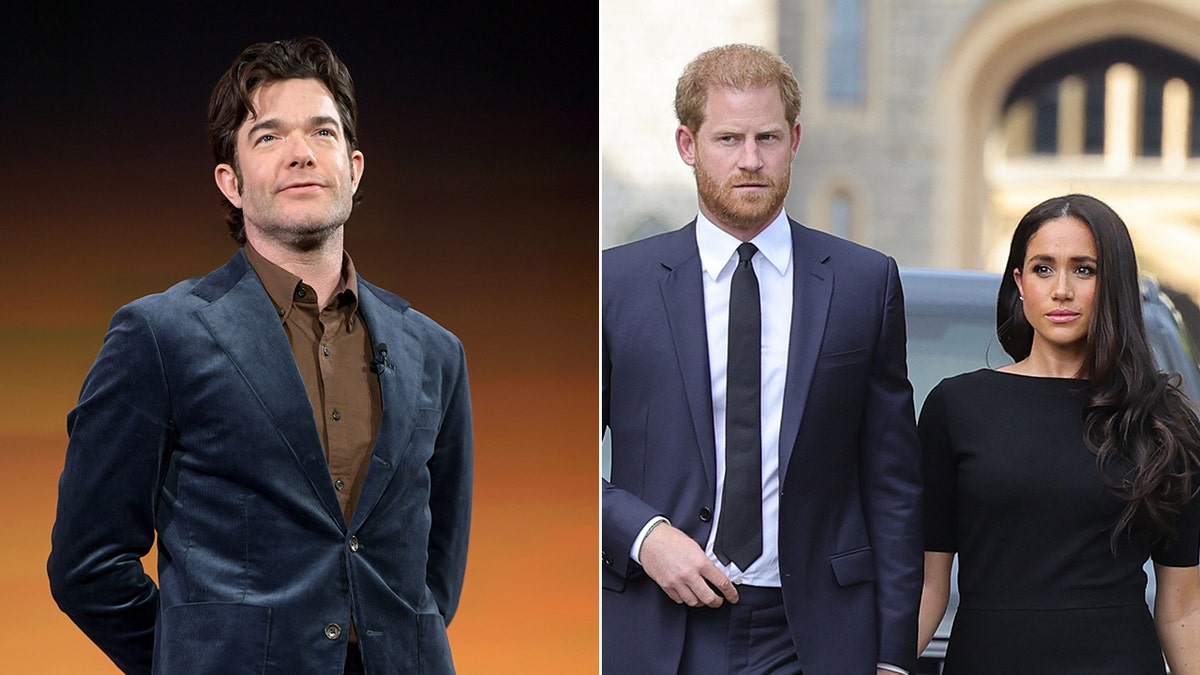
The punchline suggested that neither country seemed eager to claim ownership of the couple’s ongoing drama.
It was quick, sharp, and emblematic of a broader sentiment: fatigue.
Other comedians followed.
Josh Johnson compared Elon Musk abandoning electric cars for Twitter to a prince giving up royal life to marry an actress from a cable legal drama.
The humor wasn’t about Meghan’s career per se—it was about the scale of the perceived trade-off.
The absurdity, in their telling, was the point.

Late-night hosts also zeroed in on the couple’s post-royal ventures.
When Meghan launched her lifestyle brand and Netflix projects, critics and comics alike found material in the optics.
Jimmy Fallon joked about her repackaging pretzels into decorative bags as if unveiling groundbreaking domestic wisdom.
The humor leaned into the disconnect between palace life and Pinterest-style homemaking tips.
Meanwhile, Prince Harry’s memoir Spare provided late-night writers with weeks of material.
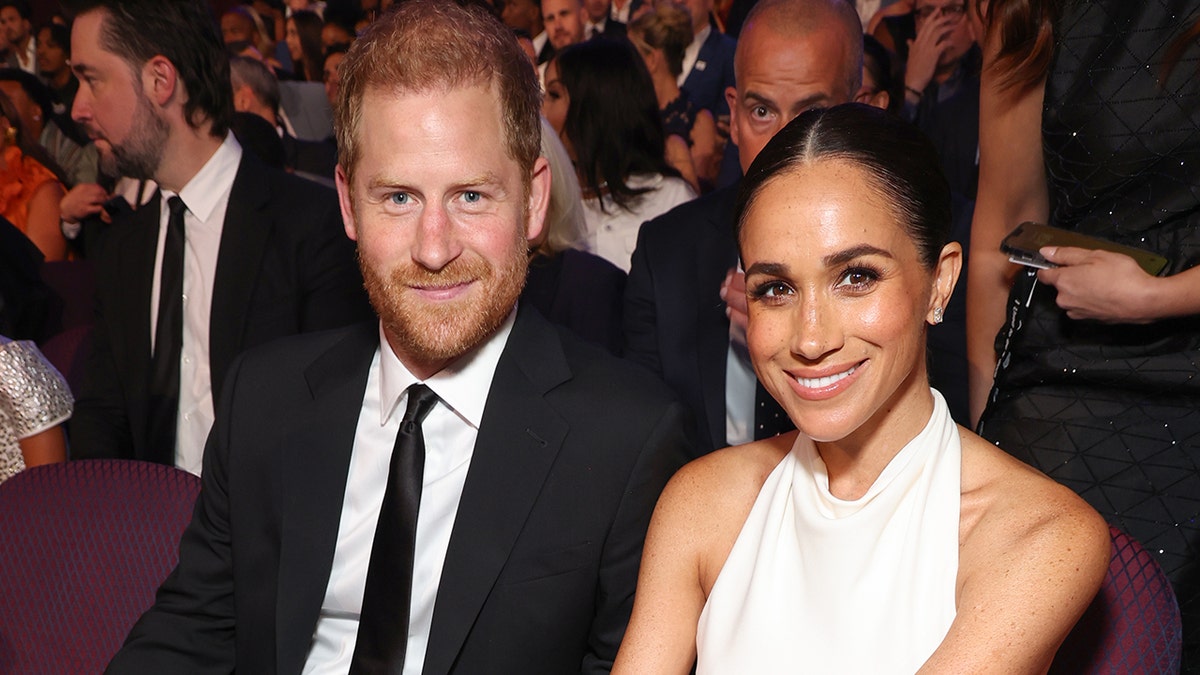
Jimmy Kimmel and Stephen Colbert highlighted the book’s intensely personal revelations, some of which struck audiences as startlingly intimate for a former senior royal.
The jokes weren’t subtle—but they reflected a broader cultural moment: the shift from sympathy to skepticism.
Award shows amplified the tone.
At the Golden Globes, host Jo Koy quipped that Harry and Meghan would still receive millions from Netflix “for doing absolutely nothing.”

In a room filled with actors and creators who hustle for years to secure deals, the remark underscored a tension between celebrity privilege and perceived productivity.
Across the Atlantic, British comedians were even less restrained.
Jimmy Carr skewered what he saw as contradictions—labeling Meghan a “lifelong feminist” who married a prince and left acting.
Others compared the Royal Family to reality television dynasties, with Harry cast as the rebellious figure who repeatedly stumbles into scandal.
The satire extended beyond stand-up.

South Park aired a now-infamous episode depicting a “worldwide privacy tour,” portraying a royal couple demanding solitude while embarking on highly public media campaigns.
Family Guy joined in.
The humor centered on one theme: the apparent paradox of seeking privacy through publicity.
Even industry executives entered the conversation.
After Spotify ended its podcast partnership with the couple, an executive publicly called them “grifters,” fueling headlines and reinforcing the narrative that their media ventures had underdelivered.
Underlying the comedy is a recurring critique: inconsistency.
Commentators like Bill Maher framed the situation not as villainy but as contradiction—promoting a book about privacy through relentless interviews, advocating climate action while using private jets, condemning media intrusion while signing major streaming deals.
To supporters, the couple is reclaiming autonomy and telling their truth.
To critics—and many comedians—they represent a study in mixed messaging.
And comedy thrives on contradiction.
It’s important to note that satire often exaggerates for effect.

Jokes are not verdicts.
They reflect cultural temperature more than legal or moral conclusions.
But when multiple comedians across different platforms converge on similar themes, it signals a broader shift in public perception.
The harshest punchlines are rarely about one individual moment.
They are about accumulated narratives.

Meghan and Harry’s journey—from royal wedding spectacle to high-profile departure, to streaming deals, memoirs, lawsuits, and lifestyle brands—has provided a steady stream of material.
The laughter echoing from comedy clubs and television studios isn’t merely mockery.
It’s commentary on celebrity culture, power, privilege, and the fine line between authenticity and branding.
Whether that tide will turn again remains to be seen.
Public opinion is cyclical.
Redemption arcs are common.
But for now, the era of velvet gloves appears to be over.
In comedy, once the protective bubble bursts, it rarely reforms.


