In the shadowed margins of American history, there are stories that do not die, no matter how often they are dismissed, ridiculed, or buried beneath official reports.
One of those stories circles relentlessly around Dallas on the night of November 21, 1963, when, according to persistent allegations, a private gathering at the estate of oil tycoon Clint Murchison Sr.
became the final waypoint before the ᴀssᴀssination of President John F. Kennedy.
Whether one views it as conspiracy or uncomfortable coincidence, the narrative refuses to loosen its grip on the imagination.
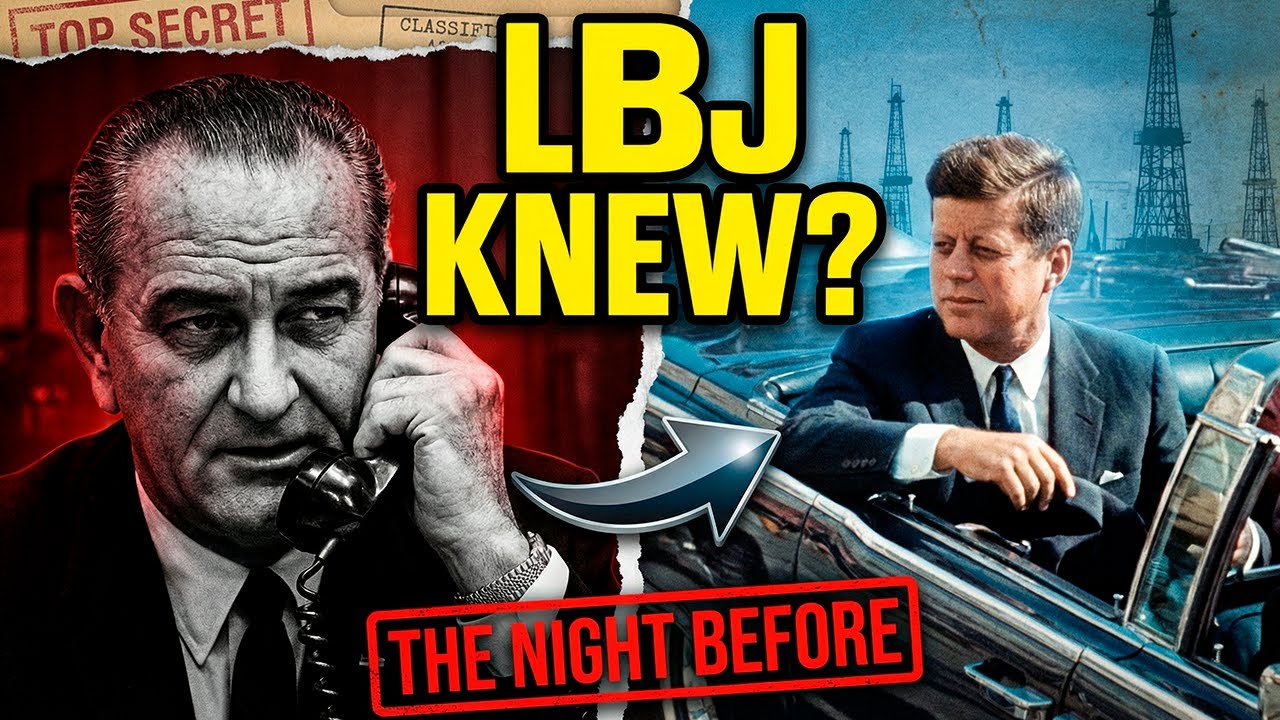
Dallas in late 1963 was not simply another American city preparing to welcome a president.
It was a cauldron of rage, ideology, and money.
Right-wing extremism flourished openly, fueled by resentment toward Kennedy’s civil rights agenda, his perceived softness on communism, and his challenge to the economic privileges of Texas oil wealth.
“Wanted for Treason” handbills circulated in public without shame.
This hostility formed the backdrop against which the alleged Murchison gathering gains its darker meaning.
At the center of this story stands Lyndon Baines Johnson, a vice president whose public smile concealed private desperation.
By November 1963, Johnson’s political career was teetering.
The Bobby Baker scandal, involving corruption, bribery, and influence peddling, was closing in fast.
Baker, once Johnson’s closest aide, had become a liability whose testimony threatened to pull the vice president into a criminal vortex.
Investigators were circling Johnson’s finances, and rumors swirled that Life magazine was preparing an exposé that could destroy him politically and legally.
This looming disaster intersected with the interests of Texas oil barons like Clint Murchison and H. L. Hunt.
These men were not merely wealthy; they were architects of a regional empire built on defense contracts, tax loopholes, and political leverage.
Kennedy’s threat to reduce the oil depletion allowance struck directly at their fortunes.
His tentative steps toward disengagement from Vietnam threatened something even larger: the flow of military-industrial money that enriched Texas corporations and entrenched their power.
The alleged gathering at Murchison’s estate, described most notably by Madeleine Brown, who claimed to be Johnson’s longtime mistress, is said to have brought these anxieties together under one roof.

Brown’s credibility has been challenged for decades, yet her account persists because it aligns too neatly with known tensions of the era to be casually ignored.
She described a night not of celebration, but of grim calculation, where the fate of Kennedy was discussed not as a moral question, but as a problem to be solved.
According to this version of events, the guest list was extraordinary.
J. Edgar Hoover, the formidable FBI director, allegedly loomed large in the background.
Hoover had his own reasons to fear the Kennedys, particularly Robert Kennedy, who was pressing for reforms that could end Hoover’s long reign.

Hoover’s relationships with Texas oil interests were well documented, as were his stays at Murchison-owned properties, paid for quietly and generously.
His alleged presence at such a gathering symbolized the fusion of federal power and private wealth.
Richard Nixon’s rumored attendance adds another layer of intrigue.
While records confirm Nixon was in Dallas that night for business reasons, whether he crossed the threshold of Murchison’s estate remains disputed.
Still, his symbolic role in the story is potent: a reminder that opposition to Kennedy transcended party lines and united those who felt marginalized by his presidency.
As the night progressed, the atmosphere was said to grow heavier.
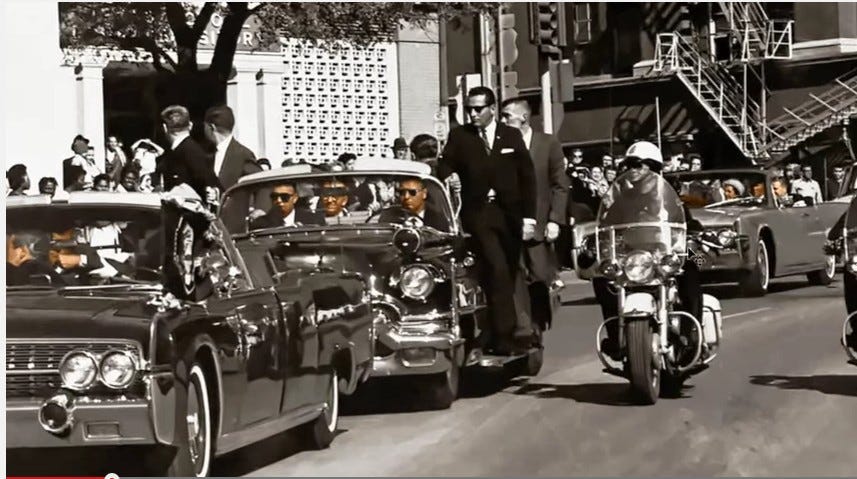
Kennedy and Jacqueline Kennedy were spending the night in Fort Worth, unaware that Dallas had become, in this narrative, a controlled environment.
The motorcade route had been altered in ways that defied standard security logic, funneling the presidential limousine into Dealey Plaza with its sharp turns and slow speeds.
Local authorities, deeply connected to the Texas power structure, approved these changes without protest.
Brown claimed that Lyndon Johnson arrived late, visibly agitated, fresh from political humiliations inflicted by the Kennedys.
Among Murchison’s circle, however, Johnson was not a subordinate.
He was their man.
The one figure capable of preserving their interests if the unthinkable occurred.
In this environment, Brown alleged, Johnson uttered a chilling line that has echoed through alternative histories ever since: that after the next day, the Kennedys would never embarrᴀss him again.
Whether spoken in anger, confidence, or something darker, the statement became, in the minds of those who believe this story, a grim prophecy.
The clock crept past midnight.
November 21 turned into November 22.
The future, whatever it held, was already in motion.
What followed is history as everyone knows it: the motorcade, the sH๏τs, the chaos, the blood on Elm Street.
Yet the aftermath is where this narrative тιԍнтens its grip.
Johnson was sworn in aboard Air Force One within hours, his ascent framed as consтιтutional necessity.
To skeptics, however, it looked like inevitability fulfilled.
Investigations into Johnson’s scandals stalled.
The Bobby Baker inquiry lost momentum.
Life magazine’s exposé vanished, replaced by solemn tributes to a fallen president.
Policy shifts came swiftly.
Kennedy’s cautious approach to Vietnam was reversed, ushering in a mᴀssive escalation that benefited defense contractors tied closely to Texas.
Billions flowed into companies with deep roots in Johnson’s political network.
To those who accept the Murchison party narrative, this was not coincidence, but payoff.
The official investigation, the Warren Commission, further deepened suspicion.
Key figures with conflicts of interest were placed in positions of authority.
The lone-gunman conclusion became doctrine, enforced with bureaucratic rigor.
Witnesses who contradicted the narrative often met strange ends, fueling the belief that silence was not accidental, but enforced.
In this telling, the Murchison party was not merely a social event.
It was the convergence point where motive, means, and opportunity aligned.
A president who threatened entrenched power was removed, and those who stood to gain the most rose seamlessly into a new era.
The tragedy in Dallas thus becomes more than an ᴀssᴀssination; it becomes a warning about what happens when wealth and authority operate beyond accountability.
Whether one believes every detail or not, the persistence of this story speaks to a deeper unease.
Americans were taught that their system is protected by laws and insтιтutions.
The Murchison party narrative suggests something far more disturbing: that in moments of crisis, real power may reside not in public office, but in private rooms, where decisions are made without votes, witnesses, or mercy.


