✨ The Code Inside Scripture That Points to Christ
For centuries, readers of the Bible have wrestled with pᴀssages that seemed confusing, disconnected, or even contradictory.
Stories appear suddenly, laws are repeated, symbols show up in unexpected places, and entire narratives seem to unfold with details that feel strangely specific.
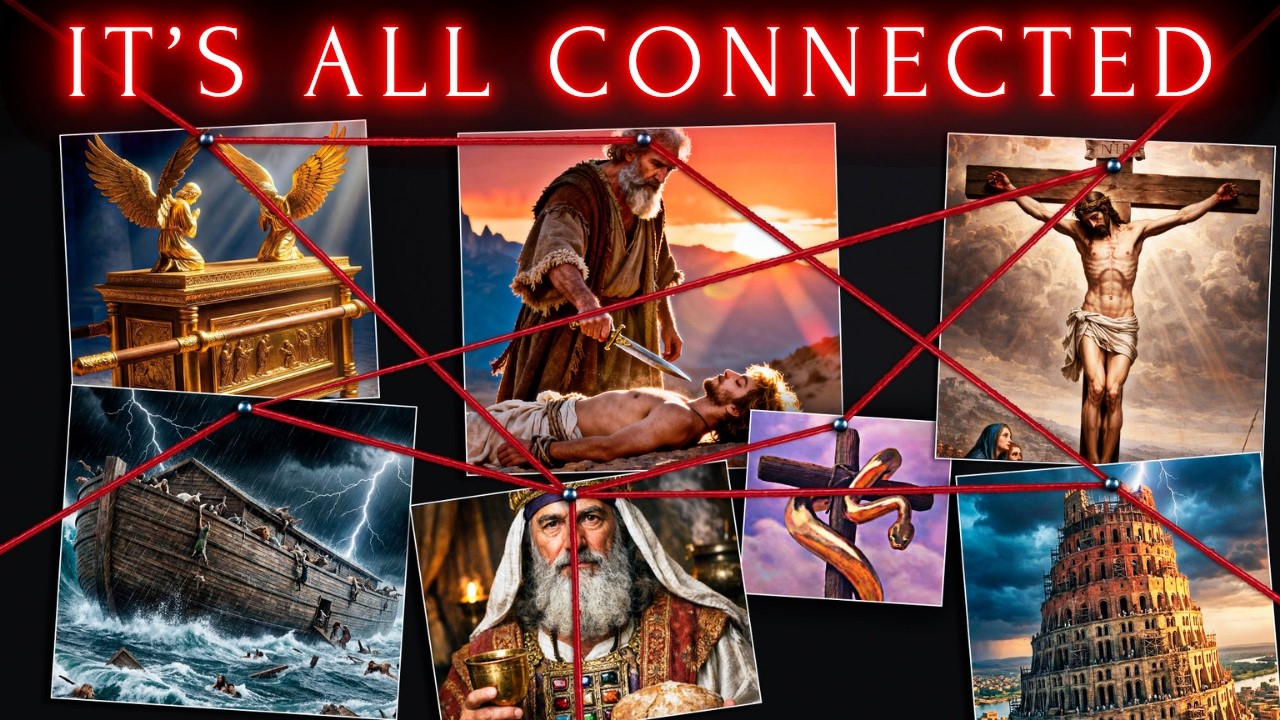
Many have asked the same question while turning the pages of Scripture.
Why are certain moments written the way they are.
Why do some events seem to mirror others, even across hundreds or thousands of years.
According to a growing number of teachers, theologians, and biblical scholars, the answer may lie in what some call the red thread of the Bible.
It is not a literal thread, but a hidden pattern running from the first pages of Genesis all the way to the final chapters of the New Testament.
This thread, they say, reveals a deeper story beneath the surface, a story that points consistently toward one central figure.
At first glance, the Bible can appear as a collection of separate books, written by different authors across centuries.
There are histories, poems, laws, prophecies, letters, and eyewitness accounts.
The settings change, the cultures shift, and the languages evolve.
Yet despite this diversity, many readers have noticed something unusual.
The themes repeat.
The patterns echo.
The symbols reappear in new forms.
One of the most discussed ideas is that many Old Testament stories function as prophetic shadows.
They are not only historical events but also symbolic previews of something greater to come.
These moments, sometimes overlooked or misunderstood, begin to form a pattern when viewed together.
Take, for example, the concept of sacrifice.
In the early chapters of Genesis, there is the story of Abel, whose offering is accepted while his brother’s is rejected.
Later, there is the dramatic account of Abraham preparing to sacrifice his son Isaac, only to have a ram provided in his place.
Still later, the Israelites are commanded to sacrifice lambs during the Pᴀssover, marking their doorposts with blood for protection.
At first, these stories may seem unrelated, scattered across different times and circumstances.
But when viewed through the lens of the red thread, they begin to form a single, connected narrative.
Each sacrifice, each symbol, each moment of subsтιтution appears to point toward a greater act of redemption in the New Testament.
Another pattern often highlighted is the idea of deliverance.
In the Old Testament, the Israelites are freed from slavery in Egypt through a series of dramatic events.
They pᴀss through the Red Sea, escape their captors, and begin a journey toward a promised land.
Centuries later, the New Testament speaks of spiritual deliverance, a freedom from sin and death through Christ.
Some scholars point out the mirrored details.
The Pᴀssover lamb without blemish.

The blood that brings protection.
The crossing from death into life.
These elements, they say, are not random.
They are part of a design woven throughout Scripture.
Legal symbolism also plays a role in this hidden thread.
Ancient laws described in the Old Testament often seem technical or confusing to modern readers.
There are rules about sacrifices, purity, debts, and inheritance.
But many theologians argue that these laws were more than cultural instructions.
They were symbolic frameworks that hinted at future events.
For instance, the idea of a kinsman redeemer appears in the story of Ruth.
A close relative steps in to rescue a vulnerable family, restoring their place and future.
In the New Testament, this concept is echoed in the portrayal of Christ as the one who redeems humanity, restoring what was lost.
Even small, technical details begin to take on new meaning when seen through this perspective.
Measurements of the tabernacle, the design of priestly garments, the sequence of feasts and festivals, all start to form a symbolic language.
What once seemed like dry instruction can suddenly appear as a coded message, pointing forward through time.
Another striking feature of the red thread concept is the repeтιтion of patterns.
Certain themes appear again and again, sometimes in surprising ways.
A younger son is chosen over an older one.
A hero emerges from unlikely circumstances.
A person descends into danger or exile, only to return with victory or blessing.
Joseph, for example, is betrayed by his brothers, sold for silver, and left for ᴅᴇᴀᴅ.
Yet he later rises to power and becomes the very one who saves them during a time of famine.
Centuries later, the New Testament tells of another figure betrayed for silver, rejected by his own people, and ultimately revealed as their savior.
These mirrored lines are not limited to individual stories.
Entire events seem to echo each other across the centuries.
The flood in Noah’s time is followed by a new beginning.
The crossing of the Red Sea marks a transition from slavery to freedom.
In the New Testament, baptism becomes a symbol of death to an old life and the start of a new one.
For many readers, discovering these patterns can be a transformative experience.
Pᴀssages that once seemed confusing or disconnected suddenly fit into a larger narrative.
The Bible begins to feel less like a collection of separate books and more like a single, unfolding story.
The idea of a red thread is also deeply emotional for believers.
It suggests that history is not random, that events across thousands of years are connected by a purposeful design.
It presents the Bible as a story of preparation, promise, and fulfillment, rather than a series of unrelated teachings.
This perspective has gained attention in recent years through books, sermons, documentaries, and online videos.
Many of these presentations aim to show viewers the hidden connections they may have missed.
They highlight repeated symbols, mirrored narratives, and subtle details that point toward a central theme.
Some viewers describe the experience as eye-opening.
Others say it changes the way they read Scripture entirely.
Stories that once seemed puzzling now appear intentional.
Laws that once felt irrelevant now carry symbolic meaning.
The entire Bible begins to look like a carefully woven tapestry.
Of course, not everyone interprets these patterns in the same way.
Scholars debate the extent to which certain connections were intentional or symbolic.
Some see them as theological reflections rather than literal predictions.
Others view them as evidence of a divine plan unfolding across centuries.
Regardless of the interpretation, the concept of a hidden thread connecting the Bible continues to capture attention.
It offers a new lens through which to view ancient texts, inviting readers to look beyond the surface and search for deeper meaning.
The fascination lies in the idea that nothing in Scripture is accidental.
Every symbol, every repeated phrase, every technical instruction may carry significance.
What appears confusing at first may reveal a profound connection when placed within the larger narrative.
For those exploring this perspective, the Bible becomes less of a puzzle and more of a story waiting to be discovered.
Each page holds clues.
Each event echoes another.
And at the center of it all is a figure many believe the entire narrative points toward.
Whether one approaches the Bible as a sacred text, a historical document, or a literary masterpiece, the idea of a unifying thread offers a compelling way to read it.
It transforms the experience from simply following separate stories to tracing a single, continuous line across time.
In the end, the mystery of the red thread is not just about symbolism or theology.
It is about the possibility that the Bible tells one grand story, woven together across centuries, cultures, and authors.
A story filled with patterns, shadows, promises, and fulfillment.
And for many readers, once that thread becomes visible, it is impossible to unsee.
The connections begin to appear everywhere, turning familiar pᴀssages into new revelations and transforming the way Scripture is understood forever.


