Why the Burj Khalifa Depends on Electricity to Stay Standing
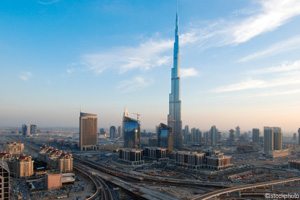
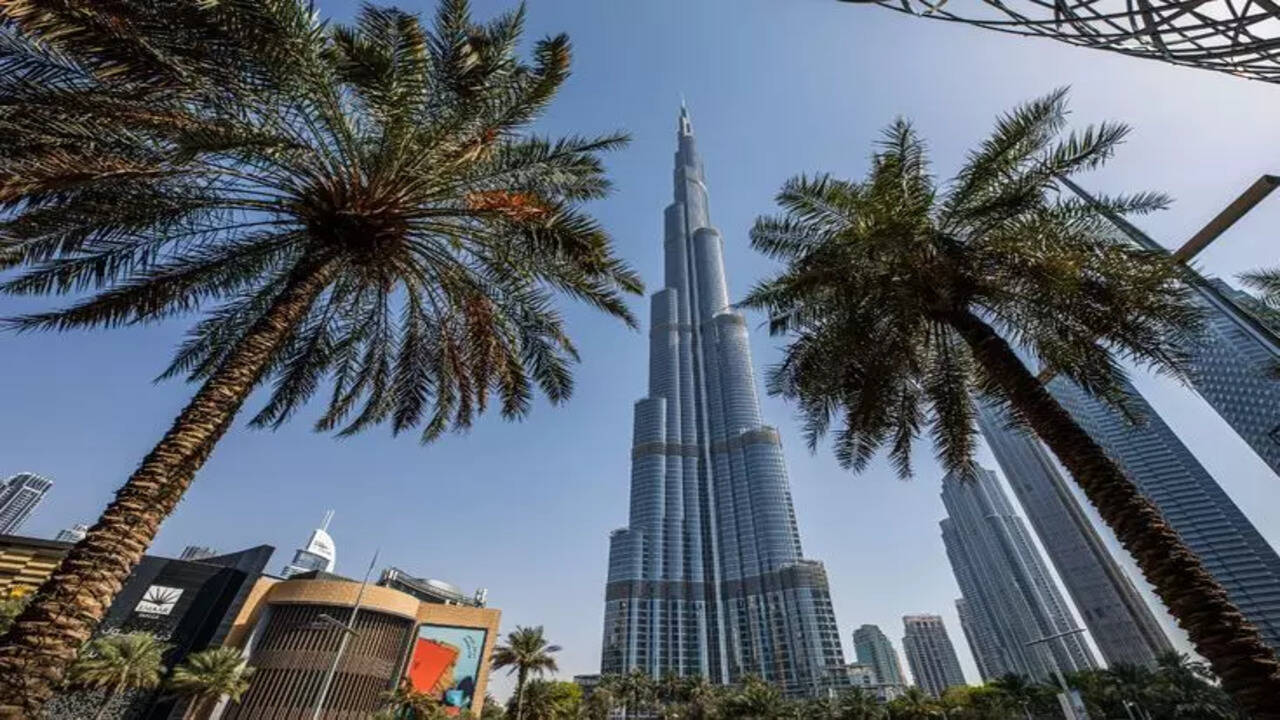
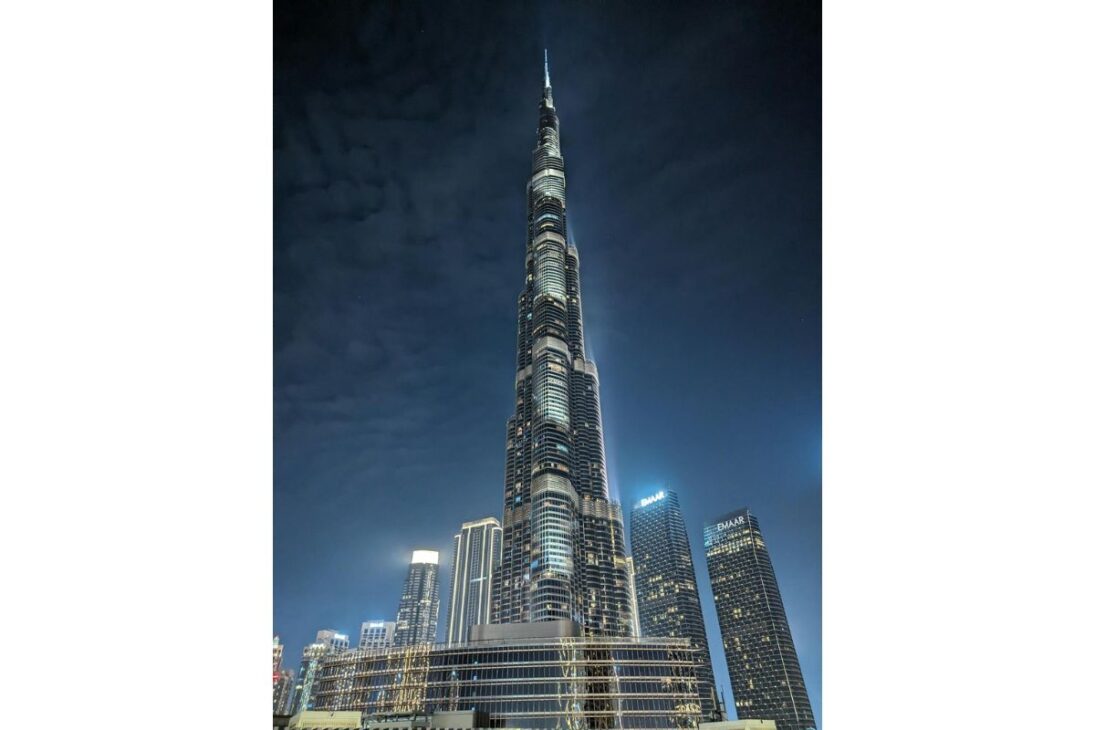
At 828 meters tall, the Burj Khalifa dominates the Dubai skyline like a futuristic needle piercing the sky. Completed in 2010 at a cost of roughly $1.5 billion, it remains the tallest structure ever built by humans. Its presence is a symbol of wealth, ambition, and engineering mastery.
But what makes the Burj Khalifa remarkable is not just its height. It’s what lies beneath it.
Unlike most supertall skyscrapers built on solid bedrock, the Burj Khalifa stands on sand — specifically, sedimentary deposits composed of ancient seashell fragments known as calcisilтιтe. Engineers drilled more than 140 meters into the ground searching for stable rock and found none suitable for conventional anchoring.

That meant they had to rethink everything.
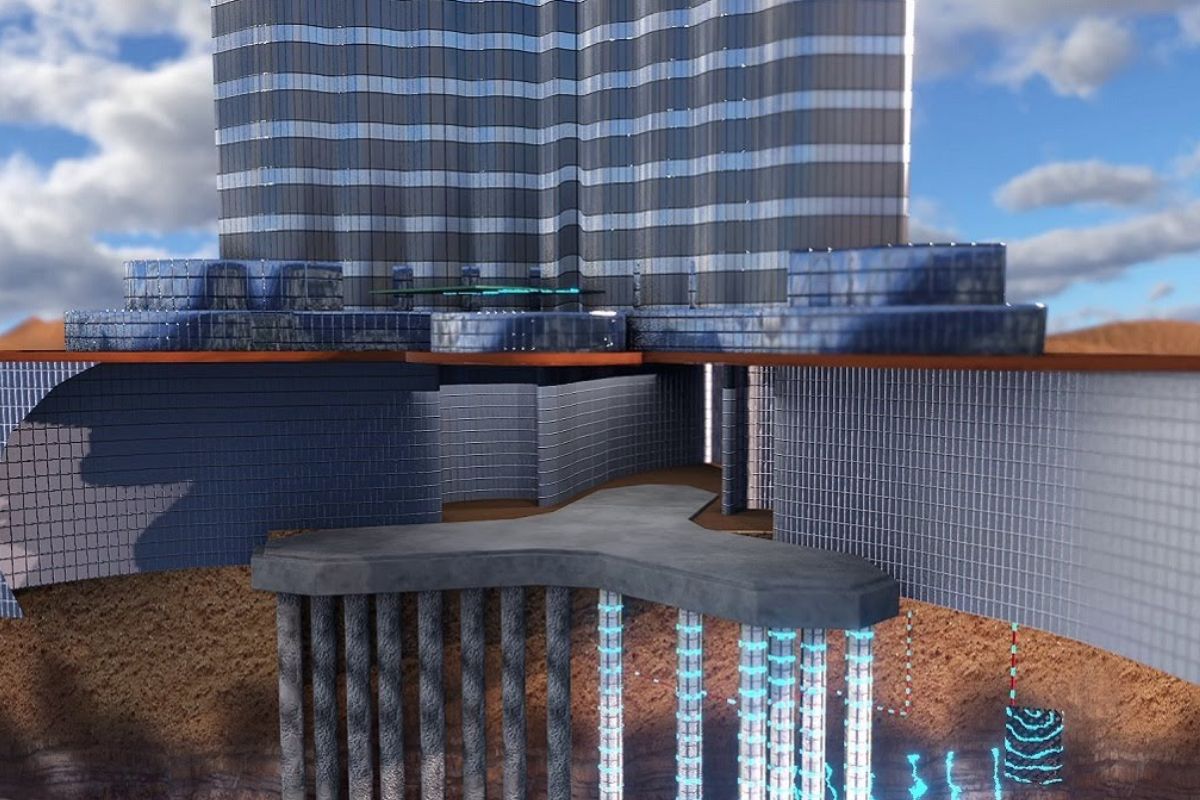
Instead of anchoring the tower to bedrock, engineers relied on friction. They drove 192 reinforced concrete piles roughly 50 meters deep into the weak sedimentary soil. On top of these piles, they poured a mᴀssive 3.7-meter-thick concrete raft foundation.
The building doesn’t “sit” on rock. It is held in place by the friction between the concrete piles and the surrounding soil — similar to how a deeply embedded fence post resists being pulled out of sand. The deeper the piles, the greater the resistance.
But this solution introduced a dangerous complication.
Dubai’s groundwater is highly saline — even saltier than seawater in some areas due to chloride concentrations from the nearby Persian Gulf. When saltwater comes into contact with steel reinforcement bars inside concrete, corrosion begins.
And corrosion inside a foundation is catastrophic.
Over time, rust weakens the steel, cracks the concrete, and reduces structural integrity. For a building weighing approximately 450,000 tons, even gradual weakening could have severe long-term consequences.
The solution? Turn the foundation into an electrochemical defense system.
Engineers installed a cathodic protection system. In this setup, the steel reinforcement bars act as the cathode, while a тιтanium mesh embedded in the concrete serves as the anode. A constant electrical current runs between them 24 hours a day, preventing oxidation — and therefore rust — from forming on the steel.
As long as electricity flows, corrosion is suppressed.
If power stops for an extended period, the electrochemical protection ceases. Corrosion begins. It would not trigger an immediate collapse, but it would start a slow degradation process that compromises the structure over time.
That is why the Burj Khalifa’s foundation relies on continuous electrical power — with multiple redundant backup systems in place. In essence, the tallest building on Earth depends on electrochemistry to survive.
The foundation is only part of the story. At nearly half a mile tall, wind becomes one of the building’s greatest threats.
Tall, flat-sided structures are vulnerable to a phenomenon called vortex shedding. As wind flows past a building, it creates alternating low-pressure zones that cause oscillations. If these oscillations align with the building’s natural frequency, resonance occurs — amplifying movement dramatically.
To prevent this, engineers conducted more than 40 wind tunnel tests. Their solution was surprisingly elegant: disrupt the wind’s rhythm.
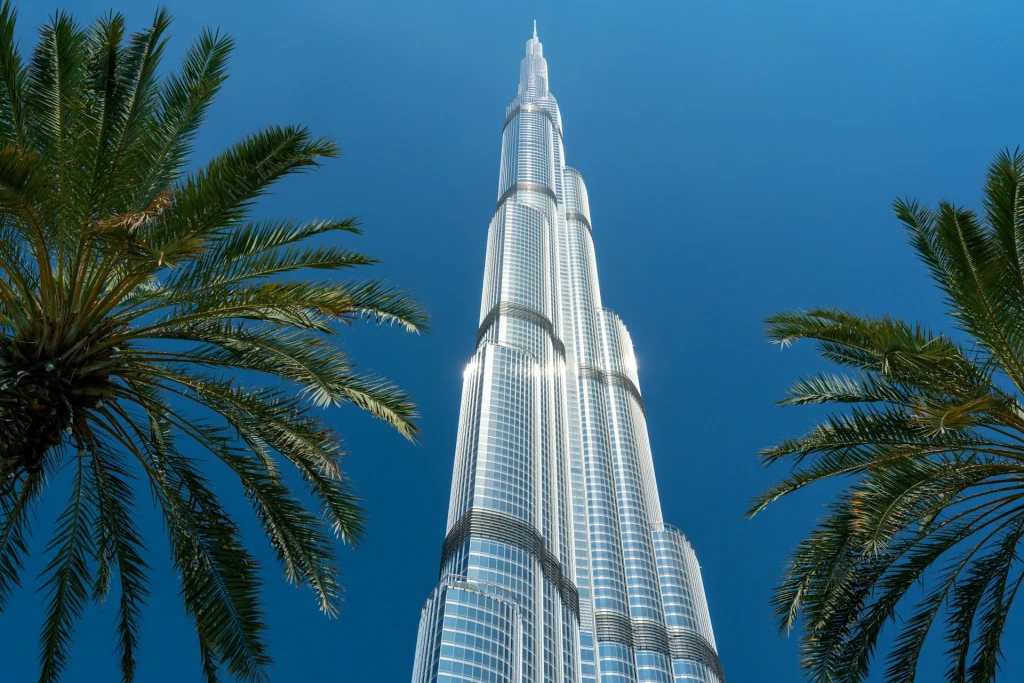
The Burj Khalifa features 27 tiered setbacks that spiral upward. Each level has a slightly different cross-sectional shape. As wind encounters the structure, the changing geometry prevents vortices from synchronizing. The building essentially “confuses” the wind.

Even so, the tower sways up to 1.5–2 meters at the top during strong storms. Additionally, daily desert heat causes thermal expansion and contraction of up to 36 centimeters. The façade panels are mounted on telescopic brackets, plumbing systems use flexible joints, and elevators incorporate slack cables to absorb motion.
The building is not rigid — it is designed to flex.
Constructing the tower required overcoming another extreme challenge: pumping concrete more than 600 meters vertically in desert heat exceeding 45°C.
Concrete begins curing the moment it is mixed. In high temperatures, it sets even faster. Engineers solved this by mixing the concrete with ice and pouring it exclusively at night when temperatures were lower.
They used ultra-high-pressure pumps capable of operating at nearly 200 bars — similar to pressures found deep in ocean trenches. In 2007, they set a world record by pumping concrete 606 meters upward. The material took roughly 40 minutes to reach the top.
If a pump failed mid-transfer, concrete could solidify inside the pipes, causing mᴀssive delays and financial losses.
The project ultimately used 330,000 cubic meters of high-performance concrete and 55,000 tons of steel reinforcement — ᴀssembled with millimeter precision.
The tower’s 200-meter steel spire was not lifted into place by crane. Instead, it was ᴀssembled inside the building around level 156 and hydraulically jacked upward in sections. This method required extraordinary precision — a slight misalignment could have jammed the structure mid-installation.
The technique echoed the construction of the Chrysler Building’s spire in 1930, but on a far larger scale and at far greater height.
The Burj Khalifa expands daily. It sways in storms. It stands on friction in sediment rather than bedrock. And its foundation depends on uninterrupted electricity to prevent corrosion from Dubai’s saline groundwater.
As an engineering achievement, it is extraordinary — proof that human ingenuity can overcome extreme environmental limitations.
But its existence also highlights a profound reality: modern megastructures often rely not just on concrete and steel, but on continuous systems — power, monitoring, and maintenance — to remain safe.
The Burj Khalifa is not merely a building.
It is a living system.
And without electricity, the silent countdown beneath it would eventually begin.


