Bishop Patrick Wooden Breaks His Silence on Viral Obama Meme
Bishop Patrick Wooden did not plan to address the issue.
He was walking into church, glancing at his phone, when a text message caught his attention. At first glance, he saw an image of the Obamas and wondered what they were laughing at. A closer look revealed it was not a pH๏τograph but a meme—one that depicted the former president and first lady in a racially demeaning way. The image had reportedly circulated on Truth Social.
His immediate reaction was strong.

“This is reprehensible,” he said. “There is no place for this.”
Wooden made clear that, in his view, portraying any human being—especially Black Americans—in a way historically ᴀssociated with primates carries painful racial overtones. He referenced the long-standing history of dehumanizing imagery used against Black people in America and stated plainly that such comparisons are neither humorous nor acceptable.
“It is not funny,” he emphasized. “It is incompatible with human dignity.”
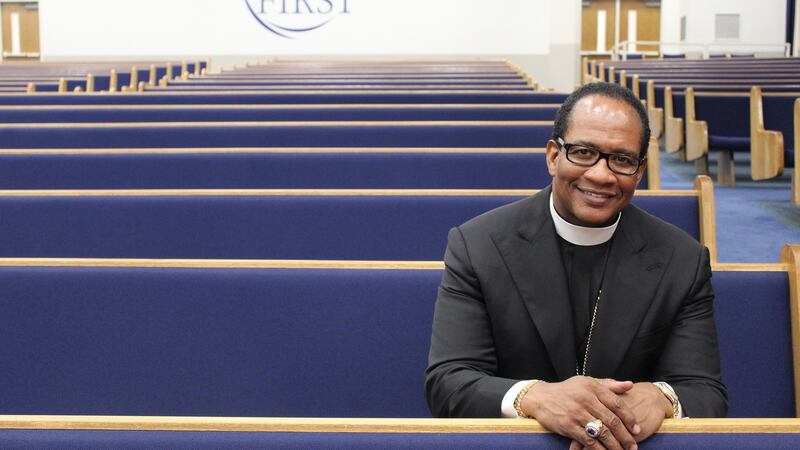
At the same time, Bishop Wooden acknowledged something deeply personal. He admitted that he himself has been the subject of mocking memes—including one that depicted him in a dress. He recalled being called names such as “pulpit pimp” and “wolf in sheep’s clothing.” In those instances, he said, he did not receive widespread support or outrage on his behalf.
Yet he made a distinction.
While he personally laughed off the meme made about him, he said the Obama image was different because of the historical racial implications. He expressed hope that the Obamas themselves might take it in stride, but he did not excuse the content.
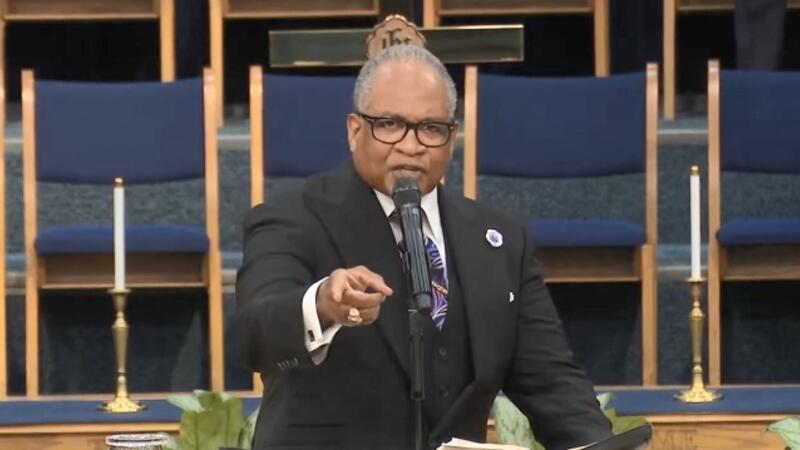
Later, he learned that the meme was part of a broader satirical video targeting several political figures, including Democrats and even former President Donald Trump. Still, Wooden maintained that context did not erase the racial sensitivity surrounding such imagery.
“If you’re going to do satire,” he suggested, “choose something without racial overtones.”
His remarks then shifted toward a broader principle—consistency.

Bishop Wooden read a formal statement issued by the presiding bishop of the Church of God in Christ (COGIC), Bishop J. Drew Sheard. The statement condemned the image as racially demeaning and reaffirmed biblical teachings about human dignity, referencing Genesis 1:27 and Proverbs 18:21. It emphasized that leadership requires moral clarity and accountability, and that allegiance to Christ must supersede political loyalty.
Wooden said he agreed with the statement “100 percent.”
However, he added a caution: the same standards must be applied universally. He argued that Christians should reject dehumanizing rhetoric in all forms—whether aimed at Black leaders, political opponents, ICE agents, or any other group.

“We should oppose racism in every way,” he said. “But let’s apply the principles everywhere.”
He warned against allowing political allegiance to override biblical conviction. For him, the greater danger lies in selective outrage—condemning one offense while ignoring others.
Throughout his message, Bishop Wooden reiterated that his loyalty is not to any political party. He emphasized that he is not paid or controlled by political interests and strives to “call balls and strikes” as he sees them.

He also pivoted to what he considers equally pressing moral concerns, particularly abortion. In his view, public outrage over offensive imagery should be matched by outrage over what he calls “the slaughter of the unborn.”
“Both things can be true,” he said. One can condemn racist imagery and also speak forcefully about other moral issues.
In closing, Wooden urged believers to remain grounded in Christ above politics. He called for prayer for the nation, for church leadership, and for wisdom in public discourse.
The underlying message was clear: dignity matters. Words matter. Images matter. But so does consistency.
In a cultural climate where outrage often follows partisan lines, Bishop Wooden’s response sought to navigate a middle path—condemning what he saw as racially offensive while warning against hypocrisy and political tribalism.
For him, the issue wasn’t simply about a meme. It was about whether Christians will apply biblical principles evenly—without favoritism, without fear, and without surrendering moral clarity to party loyalty.


