They Opened a Cave Sealed for 40,000 Years — What Was Inside Changes Everything We Know
On the southern edge of Europe, where the Mediterranean Sea meets the Atlantic Ocean, the Rock of Gibraltar rises in sheer limestone cliffs.
Carved by waves and layered with over 120,000 years of occupation, the Gorham’s Cave complex has long been one of the most important archaeological sites in the world.
But nothing in its decades of excavation prepared researchers for what lay hidden behind a dense plug of ancient sand deep inside Vanguard Cave.
For nine years, archaeologists from the Gibraltar National Museum, led by Professor Clive Finlayson, carefully removed sediment from the cave’s interior.
Then they hit something unexpected: a compacted wall of sand sealing off a pᴀssage.

This was not fallen rock or random debris.
It was an intact geological barrier that had not shifted in tens of thousands of years.
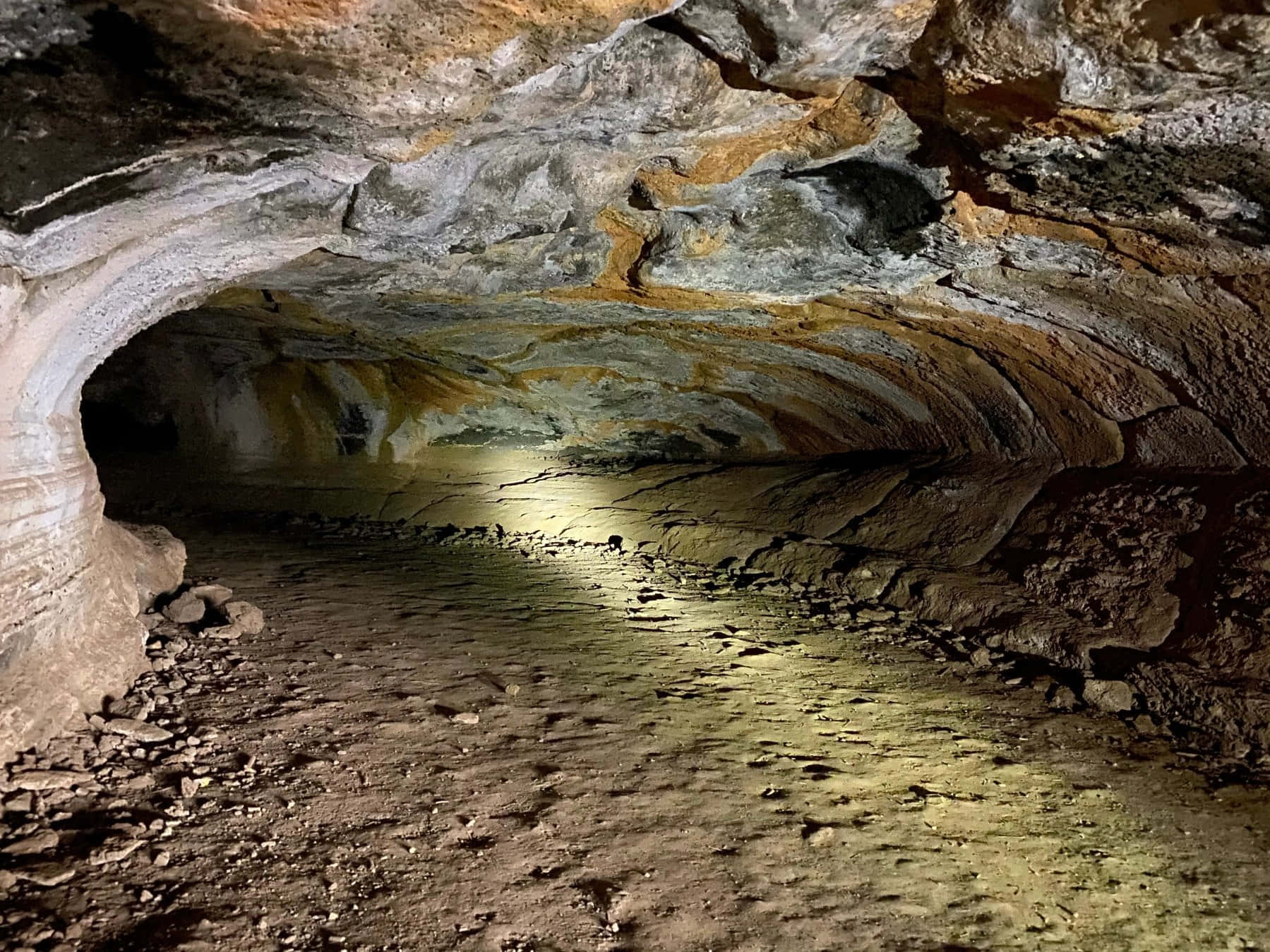
When the team finally breached it, they entered a 13-meter chamber that had been sealed in total darkness for at least 40,000 years—since the final days of the Neanderthals.
What they found inside was not treasure in the traditional sense.

It was something far more unsettling: evidence of intelligence, planning, and symbolism from a species long dismissed as primitive.
Among the first discoveries were the bones of lynx, spotted hyena, and griffon vulture—predators that do not naturally gather in the same confined space.
Their presence deep within an elevated chamber suggested deliberate transport.
Someone—or something—had carried remains into that sealed room.
Then came the detail that changed everything.

At the very back of the chamber, roughly 20 meters from the beach outside, archaeologists found a large whelk shell—a sea snail native to the Mediterranean shoreline.
Whelks do not crawl into cliffside chambers.
They do not travel inland.
The shell had been carried there.
Because of the chamber’s age, there is only one possible explanation: a Neanderthal placed it there more than 40,000 years ago.

That single shell is one of the most quietly revolutionary finds in modern archaeology.
It proves that Neanderthals were transporting marine resources into protected interior spaces.
They were not merely surviving.
They were organizing.
For most of the 20th century, Neanderthals were portrayed as dim-witted, brutish, and cognitively inferior to Homo sapiens.
The dominant narrative was simple: modern humans arrived in Europe around 40,000 years ago, and the “smarter” species replaced the weaker one.
But Gorham’s Cave has been dismantling that narrative piece by piece.
Beneath the sealed chamber, researchers uncovered evidence of a 60,000-year-old engineered hearth designed not for cooking—but for manufacturing glue.
The structure was carefully built to create a low-oxygen environment necessary for heating plant material through pyrolysis, extracting sticky resin to produce tar.
This tar was used as adhesive to haft stone tools onto wooden shafts, creating composite hunting weapons.
This was not accidental discovery.
Controlled adhesive production requires precise temperature management and understanding of materials.
It demands experimentation, shared knowledge, and teaching across generations.
It is chemistry.
Neanderthals in Gibraltar adapted this technology to local Mediterranean plants, using rockrose shrubs rather than birch bark.
That level of regional adaptation indicates cultural flexibility and environmental intelligence.
But the most explosive discovery lies deeper within the cave complex.
In Gorham’s Cave itself, researchers identified a deeply incised cross-hatched engraving carved directly into bedrock.
Dating back at least 39,000 years—before modern humans reached the region—the pattern was created with at least 54 deliberate strokes of a pointed stone tool.
This was no accidental marking.
Experimental replication demonstrated intentional, repeated carving in a sustained act of creation.
For decades, abstract cave art was considered the defining boundary between Homo sapiens and all other hominins.
Symbolic expression—art for art’s sake—was believed to be uniquely human.
The engraving in Gibraltar destroys that boundary.
Neanderthals were capable of abstract thought.
They were harvesting mussels, fish, dolphins, and seals from a coastal plain that once stretched kilometers beyond today’s shoreline.
They processed food in structured domestic spaces.
They used feathers, possibly for decoration.
They engineered adhesives.
They carved symbols.
They adapted while their environment changed dramatically.
During the Ice Age, sea levels were far lower, exposing a vast coastal landscape.
Over generations, Neanderthals watched that land slowly disappear beneath rising waters—an ancient climate shift reshaping their world.
Even the timeline of their extinction is being questioned.
Evidence from Gibraltar suggests Neanderthals may have survived there until between 33,000 and 24,000 years ago—potentially thousands of years after their presumed disappearance elsewhere in Europe.
If true, this means Neanderthals and modern humans may have coexisted longer than previously thought—possibly within sight of each other across the narrow Strait of Gibraltar.
The implications are profound.
If Neanderthals possessed symbolic behavior, technological sophistication, environmental adaptation, and social knowledge transmission, then their disappearance cannot be explained by intellectual inferiority.
They were not evolutionary failures.
They were a different branch of humanity.
The sealed chamber of Vanguard Cave represents more than an archaeological breakthrough.
It is a mirror.
It forces us to reconsider what it means to be human—and how easily we constructed a story that placed ourselves alone at the pinnacle of cognition.
Excavations are ongoing.
Beneath the chamber floor lie deeper sediment layers stretching back tens of thousands of years.
Each new fragment could further blur the line between “us” and “them.”
For over a century, we defined ourselves by what we believed Neanderthals could not do.
Now, evidence from a cave sealed for 40,000 years suggests the truth may be far more humbling.
They were not primitive.
They were human.


