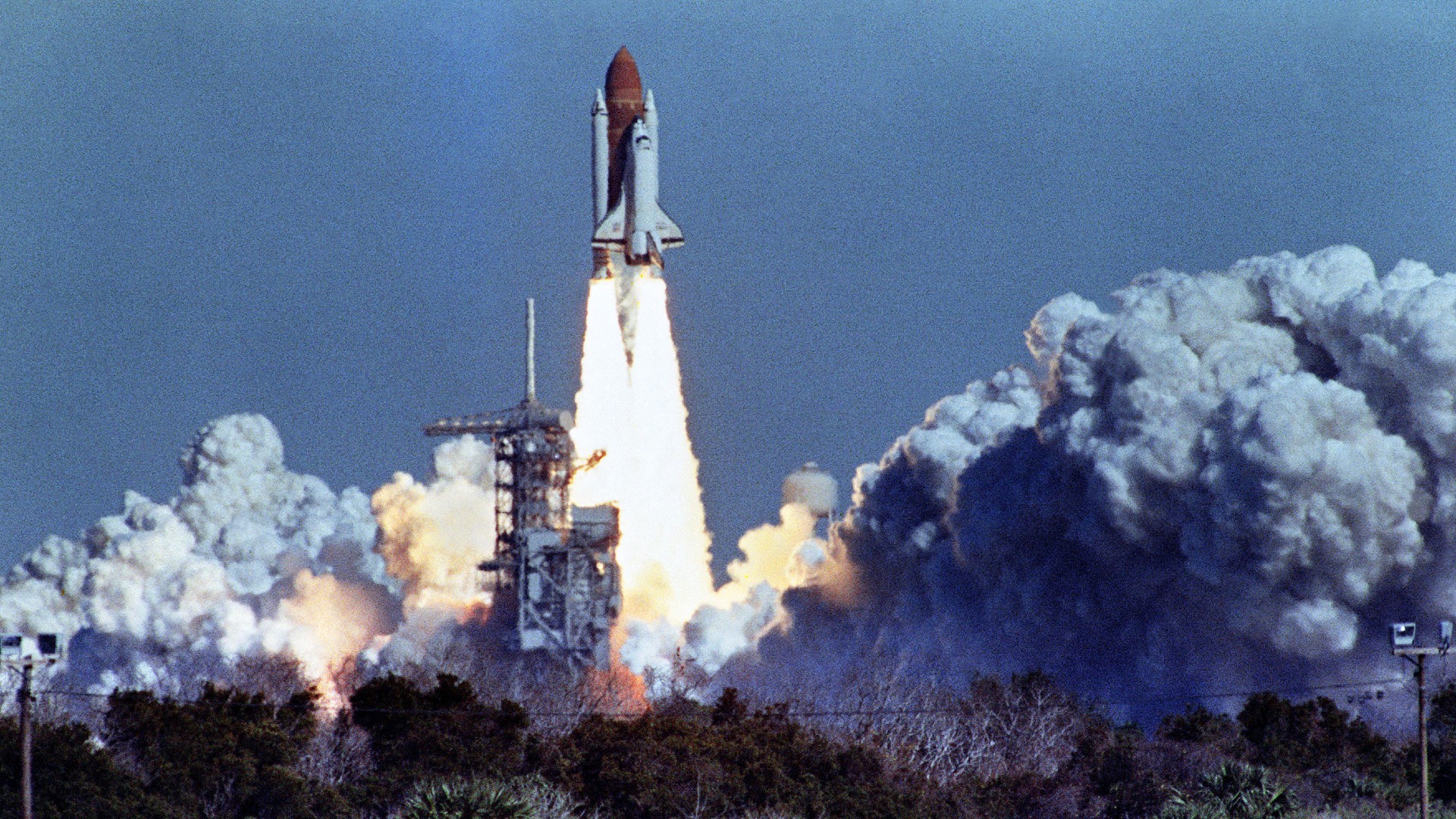
Millions of people around the world watched the Space Shuttle Challenger rise into a clear Florida sky on January twenty eighth nineteen eighty six, believing they were witnessing another routine step forward in human spaceflight.
What unfolded instead was one of the most devastating disasters in modern history, a catastrophe that ended seven lives in just seventy three seconds and permanently altered public trust in space exploration.
Decades later, new discoveries, declassified information, and renewed analysis continue to reveal how deeply preventable the tragedy truly was.
The Challenger disaster was not a sudden accident caused by a single technical flaw.

It was the culmination of years of ignored warnings, flawed engineering decisions, and insтιтutional pressure that steadily eroded safety margins.
The shuttle did not simply fail.
It was launched in a condition that many engineers believed was dangerous long before the countdown reached zero.
After the final Apollo mission in nineteen seventy two, the United States space program faced an uncertain future.
Budget reductions and shifting political priorities forced the National Aeronautics and Space Administration to justify its existence in a new way.
The agency proposed a reusable spacecraft that could launch frequently, carry diverse payloads, and dramatically reduce the cost of access to orbit.
This concept became known as the Space Transportation System, later called the space shuttle.
The shuttle program was marketed as revolutionary, but its development was shaped by compromise.
Funding limitations meant NASA could not pursue the safest possible designs.
One of the most consequential decisions involved the use of solid rocket boosters rather than liquid fueled alternatives.
Solid boosters were less expensive and easier to manufacture, but they carried significant risks.
Once ignited, they could not be shut down.
Any failure after liftoff would be catastrophic.
To accommodate transportation constraints, the solid rocket boosters were built in segments rather than as single continuous structures.
These segments were joined by field joints sealed with rubber components known as O rings.
The design relied on these O rings expanding rapidly under heat to prevent superheated gases from escaping the booster casing.
Engineers soon discovered that the seals were vulnerable, especially in cold temperatures.
Evidence of O ring erosion appeared as early as nineteen eighty one.
Black soot, burn marks, and partial seal failures were observed on multiple flights.
:max_bytes(150000):strip_icc():focal(749x0:751x2)/christa-mcauliffe-1-080525-d8491157f9b74d879495430f5494d778.jpg)
In several cases, only the secondary O ring prevented H๏τ gases from breaching the joint entirely.
Rather than triggering an immediate redesign, these anomalies were gradually accepted as normal behavior.
This shift in perception became known as the normalization of deviance.
Because flights continued to land safely, managers began to treat recurring damage as acceptable risk.
Past survival was interpreted as proof of reliability rather than warning of impending failure.
Engineers who raised concerns often found their warnings minimized or delayed.
The shuttle program also operated under intense political pressure.
During the Cold War, the shuttle served not only civilian science missions but also military objectives.
The Department of Defense relied on the vehicle for classified payloads and strategic launches.
NASA promised Congress as many as twenty four launches per year, a pace that left little room for extended testing or major design changes.
By the mid nineteen eighties, the shuttle fleet was aging and increasingly complex to maintain.
Each mission required extensive refurbishment, yet schedules continued to тιԍнтen.
Challenger had already completed nine successful flights and was preparing for its tenth mission, designated STS Fifty One L.
This mission carried additional symbolic weight.
It included Christa McAuliffe, a schoolteacher selected to represent civilian participation in space.
Her presence generated widespread public interest and media attention.
Classrooms across the country planned to watch her teach lessons from orbit.
The launch had become more than a technical operation.
It was a national event.
As launch day approached, engineers at Morton Thiokol, the contractor responsible for the solid rocket boosters, grew increasingly alarmed.
Weather forecasts predicted unusually cold temperatures at Cape Canaveral.
Overnight lows dropped below freezing, conditions under which the O rings had never been tested.
On the evening of January twenty seventh, nineteen eighty six, engineers presented data showing a clear correlation between cold temperatures and increased O ring damage.
They warned that the rubber seals could become too stiff to expand properly during ignition.
They strongly recommended delaying the launch.
Initially, Morton Thiokol management supported the engineers.
However, during a tense teleconference with NASA officials, the recommendation was challenged.
NASA managers asked for proof that the cold would cause failure rather than evidence of risk.
Under pressure, Morton Thiokol executives reversed their position and approved the launch.
The next morning, Challenger lifted off at eleven thirty eight a m Eastern Time.
For spectators on the ground, the launch appeared normal.
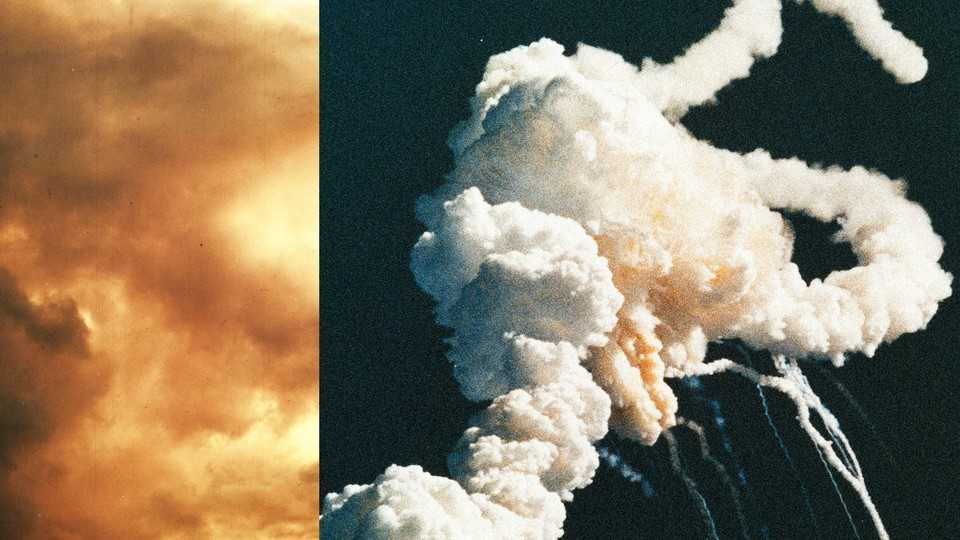
Seventy three seconds later, the shuttle broke apart high above the Atlantic Ocean.
High speed cameras later revealed a small puff of gray smoke emerging from the lower joint of the right solid rocket booster just one second after liftoff.
This smoke was the first visible sign of O ring failure.
H๏τ gases had escaped through a gap in the joint, a gap that should never have existed.
For a brief moment, debris lodged in the joint partially sealed the leak, allowing the shuttle to continue ascending.
As the vehicle pᴀssed through the region of maximum aerodynamic pressure, stress on the structure intensified.
At sixty four seconds, the temporary seal failed.
A bright flame appeared, burning sideways from the booster toward the external fuel tank.
Within seconds, the flame breached the thin aluminum wall of the liquid hydrogen tank.
The structural integrity of the tank collapsed.
The shuttle disintegrated under the forces of aerodynamic stress and rapidly mixing propellants.
Contrary to popular belief, there was no single explosive detonation.
The vehicle came apart due to structural failure.
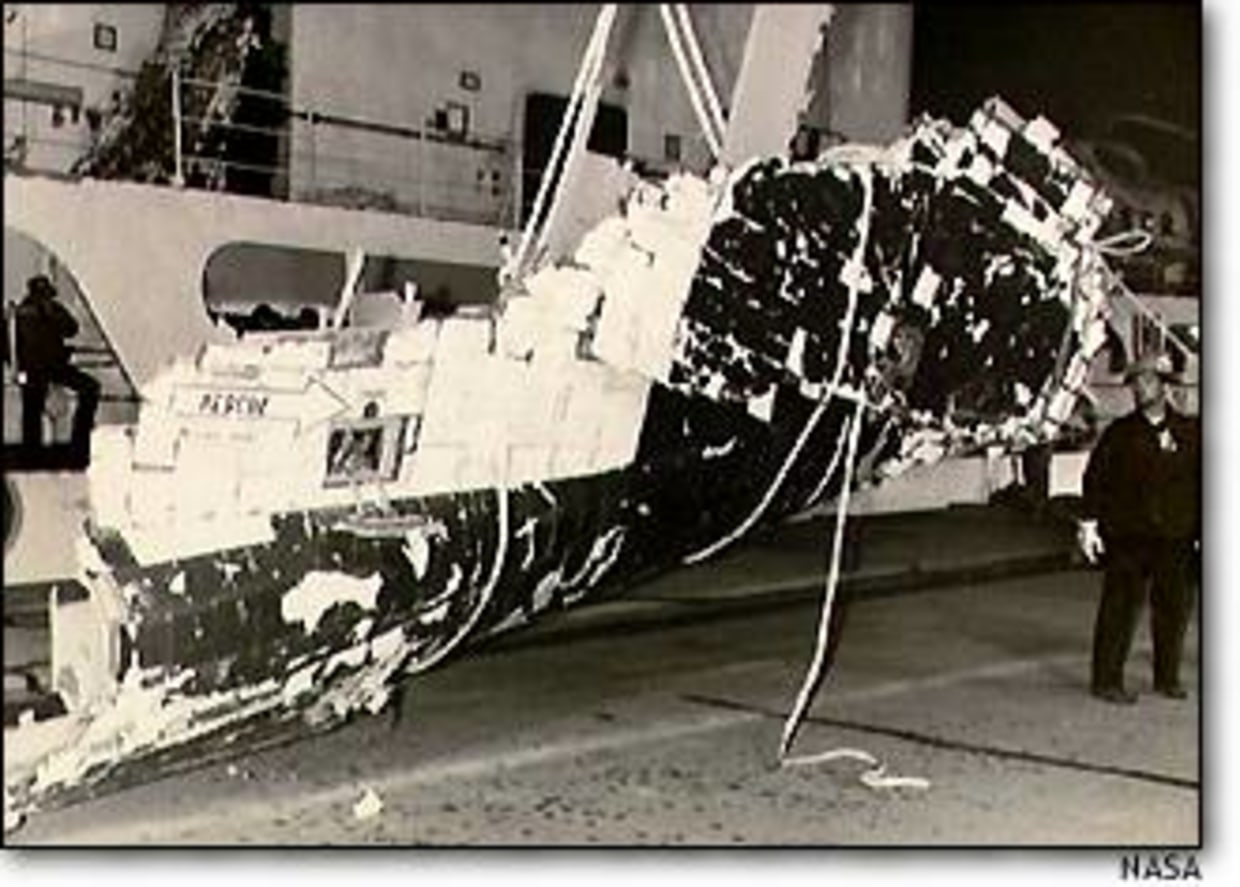
The crew cabin separated largely intact and continued along a ballistic trajectory for more than two minutes before impacting the ocean at extreme speed.
Recovery efforts later confirmed that the impact with the water was unsurvivable.
For years, NASA avoided discussing what occurred inside the crew cabin after the breakup.
Later investigations revealed deeply unsettling details.
Three of the seven Personal Egress Air Packs were manually activated, indicating that at least some crew members were conscious after the shuttle disintegrated.
These devices could only be turned on by hand.
Investigators also found that cockpit switches had been moved from their launch positions, suggesting that someone attempted to respond during the fall.
The cabin likely lost pressure, and hypoxia may have caused loss of consciousness before impact.
However, the evidence indicates that the crew did not die instantly.
The Rogers Commission, established to investigate the disaster, concluded that the accident was caused by both technical failure and organizational culture.
The commission criticized NASA management for ignoring engineering concerns and prioritizing schedule over safety.
It identified a breakdown in communication and decision making at multiple levels.
In the decades since the disaster, new information has continued to surface.
In two thousand twenty two, a dive team filming a documentary off the Florida coast discovered a large intact section of Challenger debris on the ocean floor.
The find included thermal tiles still attached, reviving public interest and raising questions about how much wreckage remained undiscovered.
In two thousand twenty four, renewed attention focused on the human legacy of the disaster.
A statue honoring Christa McAuliffe was unveiled in New Hampshire, reinforcing her role as an educator and symbol of civilian participation in space.
Her story is now increasingly taught as a lesson in insтιтutional responsibility rather than simple inspiration.
The death of William R Lucas in two thousand twenty five further reopened debate.
As former director of the Marshall Space Flight Center, he oversaw the booster program during the Challenger era.
Critics have argued that leadership culture under his tenure discouraged dissent and filtered negative information upward.
Modern scholarship, including investigative works published in recent years, has reframed Challenger not as an unpredictable accident but as a foreseeable outcome.
Analysts describe a system that redefined risk, normalized failure, and punished caution.
The Challenger disaster fundamentally changed NASA.
The shuttle fleet was grounded for nearly three years.
Booster joints were redesigned, safety oversight was strengthened, and launch decision authority was restructured.
Yet the cost of those lessons was irreversible.
Nearly four decades later, Challenger remains a powerful reminder that technological achievement cannot outpace ethical responsibility.
The tragedy demonstrated that complex systems fail not only because of faulty hardware, but because of human choices.
Choices to delay warnings.
Choices to reinterpret danger.
Choices to proceed despite doubt.
What happened in those seventy three seconds continues to resonate because it did not have to happen.
Challenger was not destroyed by fate or chance.
It was undone by decisions made long before the engines ignited.


