John F. Kennedy’s ᴀssᴀssination remains the central nerve of America’s modern political trauma, a moment so dissected that even its smallest details still provoke arguments generations later. Dealey Plaza, the Zapruder film, Lee Harvey Oswald, and the question of whether there was more than one shooter form a familiar loop in the public imagination. Yet among all the theories, few figures are as controversial—or as polarizing—as James E. Files, the man who went on camera to say he pulled the trigger from behind the fence on the grᴀssy knoll.
Files, sometimes identified under the alias James Sutton, did not come forward as a whistleblower seeking redemption. In the documentary Confessions of an ᴀssᴀssin, he framed his decision with chilling bluntness. He said he was not motivated by patriotism, justice, or history, but by fear—fear of retaliation from both organized crime and the government. He claimed he had never betrayed anyone in his life and would not start now, even if that meant accepting death as the price of speaking at all.

The confession did not emerge from nowhere. In 1989, Houston private investigator Joe West began pursuing his own independent investigation into the Kennedy ᴀssᴀssination. According to the documentary’s narrative, West followed ᴅᴇᴀᴅ ends for years before receiving a tip from an unnamed FBI source. That lead brought him to Joliet Prison in Illinois, where James Files was serving time for shooting a police officer during a roadside encounter. Rather than staging a dramatic confrontation, West reportedly built trust slowly through repeated visits and correspondence, allowing Files to talk at his own pace.
Files claimed that on November 22, 1963, he arrived in Dealey Plaza shortly before 10 a.m., carrying weapons through Dallas for one purpose only: the ᴀssᴀssination of the president. He described himself not as a mastermind, but as a subordinate—a man given a specific task within a larger operation. This framing became a constant theme of his story. He insisted he did not design the plan, choose the target, or understand the full scope of the operation. He only knew what he was told to do.

Joe West died in 1993, just as Files was, according to the filmmakers, nearing a complete confession. Thirteen months later, on March 22, 1994, ᴀssociates of West recorded Files on video. That footage became the backbone of the documentary. The producers emphasized that the interview was “unedited,” explaining that visible breaks were natural pauses rather than deliberate omissions. From the outset, Files presented himself as a cog in a machine involving intelligence handlers, organized crime figures, and anti-Castro networks.
In recounting his background, Files blended military service with underworld proximity. He claimed to have served in the 82nd Airborne, deploying overseas in 1959, and later working in Laos as an advisor training troops in small arms, explosives, and ambush tactics. He then described drifting into anti-Castro activity in Florida, where, he alleged, weapons and logistical support came directly from the CIA. In that world, he said, David Atlee Phillips acted as his controller, a name already infamous in ᴀssᴀssination research circles.

From there, Files said his path crossed into organized crime through an almost mundane avenue: stock car racing. According to his account, Chicago mob figure Charles Nicoletti noticed him, tested his reliability, and eventually began using him as a driver on jobs. Files portrayed Nicoletti as a high-level hitman connected to the Chicago Outfit, alongside names like Johnny Roselli and Sam Giancana. Yet he consistently positioned himself as the helper, the logistics man, the one who followed instructions without asking questions.
When Files described the planning for Dallas, his narrative shifted into precise logistics. He claimed the operation was initially aimed at Chicago before pivoting to Texas once Kennedy’s travel schedule became clear. Files said he drove to Dallas a week early, retrieved weapons from storage, stayed in Mesquite, and waited. He alleged that Lee Harvey Oswald visited him at the motel, helped him test-fire weapons, and ᴀssisted with learning the area, while never explicitly discussing killing the president.
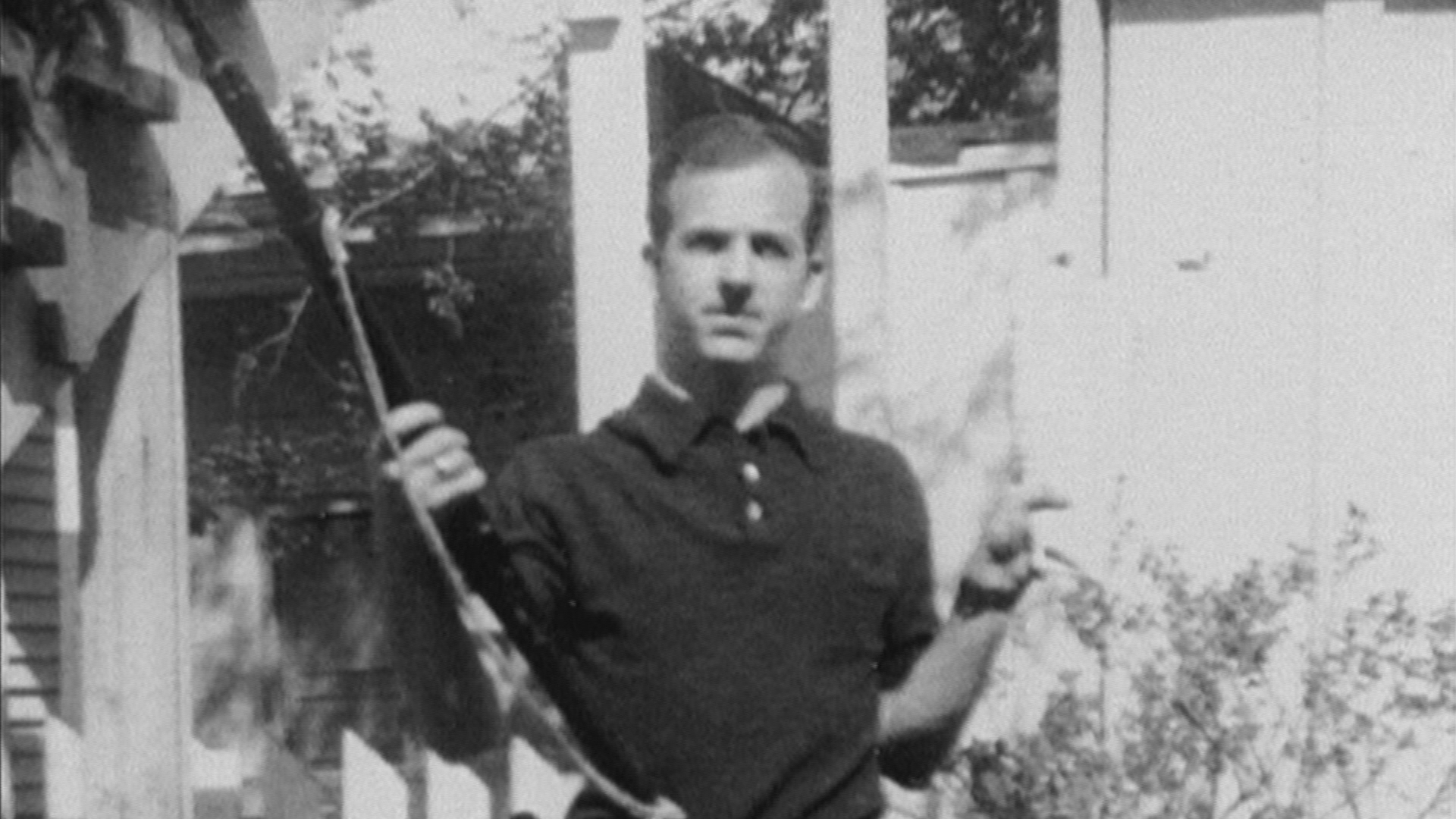
On the morning of the ᴀssᴀssination, Files claimed he picked up Roselli, drove to Fort Worth, and met a man Roselli identified as Jack Ruby. He described seeing an envelope exchanged, which he said contained Secret Service identification and a motorcade route map. Files emphasized the turn onto Elm Street as the fatal mistake that made the ambush possible, calling it an opportunity that should never have existed.
When asked where he would position himself, Files said he chose the area behind the fence on the grᴀssy knoll, near the trees and the railroad yard. He described it as ideal camouflage, allowing him to blend in as a worker and escape through the rail yards. He claimed Nicoletti was positioned elsewhere, contributing to what Files portrayed as a coordinated crossfire.

Files’ description of the shooting itself is among the most graphic elements of his confession. He said sH๏τs from behind began first, striking Kennedy in the body. Files claimed he waited for what he believed was the last safe moment to avoid hitting Jacqueline Kennedy, then fired a single sH๏τ at the left side of the president’s head. He described using a Remington XP-100 “Fireball,” a single-sH๏τ bolt-action pistol firing a high-velocity round, and insisted he had only one opportunity to shoot.
Perhaps the most notorious detail in Files’ story is the casing. He claimed he placed the spent casing in his mouth, bit it, and left it on the stockade fence as a personal signature—a detail that has fascinated some researchers and repelled others. Afterward, he described a calm escape, changing his appearance, carrying a briefcase, swapping cars, and leaving Dallas without incident.

Despite its detail, the confession has never been officially accepted. The FBI dismissed Files’ account as not credible, and many researchers point to inconsistencies, technical improbabilities, and the lack of contemporaneous evidence. Files’ criminal history, including his conviction for attempted murder, further complicates perceptions of his reliability. Supporters argue that his familiarity with weapons and underworld figures lends credibility, while skeptics see a story tailored perfectly to the public mythology of the grᴀssy knoll.
What keeps the Files confession alive is not proof, but persistence. It resurfaces whenever the JFK debate reignites, offering a complete, cinematic narrative that seems to explain what so many Americans instinctively feel was missing. Whether it represents a genuine insider account or a story shaped to fit a conspiracy template remains unresolved. And perhaps that is the most telling detail of all.


