
The latest developments in the Middle East conflict reveal a volatile mix of military escalation, political fractures, and strategic uncertainty that continues to ripple far beyond the region.
What initially appeared to be a calculated operation has quickly evolved into a complex and unpredictable confrontation, with consequences that could reshape alliances and global stability.
At the center of the storm is a controversial decision by the United States to deploy advanced 5,000-pound deep penetrator munitions against hardened Iranian missile facilities.
These weapons, designed to destroy deeply buried targets such as underground tunnels and fortified bunkers, signal a new phase in modern warfare.
Analysts suggest that their use reflects years of preparation, specifically anticipating nations like Iran that have invested heavily in subterranean military infrastructure.
The strikes reportedly targeted missile storage sites along Iran’s coastline near the Strait of Hormuz, a critical artery for global oil transport.
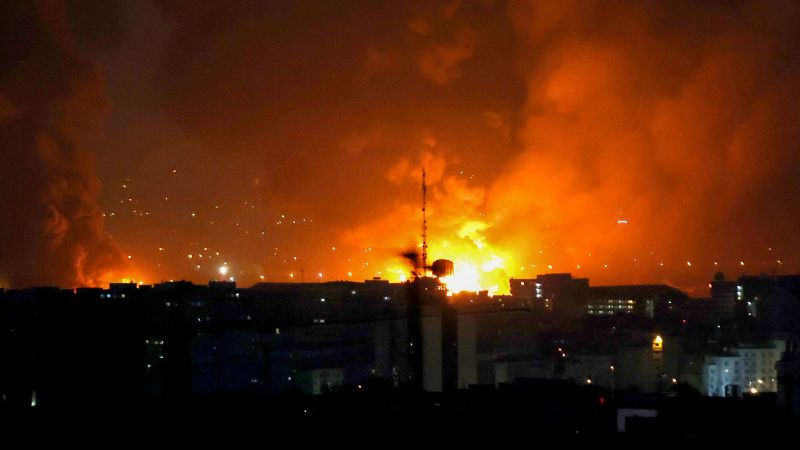
By focusing on anti-ship missile capabilities, the operation appears aimed at securing international shipping routes while simultaneously weakening Iran’s ability to disrupt maritime trade.
The scale and precision of these attacks highlight not only technological superiority but also a willingness to escalate.
Meanwhile, the battlefield is not confined to Iran.
In Israel, the consequences of retaliation are already being felt.
Missile barrages have reached urban areas, including Tel Aviv, with some projectiles carrying cluster munitions—an alarming development that complicates even the most advanced defense systems.
Unlike traditional warheads, these weapons disperse multiple smaller explosives, increasing the likelihood of damage even when intercepted mid-air.
This tactical shift presents a serious challenge for Israel’s missile defense network.
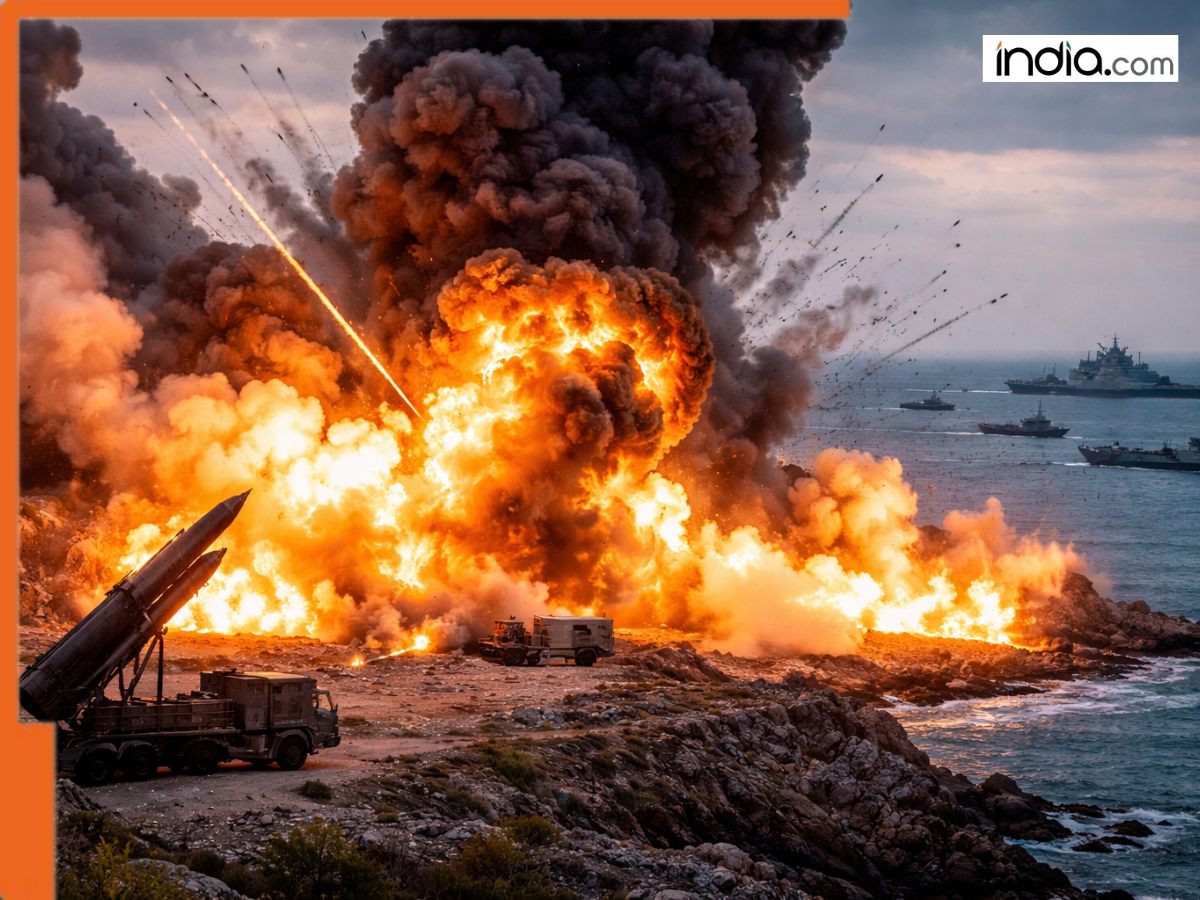
Systems like Iron Dome are highly effective against conventional threats, but cluster-based payloads introduce a new level of unpredictability.
Even successful interceptions can result in debris raining down across populated areas, amplifying both physical destruction and psychological fear.
As military operations intensify, political divisions within the United States are becoming increasingly visible.
The resignation of National Counterterrorism Center Director Joe Kent has added fuel to an already heated debate.
Kent publicly argued that Iran posed no imminent threat to the United States, suggesting that the conflict was driven more by external pressure than direct necessity.
His departure, however, has been met with strong pushback from the administration, which insists that intelligence pointed to a credible and immediate danger.
The disagreement underscores a deeper issue: the difficulty of defining “imminent threat” in an era of asymmetric warfare, proxy networks, and covert operations.
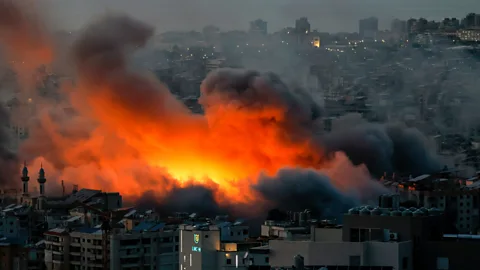
Iran’s global reach, through allied groups and indirect tactics, complicates traditional ᴀssessments of risk.
At the same time, the elimination of key Iranian figures has introduced another layer of instability.
Among those reportedly killed were individuals believed to hold significant influence within Iran’s power structure, including a figure described as a central decision-maker and a leader of a powerful internal security force.
These targeted strikes resemble a broader strategy aimed at dismantling leadership hierarchies—a tactic that has proven both effective and controversial in past conflicts.
While such actions can disrupt command structures, they also carry unpredictable consequences.
Removing high-ranking figures may weaken coordination in the short term, but it can also create power vacuums, internal rivalries, or even more radical leadership emerging from the shadows.
History has shown that decapitation strategies rarely produce immediate stability.
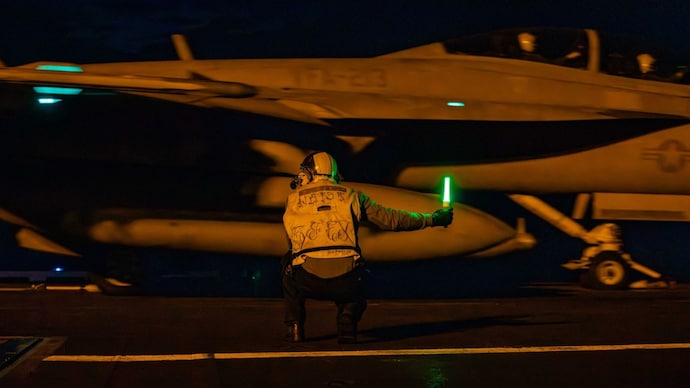
Complicating matters further is the uncertain status of Iran’s top leadership.
Reports suggest that key figures may be injured, missing, or otherwise incapacitated, though confirmation remains elusive.
This ambiguity fuels speculation and raises critical questions about who is truly in control.
In such an environment, decision-making becomes opaque, increasing the risk of miscalculation.
Beyond the battlefield, tensions are also straining international alliances.
Former President Donald Trump has openly criticized NATO, accusing member states of failing to support U.S. efforts to secure strategic waterways.
His remarks highlight a growing divide between the United States and its traditional allies, many of whom are reluctant to become entangled in another Middle Eastern conflict.

For European nations, the hesitation is rooted in both political and historical realities.
Previous military engagements in the region have left lasting scars, and public opinion remains wary of new interventions.
Domestic considerations, including diverse populations with strong views on Middle Eastern affairs, further complicate the decision to participate.
Economic concerns are also beginning to surface.
While officials downplay the broader impact on the U.S. economy, there is acknowledgment that prolonged conflict could affect consumers.
Energy markets, shipping routes, and global supply chains all hinge on stability in the region, particularly around the Strait of Hormuz.
Amid these developments, questions arise about the potential for internal unrest within Iran.
Some speculate that sustained pressure could embolden protesters, but the risks are immense.

Iran’s internal security forces have demonstrated a willingness to respond with extreme force, and any uprising could be met with swift and brutal suppression.
Efforts to support such movements from outside the country present significant challenges.
Coordinating military actions to protect civilians in real time would require an extraordinary level of precision and intelligence.
Even then, the risk of escalation would be considerable, potentially drawing external powers deeper into the conflict.
What emerges from this complex landscape is a conflict defined not just by military might, but by uncertainty.
Every move carries consequences that extend beyond immediate objectives, influencing political dynamics, alliance structures, and the broader global order.
As events continue to unfold, one thing becomes clear: this is no longer a contained regional dispute.
It is a multifaceted confrontation with implications that reach far beyond the Middle East, shaping the future of international relations in ways that are only beginning to be understood.


