Storms Kristin and Leonardo Unleash Flood Apocalypse Across Europe — Billions Lost, Thousands Displaced 💥🌧️
Europe is reeling as a relentless wave of extreme weather tears across the continent, leaving behind a trail of death, destruction, and uncertainty.
In recent days, a powerful series of Atlantic storms — led by Storm Kristin and Storm Leonardo — has unleashed catastrophic flooding, freezing temperatures, and widespread infrastructure collapse, pushing several countries to the brink and exposing Europe’s growing vulnerability to climate-driven disasters.
What began as a fast-moving Atlantic disturbance quickly transformed into a multi-nation crisis.
Torrential rain hammered southern and western Europe without pause, overwhelming rivers, bursting dams, and turning city streets into raging waterways.
Entire neighborhoods vanished beneath muddy floodwater in a matter of hours.
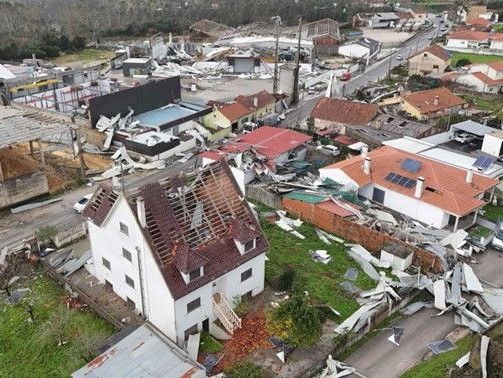
Roads cracked open, bridges collapsed, and rail lines were ripped apart as if made of paper.
Emergency sirens echoed through the night as residents scrambled to higher ground, many with only minutes to escape.
Portugal has emerged as one of the hardest-hit nations.
As Storms Kristin and Leonardo slammed into the Iberian Peninsula in rapid succession, rainfall levels shattered historical records.
Rivers overflowed violently, submerging towns and isolating rural communities.
In Lisbon and surrounding regions, floodwaters surged into homes, hospitals, and underground transport systems, paralyzing daily life.
Authorities confirmed that at least 14 people across Europe have lost their lives so far, with the death toll expected to rise as search and rescue operations continue in flooded and inaccessible areas.
In the aftermath, the Portuguese government announced a mᴀssive emergency aid package worth 2.
5 billion euros, aimed at stabilizing the country and accelerating recovery efforts.
The funds will be used to rebuild destroyed infrastructure, provide financial ᴀssistance to displaced families, and support local governments struggling under the weight of unprecedented damage.
Officials described the situation as “one of the most severe climate emergencies Portugal has faced in decades,” warning that recovery will take months, if not years.
Across Spain, scenes were equally harrowing.
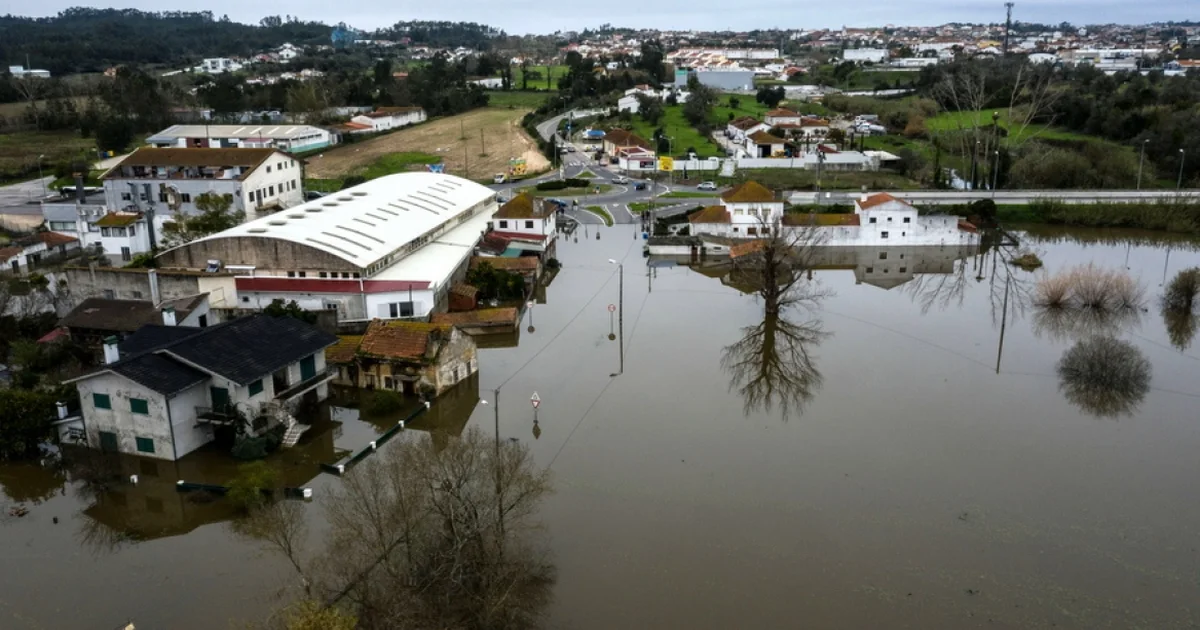
Flash floods swept through Andalusia and Valencia, dragging cars down streets and collapsing ancient stone bridges that had stood for centuries.
Farmers watched helplessly as crops were wiped out overnight, threatening food supply chains and livelihoods.
Emergency shelters filled rapidly as thousands were forced from their homes, while power outages left entire regions in darkness amid freezing night temperatures.
France, Italy, and parts of Central Europe were not spared.
As the storm system pushed eastward, temperatures plunged dramatically, bringing snow and ice to areas already saturated by rain.
Mountain regions faced heightened avalanche risks, while low-lying areas battled frozen floodwaters that complicated rescue efforts.
Airports reported mᴀss cancellations, highways were shut down, and cross-border trade slowed as logistics networks buckled under the pressure.
Meteorologists warn that the destructive power of these storms lies not only in their intensity, but in their frequency.
Kristin and Leonardo arrived back-to-back, allowing little time for recovery between impacts.
Saturated soil turned ᴅᴇᴀᴅly as landslides tore through hillsides, burying homes and cutting off entire villages.
Emergency responders described exhaustion and frustration as they raced against time, battling both rising water and plunging temperatures.

The human cost is devastating.
Families have been separated, elderly residents rescued from rooftops, and children pulled from icy waters.
Hospitals are operating under emergency protocols, treating injuries caused by debris, hypothermia, and electrical hazards.
Psychological trauma is spreading alongside physical destruction, as survivors struggle to process the sudden loss of homes, security, and loved ones.
European leaders are now facing urgent questions.
How prepared is the continent for a future defined by extreme weather? Aging infrastructure, built for a milder climate, is proving increasingly fragile.
Drainage systems designed decades ago are collapsing under rainfall volumes once considered impossible.
Climate experts argue that Storms Kristin and Leonardo are not anomalies, but warnings — a glimpse into a new normal driven by a warming Atlantic and destabilized weather patterns.
Public anger is growing in affected regions, with citizens demanding faster responses, stronger flood defenses, and long-term climate adaptation strategies.
Social media has been flooded with images of submerged cities, destroyed homes, and desperate rescues, igniting debates about accountability and preparedness.
“This is not just a storm,” one Portuguese resident said.
“This is a failure to protect people.”
As Europe braces for more unstable weather in the coming weeks, recovery teams continue their grim work: clearing debris, restoring power, and searching for the missing.
The financial cost is expected to climb into the tens of billions of euros, but many fear the true cost — measured in lives, trauma, and lost communities — can never be fully calculated.
Storms Kristin and Leonardo have left scars across Europe’s landscape and psyche.
What remains now is a continent forced to confront an uncomfortable reality: extreme weather is no longer a distant threat on the horizon.
It is here, it is ᴅᴇᴀᴅly, and it is rewriting Europe’s future in water, ice, and ruin.


