Rivers on the Streets: Relentless Storms Trigger Flooding and Landslides Across Oregon and Washington
Dark storm clouds gathered over the Pacific Northwest long before the first emergency call came in, but few residents expected the scale of destruction that would follow.
As relentless rain hammered the region, neighborhoods across parts of Oregon and Washington were suddenly thrust into a battle against rising water, collapsing hillsides, and dangerous currents that transformed familiar streets into raging rivers.
The storm began quietly, with steady rainfall falling over forests, highways, and suburban neighborhoods.
At first, it seemed like another typical wet day in the Northwest.
But the rain kept coming.
Hour after hour, the downpour intensified, overwhelming drainage systems and swelling creeks and rivers beyond their limits.
In towns scattered across western Oregon and southwestern Washington, residents began noticing water creeping into places it had never reached before.

Driveways filled, yards disappeared beneath muddy water, and small creeks surged into fast-moving torrents.
Soon, roads were flooded and traffic slowed to a crawl as drivers realized they were navigating through deep and unpredictable water.
Emergency responders were quickly flooded with calls for help.
In several communities, people became trapped inside vehicles as water rushed across roadways.
Drivers who had attempted to cross flooded intersections suddenly found themselves surrounded by rising currents.
Some climbed onto the roofs of their cars while waiting for rescue crews to arrive.
Firefighters and rescue teams rushed into action, launching boats into submerged streets and deploying specialized rescue vehicles designed for high water conditions.
In one dramatic rescue, responders pulled a stranded driver from a vehicle that had become lodged against a submerged guardrail.
The water had risen to the windows, and the current was strong enough to push the vehicle sideways.
The rescues continued throughout the day and into the night.
As rain continued to pour down, hillsides soaked with water began to fail.
Landslides were reported across several rural areas, where saturated soil could no longer hold its shape.
Mud, rocks, and fallen trees crashed down slopes and onto roadways, cutting off access to some communities.
In one particularly dangerous incident, a hillside collapsed near a residential road, sending a thick wave of mud and debris across the pavement.
Residents watched in disbelief as the landslide blocked the only route in and out of their neighborhood.
Emergency crews later arrived to ᴀssess the damage, warning residents to stay alert for further slides.
Across the region, swollen rivers pushed closer to their banks.
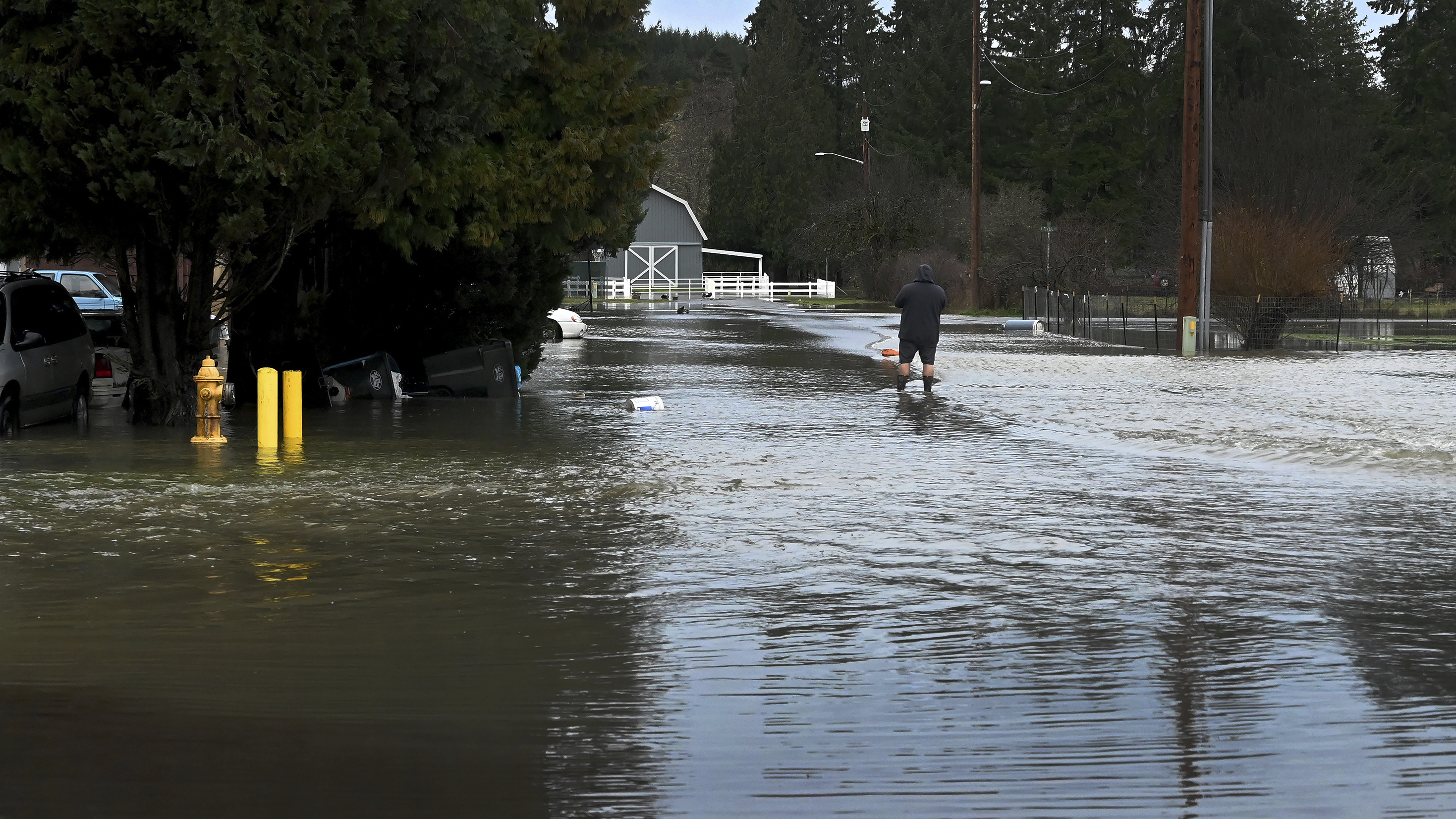
Small waterways that normally flowed gently through neighborhoods surged with muddy water, carrying branches, debris, and even pieces of fencing downstream.
The sound of rushing water echoed through residential areas where silence usually dominated.
For many residents, the sudden transformation was both shocking and terrifying.
One homeowner described waking early in the morning to the sound of rain pounding the roof harder than usual.
When they looked outside, their street had already begun filling with water.
Within an hour, the water level had risen so high that cars parked along the curb were partially submerged.
Neighbors gathered outside, watching helplessly as the water continued to rise.
Some attempted to move their vehicles to higher ground, while others worked quickly to stack sandbags along doorways and garage entrances.
But the speed of the flooding made it difficult to keep up.
Soon, emergency alerts began appearing on phones across the region, warning residents about dangerous road conditions and urging them to avoid travel unless absolutely necessary.
Local authorities closed several major roads as floodwaters washed across highways and bridges.
Drivers attempting to commute found themselves forced to turn around or search for alternate routes through already congested side streets.
In rural areas, the situation was even more dangerous.

Heavy rain had saturated the soil across forested hillsides, increasing the risk of landslides and falling trees.
Crews reported multiple incidents where trees had collapsed across roads, blocking traffic and damaging power lines.
Utility crews raced to restore electricity in neighborhoods where fallen branches had knocked down power lines.
In some areas, entire blocks lost power as the storm intensified.
Meanwhile, rivers and streams continued to swell.
Hydrologists monitoring river gauges warned that several waterways were approaching flood stage.
If the rain continued, they warned, more communities could face severe flooding in the coming hours.
For residents living near rivers, the warnings were alarming.
Many families began moving valuables to higher shelves or second floors, preparing for the possibility that water might enter their homes.
Some packed emergency bags in case evacuation orders were issued overnight.
Emergency management officials urged residents to remain cautious and avoid flooded areas.
They reminded drivers that even shallow water can sweep away vehicles and warned that floodwaters often conceal dangerous debris or washed-out road surfaces.
Despite the dangers, rescue teams continued working tirelessly.
Throughout the region, firefighters, sheriff’s deputies, and volunteer rescue crews coordinated efforts to reach stranded motorists and ᴀssist residents trapped by floodwaters.
In several towns, rescue boats navigated through streets where water had risen above the sidewalks.
For first responders, the storm was a race against time.
Every minute mattered when water levels were rising rapidly and people were stuck in dangerous conditions.
Rescue teams relied on quick coordination and communication to respond to dozens of emergency calls coming in simultaneously.
The storm also highlighted the growing challenges posed by extreme weather events in the Pacific Northwest.
Meteorologists explained that the system responsible for the heavy rainfall had pulled large amounts of moisture from the Pacific Ocean, feeding the storm and intensifying precipitation across the region.
Such atmospheric conditions can lead to prolonged rainfall events capable of overwhelming rivers and drainage systems.
Climate scientists have noted that heavy rainstorms in the region are becoming more intense, raising concerns about future flooding risks.
For now, however, the focus remained on immediate safety.
Officials urged residents to monitor local updates and remain prepared for rapidly changing conditions.
They warned that even after rainfall begins to ease, floodwaters can continue rising for hours as runoff flows into rivers and streams.
As night fell across Oregon and Washington, the rain continued to fall steadily, drumming against rooftops and filling already swollen waterways.
Emergency lights flashed across darkened streets as rescue crews continued their work, searching flooded roads and responding to new calls for help.
For many communities across the region, it was a night of uncertainty and vigilance.
Residents watched water levels carefully, hoping the storm would weaken before causing even more damage.
But with rivers still rising and the ground already saturated, the danger was far from over.
In the quiet moments between bursts of rain, one thing was clear.
The Pacific Northwest had once again been reminded of nature’s power — and how quickly a peaceful landscape can transform into a scene of chaos when the skies refuse to stop pouring.


