Michael Jackson and Diana Ross: The Bond He Never Fully Explained
When Michael Jackson first met Diana Ross in 1969, he was just 11 years old. She was already a global star—the face of Motown glamour and the lead singer of The Supremes. Berry Gordy strategically positioned Diana as the one who “discovered” the Jackson 5, a marketing move designed to link the rising group to an established icon. The story wasn’t entirely accurate, but it created a narrative that would define Michael’s early career.
From the beginning, Michael idolized her.

He reportedly lived for a time in Diana’s home, and according to family accounts, he affectionately called her “Mama.” Whether that was symbolic or emotional, it reflected how deeply attached he became. Diana introduced the Jackson 5 on national television during their debut on The Ed Sullivan Show, cementing her role in his origin story.
As Michael grew older, the relationship evolved—but it never became easy to categorize.
He described her at different times as a mentor, a friend, a muse, and even his “first love.” In his autobiography Moonwalk, he wrote plainly: “I’ve always loved Diana, and I always will.” That sentence alone fueled decades of speculation.

The 14-year age gap between them complicated public perception. Rumors circulated through the 1970s and 1980s suggesting a romantic relationship. During the filming of The Wiz in 1977, where Diana played Dorothy and Michael portrayed the Scarecrow, their closeness became especially visible. Stories emerged of late-night visits and emotional intensity.
Neither fully confirmed nor denied romantic involvement. Instead, they deflected questions—often playfully—leaving the truth ambiguous.
In the mid-1980s, speculation intensified when Diana appeared publicly wearing a ring reportedly given by Michael. At events like Motown 25 and the American Music Awards, cameras captured affectionate moments between them. At one awards show, she kissed him on the mouth in front of pH๏τographers, a gesture that sparked headlines worldwide.

According to accounts from those close to the family, Michael even told his mother at one point that he and Diana were engaged. Catherine Jackson reportedly disapproved, concerned about the age difference and potential public backlash. The media’s harsh commentary—labeling Diana in unflattering terms—added pressure.
Eventually, Diana married Norwegian shipping heir Arne Næss Jr., and Michael was said to be deeply hurt.
When Michael released “Dirty Diana” in 1987, many listeners speculated the song referenced Ross. Officially, it was described as a song about groupies. But producer Quincy Jones reportedly worried the lyrics were too personal and advised Michael to modify them to avoid direct ᴀssociation.

Whether the song was about Diana remains unconfirmed. Yet the emotional intensity of the track—particularly its themes of longing and frustration—suggests it came from a deeply personal place.
Interestingly, Diana later incorporated “Dirty Diana” into one of her concert intros, a subtle acknowledgment that she understood the connection fans were making.
Despite periods of silence and tension, their bond endured.

When Michael faced legal battles and public scrutiny throughout his life, Diana remained largely supportive. After the 2019 documentary Leaving Neverland reignited allegations against him, she publicly defended his character, describing him as a “magnificent force” in her life and urging compᴀssion rather than condemnation.
That loyalty was consistent with the trust Michael had shown her years earlier.
In his 2002 will, he named Diana Ross as a secondary guardian for his children if his mother, Katherine Jackson, was unable to care for them. It was an extraordinary gesture—one that indicated profound trust and emotional significance.
Few people occupied that level of importance in his life.

Was Diana Ross Michael Jackson’s first great love? Possibly. Was she a maternal figure, a mentor, a symbol of safety from his chaotic childhood? Likely, yes.
Their relationship defied simple labels.
Diana was the first superstar he truly knew. She represented success, glamour, and artistic excellence at a time when he was still forming his idenтιтy. As he grew into global fame himself, she remained a constant reference point—someone who understood both the pressures of stardom and the loneliness that often accompanies it.
Their connection endured marriages, rumors, distance, and decades of shifting public narratives. Even when they were not visibly close, the emotional thread seemed unbroken.
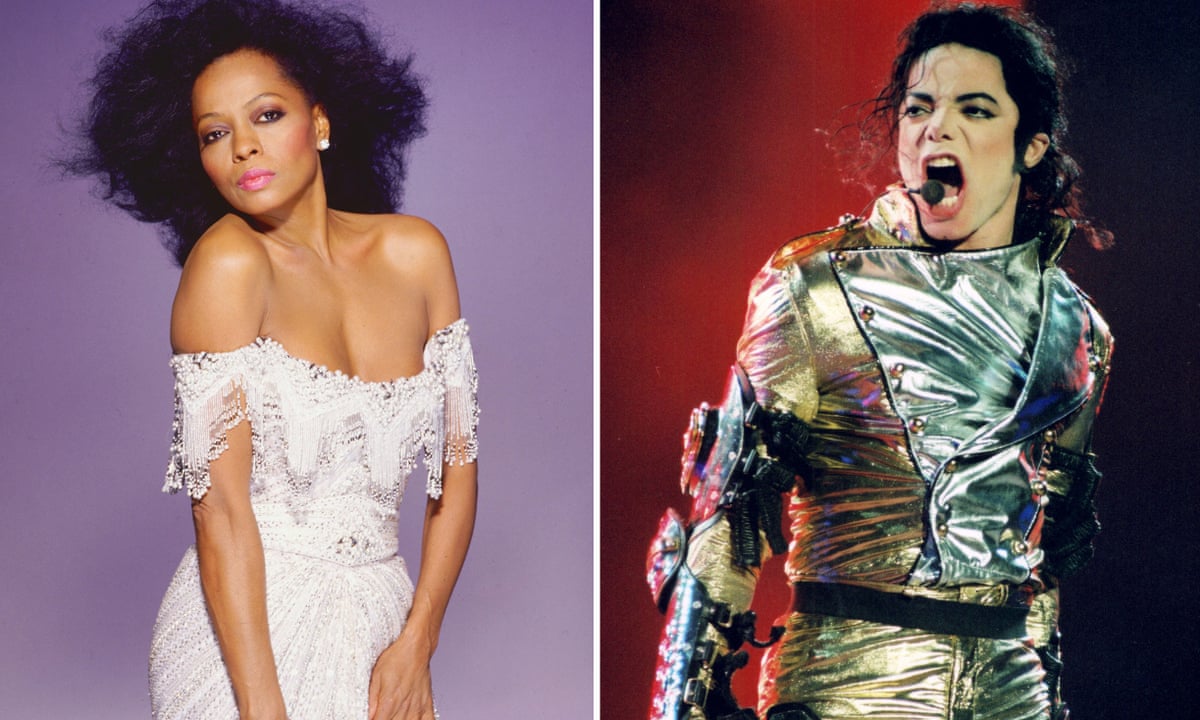
Michael Jackson was famously private about his deepest emotions. He rarely explained his most intimate relationships in clear terms. With Diana Ross, that silence may have been intentional—not secrecy, but protection.
Some bonds are too layered to define publicly.
Whether she was his first love, his emotional anchor, or simply a lifelong friend who understood him in ways few others could, Diana Ross shaped Michael Jackson’s world in undeniable ways.

And perhaps the most telling detail of all is this: when he considered who he trusted to care for his children, her name was written into his final wishes.
That alone suggests a story deeper than headlines ever captured.


