Archaeological Discoveries Beneath Jesus’ Tomb Reshape History, Faith, and Science
Beneath one of the most sacred sites in Christianity, a series of archaeological discoveries has revealed layers of history that are reshaping scholarly understanding of Jerusalem, early Christianity, and the physical setting of the Gospel narratives.
Hidden for centuries under stone, marble, and devotion, what lies beneath the Church of the Holy Sepulchre is no longer confined to tradition alone.
Recent scientific excavations have brought tangible evidence into view, prompting renewed discussion among historians, archaeologists, and theologians alike.
The Church of the Holy Sepulchre, located in Jerusalem’s Old City, has long been revered as the site of Jesus Christ’s crucifixion, burial, and resurrection.

Over centuries of conquest, rebuilding, and religious stewardship, the original rock-cut tomb believed to be Jesus’ burial place had been obscured beneath layers of marble and structural reinforcement.
Many scholars questioned whether the original burial bed still existed at all, or whether the location had shifted during repeated reconstructions.
That uncertainty began to dissolve in October during a major conservation project led by specialists from the National Technical University of Athens.
As part of a structural restoration of the Edicule, the shrine encasing the tomb, conservators removed the marble cladding that had sealed the burial site since at least the mid-16th century.
Beneath the surface, they encountered fill material and debris from earlier renovations, seemingly confirming fears that the original stone had been lost.
However, continued excavation revealed a second marble slab bearing a faintly carved cross, believed to date from the Crusader period.
Below that layer, researchers made a discovery of extraordinary significance.
The original limestone burial bed emerged intact, preserved beneath centuries of modification, conflict, and time.
Its survival challenged long-standing doubts and provided physical confirmation that the tomb’s core had remained in place since antiquity.
Further examination within the Edicule revealed that portions of the original limestone cave walls still stood behind later masonry.
A carefully opened window in the shrine’s southern interior exposed untouched rock surfaces believed to be part of the original tomb chamber.
For the first time in generations, archaeologists were able to directly observe the natural stone once venerated as the resting place of Jesus’ body.
While absolute certainty remains elusive, scholars widely agree that the archaeological evidence strongly supports the traditional identification of the site.
Historical records indicate that Roman Emperor Hadrian constructed a pagan temple over the area in the second century in an effort to suppress Christian worship.
Ironically, this act may have preserved the site by marking and sealing it beneath monumental architecture.

When Emperor Constantine ordered the removal of the Roman structure in the fourth century, a rock-cut tomb was revealed beneath it, prompting the construction of the first church on the site.
Subsequent centuries brought destruction and rebuilding, including the near-total demolition of the church in 1009 and its reconstruction in the Crusader era.
Twentieth-century excavations uncovered remnants of Hadrian’s temple, Constantine’s basilica, and surrounding quarry landscapes.
These findings demonstrated that the area had served as a Jewish cemetery outside Jerusalem’s city walls during the first century, aligning closely with Gospel descriptions of Jesus’ burial.
The significance of the discoveries deepened further in 2022 during another restoration effort beneath the church floor.
Archaeologists from Sapienza University of Rome uncovered something unexpected beneath the stone foundations: a cultivated garden dating back approximately 2,000 years.
Preserved beneath layers of rubble, the garden contained planting beds, stone borders, olive pits, grape seeds, pollen, and soil remains consistent with first-century agriculture in Judea.
This was not a wild or abandoned landscape.
The orderly layout indicated intentional cultivation, suggesting a space that may have held cultural or spiritual meaning beyond simple sustenance.
Beneath this garden layer, archaeologists found additional rock-cut tombs carved directly into the limestone, some among the earliest burial chambers discovered in the area.
Together, these layers painted a vivid picture of a landscape where life and death coexisted side by side.
The discovery of the garden carries particular significance when compared with the Gospel of John, which describes Jesus being buried in a garden near the site of his crucifixion.
For decades, scholars debated whether this reference was symbolic or literal.
The archaeological evidence now strongly suggests the latter.
The garden’s location outside the ancient city walls, adjacent to elite rock-cut tombs, matches the burial customs described in Jewish law and historical texts.
The tombs themselves further support the biblical narrative.
They are not simple or reused graves but newly carved chambers consistent with elite burial practices of the period.
This aligns with accounts stating that Jesus was buried in a tomb owned by Joseph of Arimathea, a wealthy follower.
The craftsmanship, design, and placement of the tombs match what would be expected for a burial provided by a person of status.
The proximity of the garden and tombs to the crucifixion site also aligns with descriptions of urgency in the burial process.
According to the Gospels, Jesus was buried quickly before the Sabbath began, requiring a nearby and prepared tomb.
The site’s location and accessibility fit this context precisely, reinforcing its historical plausibility.
Botanical findings add another layer of meaning.
Olive trees and grapevines were common in the region but also carried deep cultural and religious symbolism in Jewish and early Christian traditions.
Their presence in the garden reflects both agricultural reality and the theological imagery found throughout scripture, linking physical evidence with textual tradition.
Perhaps most compelling is the role of Roman intervention in preserving the site.
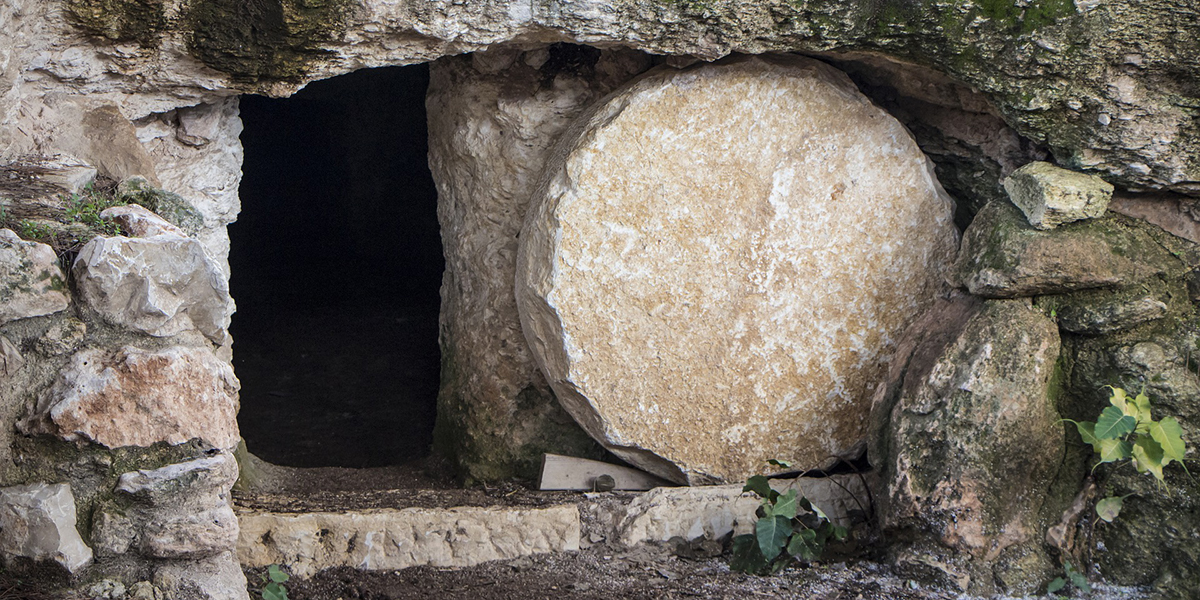
Hadrian’s construction of a temple over the area, intended to suppress Christian worship, effectively sealed the tombs and garden beneath layers of stone.
This unintended preservation protected the site from later development, allowing its features to survive largely undisturbed until modern excavation.
Taken together, the discoveries beneath the Church of the Holy Sepulchre represent one of the most significant archaeological confirmations of the Gospel setting to date.
While archaeology cannot prove matters of faith, it can illuminate the historical context in which faith emerged.
In this case, the convergence of geography, burial customs, botanical remains, and architectural evidence creates a compelling picture of a real place described in ancient texts.
The implications extend beyond Christianity alone.
These findings demonstrate the value of interdisciplinary research combining archaeology, history, geology, and environmental science.
They also highlight how religious traditions, often dismissed as purely symbolic, may preserve accurate memories of historical landscapes.
As the burial bed has now been resealed beneath protective marble, it may not be exposed again for centuries.
Yet extensive documentation ensures that its details remain available for study.
The garden and tombs beneath the church continue to be examined, offering new insights into the social, cultural, and spiritual world of first-century Jerusalem.
In an era where history is often abstracted into text and theory, the discoveries beneath Jesus’ tomb provide a rare and powerful reminder that ancient narratives unfolded in real places shaped by stone, soil, and human hands.
Beneath one of the holiest sites in the world lies not only devotion but evidence, preserved silently through time, now speaking with renewed clarity to a modern world still seeking connection between faith and history.


