Night of Terror in Kihei: Floodwaters Bring Condo Crashing Down
The quiet coastal town of Kihei was thrust into chaos as unprecedented flooding tore through the area, culminating in the shocking collapse of a condominium building and leaving residents in a state of fear, disbelief, and urgent uncertainty.
What began as a severe weather alert quickly escalated into a life-threatening emergency, as relentless rain and surging waters overwhelmed infrastructure, turning streets into rivers and homes into fragile islands against the rising tide.
Witnesses described the moments leading up to the collapse as surreal and terrifying.
Heavy rain had been pounding the region for hours, but few expected the situation to spiral so rapidly out of control.
Water levels rose with alarming speed, swallowing parked cars, seeping into ground floors, and cutting off escape routes.
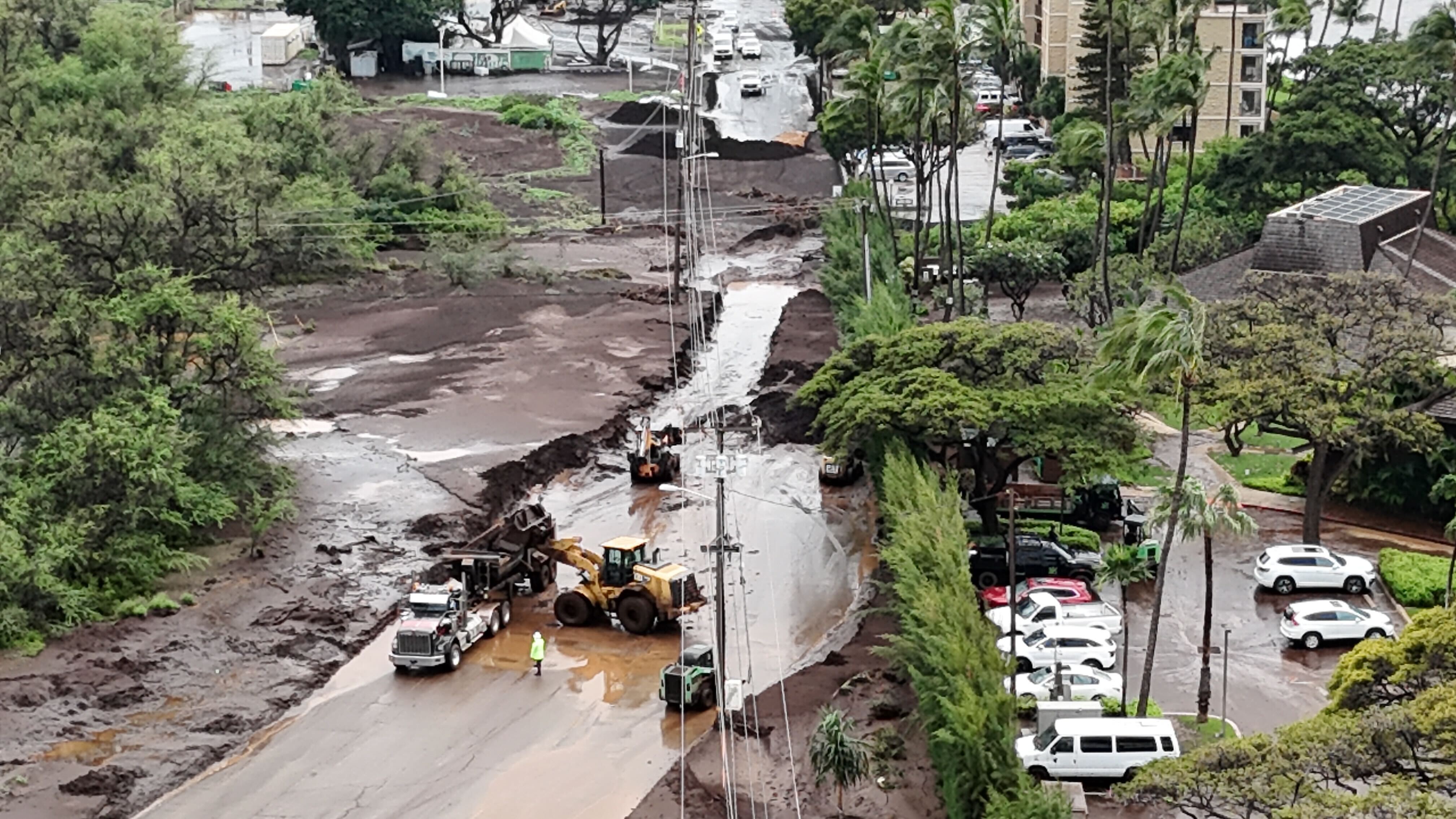
Residents reported hearing deep, unsettling creaks from the building’s foundation as the floodwaters continued to erode the ground beneath it.
“It didn’t feel real,” said one resident who managed to evacuate minutes before the collapse.
“The water just kept rising, and then we heard this loud cracking sound.
The building started to shift.
People were screaming, trying to get out.
It all happened so fast.”
Emergency services had already been dispatched across Kihei as reports of flooding poured in from multiple neighborhoods.
However, the scale and speed of the disaster stretched resources thin.
First responders raced against time, navigating submerged roads and hazardous conditions to reach those trapped or stranded.
Helicopters hovered overhead as rescue teams coordinated evacuations, pulling residents from rooftops and balconies while floodwaters continued to surge.
The condominium collapse marked a devastating turning point in the unfolding disaster.
According to preliminary ᴀssessments, the structure’s foundation was severely compromised by the force of the water and the erosion of supporting soil.
Experts suggest that the intensity of the flooding—described by local authorities as “unprecedented”—played a critical role in undermining the building’s stability.
Neighbors recounted the exact moment the structure gave way.
“There was this deafening roar,” one witness said.
“It sounded like the ground itself was breaking apart.
Then the building just came down.

Dust, water, debris—everything mixed together.
It was horrifying.”
As night fell, the situation grew even more dangerous.
Power outages plunged large parts of Kihei into darkness, complicating rescue efforts and increasing the sense of panic among residents.
Emergency crews worked tirelessly under floodlights, searching for anyone who might still be trapped beneath the rubble.
The uncertainty surrounding potential casualties added to the tension, as families waited anxiously for news of loved ones.
Authorities urged residents to remain vigilant and follow evacuation orders, emphasizing that conditions remained volatile.
Additional rainfall was forecast, raising fears of further flooding and possible structural failures in other parts of the town.
Temporary shelters were established to accommodate displaced residents, many of whom fled their homes with little more than the clothes on their backs.
Meteorologists pointed to a combination of factors that contributed to the severity of the flooding.
An intense storm system stalled over the region, dumping an extraordinary volume of rain in a short period.
Saturated ground conditions, combined with overwhelmed drainage systems, created the perfect storm for widespread flooding.
In coastal areas like Kihei, the situation was exacerbated by high tides, which limited the ability of floodwaters to recede.
Local officials acknowledged that while flooding is not uncommon in the region, the magnitude of this event was unlike anything seen in recent memory.
“We are dealing with a situation that exceeds our previous worst-case scenarios,” one official stated.
“This is a stark reminder of how quickly natural conditions can escalate into a major disaster.”
Residents described scenes of chaos and desperation as they attempted to escape the rising waters.
Some waded through chest-deep currents, carrying children and elderly family members to safety.
Others used makeshift flotation devices to navigate submerged streets.

The sense of community, however, remained strong, as neighbors helped one another evacuate and shared resources in the face of overwhelming adversity.
“I saw people risking their own safety to help others,” one survivor said.
“That’s what kept us going—the fact that we weren’t alone.”
As dawn broke, the full extent of the damage began to emerge.
Entire blocks were inundated, vehicles lay scattered and overturned, and debris was strewn across the landscape.
The collapsed condominium stood as a stark symbol of the disaster’s destructive power, its remains partially submerged in muddy water.
Search and rescue operations continued into the day, with teams carefully combing through the wreckage.
Officials remained cautious in releasing information, focusing instead on ensuring that all possible survivors were accounted for.
Medical teams treated injuries ranging from minor cuts to more serious conditions caused by the collapse and flood-related incidents.
The emotional toll of the disaster was evident across Kihei.
Residents grappled with shock, grief, and uncertainty about what comes next.
For many, the loss extended beyond physical property, encompᴀssing a sense of security that had been shattered in a matter of hours.
Experts are now calling for a thorough investigation into the structural integrity of buildings in flood-prone areas, as well as a reᴀssessment of emergency preparedness measures.
The collapse has raised urgent questions about how infrastructure can withstand increasingly extreme weather events, which are becoming more frequent and intense.
Despite the devastation, there are signs of resilience.
Community members have begun organizing relief efforts, distributing food, water, and essential supplies to those affected.
Volunteers have stepped forward to ᴀssist in cleanup operations, determined to help Kihei recover and rebuild.
For now, however, the focus remains on rescue, recovery, and ensuring the safety of those still at risk.
The events in Kihei serve as a sobering reminder of nature’s unpredictable force and the fragile line between normalcy and disaster.
As one resident put it, standing amid the wreckage of what was once a peaceful neighborhood: “Everything changed in a single night.
We’ll rebuild—but we’ll never forget what happened here.”


