Hidden Beneath the Desert: The Surprising Origins of Middle Eastern Oil Wealth
The Middle East is often ᴀssociated with extremes—immense wealth, deep poverty, rapid urban development, and long-standing conflict.
At the center of many of these contrasts lies one critical resource: oil.
But why does this particular region possess such a disproportionately large share of the world’s crude oil reserves? The answer stretches back hundreds of millions of years and begins in an environment that looks nothing like the deserts we see today.
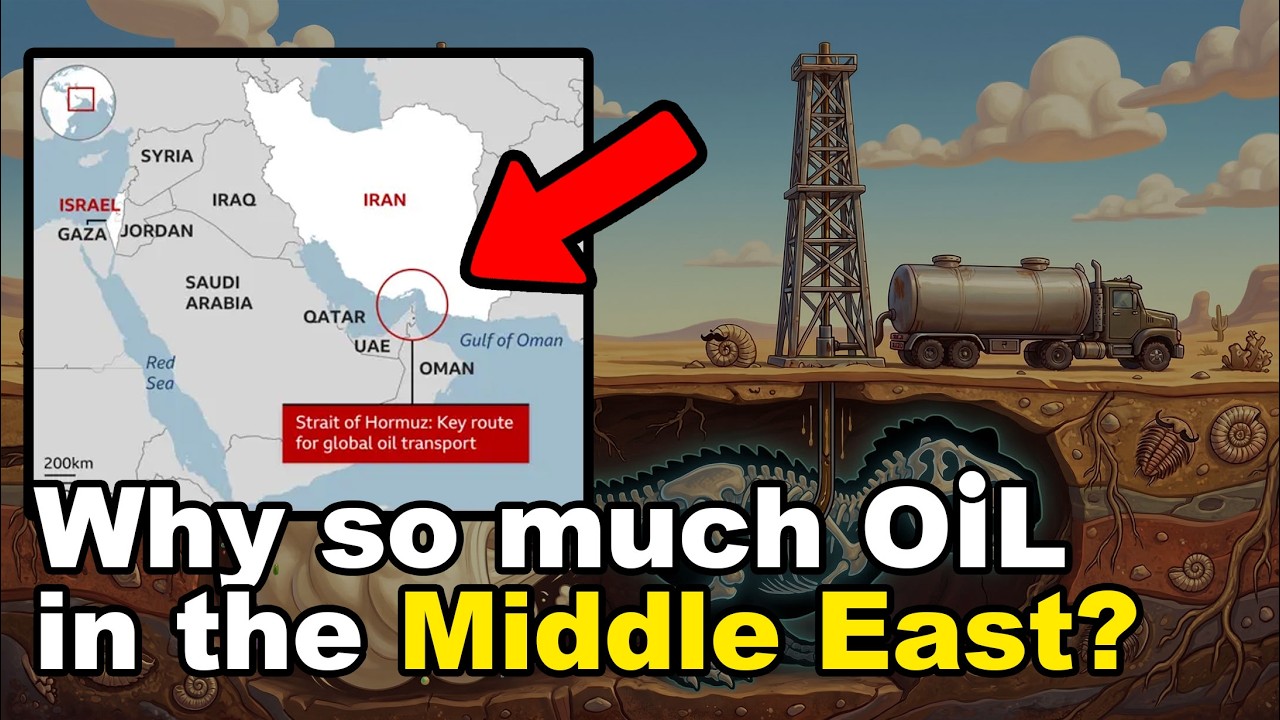
Oil, as we know it, originates from the remains of ancient life.
Millions of years ago, organic material—primarily microscopic marine organisms such as plankton and algae—accumulated on the floors of ancient oceans.
Over time, layers of sediment buried these remains.
As pressure and temperature increased, the organic material gradually transformed into hydrocarbons, eventually becoming crude oil and natural gas.
While life once existed across the entire planet, not all environments were equally suited for oil formation.
:max_bytes(150000):strip_icc()/GettyImages-1457198372-ddcdcea2d17b43df9ff9be4c06f4adbb.jpg)
The key difference lies in the type of organic material and the conditions under which it was buried.
Coal, for instance, formed mainly from land plants, whereas oil formed from marine microorganisms.
This distinction is crucial in understanding why oil is concentrated in certain regions, particularly the Middle East.
Around 100 million years ago, much of what is now the Middle East was submerged beneath a vast body of water known as the Tethys Sea.
This ancient ocean was uniquely rich in nutrients, largely due to rivers that carried minerals from surrounding landmᴀsses.
These nutrient-rich waters supported enormous populations of plankton and algae, creating an ideal environment for oil formation.
However, the presence of organic material alone was not enough.
Several specific conditions had to be met for oil to form efficiently.
First, the organic matter needed to be buried quickly.
This rapid burial prevented exposure to oxygen, which would otherwise lead to decomposition.
Second, the environment had to be low in oxygen.
In such conditions, bacteria could not fully break down the organic material, allowing it to be preserved.
Third, thick layers of sediment—sometimes thousands of meters deep—were necessary to generate the pressure and heat required for transformation into oil.
The Tethys Sea provided all these conditions.
Tectonic activity in the region created deep basins where water circulation was limited, leading to oxygen-poor environments.
At the same time, sediments carried by rivers rapidly covered the organic material.
Over millions of years, these processes resulted in the formation of vast reserves beneath the seafloor.
But this raises another question: if oil formed beneath an ancient ocean, how did it end up beneath desert land?
The answer lies in the movement of Earth’s tectonic plates.
The planet’s surface is divided into mᴀssive plates that slowly shift over time.
Though these movements occur at a rate of only a few centimeters per year, their effects over millions of years are enormous.
Continents collide, mountains rise, and entire regions are reshaped.
Roughly 50 million years ago, the Arabian tectonic plate began colliding with the Eurasian plate.
This collision caused the seafloor of the Tethys Sea to rise above sea level, gradually forming the landmᴀss we now recognize as the Middle East.
As this uplift occurred, the oil and gas trapped beneath the ancient seabed were brought closer to the surface, making them accessible for extraction.
This unique combination of geological history—abundant marine life, ideal burial conditions, and tectonic uplift—explains why the Middle East holds such vast oil reserves compared to other parts of the world.
It is not merely a coincidence, but the result of a rare convergence of natural processes over an immense timescale.
Today, this “black gold” continues to play a central role in shaping the region’s economic and political landscape.
Oil wealth has fueled rapid development in some countries while contributing to geopolitical tensions in others.
At the same time, global dependence on fossil fuels has made the Middle East a focal point of international attention.
However, oil is a finite resource.
As global demand continues to rise, concerns about depletion and environmental impact have prompted a shift toward renewable energy sources.
Solar, wind, geothermal, and hydroelectric power are increasingly being explored as sustainable alternatives.
This transition is not only essential for reducing greenhouse gas emissions but also for improving environmental and public health.
The story of Middle Eastern oil is ultimately a story of deep time—of ancient oceans, microscopic life, and the restless movement of Earth’s crust.
It is a reminder that the forces shaping our modern world often began long before human civilization existed.


