Patrice O’Neal Revisited: The Legacy That Hits Different Today
More than a decade after his pᴀssing, Patrice O’Neal continues to echo through comedy clubs, podcasts, and viral clips across the internet.
But lately, something has shifted.
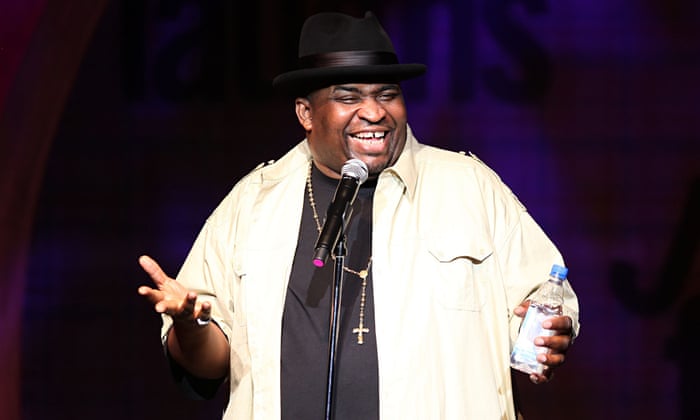
A new wave of fans — many too young to have watched him live — are discovering old interviews, radio appearances, and stand-up sets. And the reaction is strikingly consistent:
“You’ll never see him the same way after this.”
So what changed?
Patrice O’Neal was never the most mainstream comic. He wasn’t built for safe late-night slots or network-friendly punchlines. His comedy was sharp, confrontational, often uncomfortable. He challenged audiences. He challenged interviewers. He challenged fellow comics.
And sometimes, he challenged the industry itself.
When O’Neal appeared on radio shows like Opie & Anthony or debated on panels, he rarely softened his stance. He dissected relationships, power dynamics, race, ego, and vulnerability with a tone that blended humor and brutal honesty.
At the time, some dismissed him as too raw.

Today, many are calling him prophetic.
Clips resurfacing online show O’Neal speaking about fame, authenticity, and the hidden pressures inside entertainment long before those conversations became mainstream.
In one widely shared segment, he discusses how comedians can become trapped by branding — forced into personas that restrict growth. In another, he challenges the idea that success equals freedom.
What once sounded abrasive now feels reflective.
Patrice O’Neal died in 2011 at age 41 after complications from a stroke linked to diabetes. His death shocked the comedy world. Tributes poured in from peers who described him as one of the sharpest minds in the business.
But at the time, his mainstream footprint was smaller than many believed it should have been.
He had appeared on television, acted in films, and built a loyal fan base — yet he never fully conformed to industry expectations.

That independence may be why his legacy has grown in hindsight.
Comedy has changed.
Audiences today debate authenticity more than ever. Cancel culture, free speech, platforming, and artistic boundaries dominate cultural discourse.
Rewatching O’Neal’s material through that lens feels different.
He often refused to dilute his perspective, even when it cost him opportunities.
Former collaborators have shared stories about deals that fell apart because he would not compromise his voice.
In an era where branding and monetization shape careers, that refusal reads as defiance.
Some critics argue that O’Neal’s material crossed lines.
Others argue that his willingness to walk those lines honestly is precisely why he resonates now.
Legacy is rarely static.
It evolves as culture evolves.
Many fans discovering him for the first time express disbelief that he wasn’t elevated further during his lifetime.
But comedy history is filled with artists whose influence outpaced their mainstream recognition.
Dave Chappelle has publicly cited O’Neal as one of the most important voices in stand-up.
Comedians often describe him as “your favorite comedian’s favorite comedian.”
That phrase carries weight.
It suggests depth — respect from peers who understood the mechanics behind the jokes.
Listening now, you hear more than punchlines.
You hear introspection about masculinity, vulnerability, ego, and power — themes that dominate modern cultural conversation.
He didn’t package those ideas gently.
He forced confrontation.
And perhaps that’s why people say you’ll never see him the same way.
Because the surface — the brash exterior — obscured something layered beneath.
Clips trending today highlight his philosophical moments as much as his jokes.
Younger audiences, raised in an era of long-form podcasts and raw interviews, connect with his unfiltered style.
What once felt abrasive now feels authentic.
There’s also something haunting about revisiting a voice cut short.
When artists die young, their catalog freezes.
But interpretation does not.
Each generation hears something new.
Patrice O’Neal’s health struggles were public. He had spoken openly about diabetes and lifestyle challenges.
His pᴀssing prompted reflection not just on comedy, but on self-care, industry pressure, and mortality.
In hindsight, his candor about personal flaws feels even more poignant.
He didn’t present himself as polished.
He presented himself as honest.
In the years since his death, compilation videos, remastered sets, and podcast archives have introduced him to millions who never saw him headline.
The internet has a way of resurrecting voices.
But resurrection through algorithm can distort context.
To understand Patrice O’Neal fully, you have to listen beyond viral snippets.
You have to sit with the discomfort.
Because that discomfort was intentional.
He believed comedy should provoke.
Not merely entertain.
The phrase “you will never see him the same way after this” reflects that realization.
When you strip away the caricature and hear the thinker underneath, perspective shifts.
Patrice O’Neal wasn’t just telling jokes.
He was dissecting human behavior in real time.
And sometimes, he was dissecting himself.
His legacy remains complicated, powerful, and fiercely debated.
But one thing is clear:
Time has reframed him.
And for many rediscovering his voice today, that reframing hits hard.


