“Men Are Looking for Wives, Not Queens”: A Sermon That Sparked Debate
In a culture where social media bios are filled with crowns and captions declare “I’m a queen” or “I’m a king,” Bishop Wooden offered a countercultural perspective: men are looking for wives, not queens.
The statement came from a sermon in which he recounted a recent encounter at an airport. While traveling with his wife, he was approached by a man who admitted he had once thought the bishop was “too hard” in his preaching. After listening more closely over time, the man said he had come to believe Wooden was simply telling the truth. Wanting no bitterness in his heart, he apologized.
But the conversation didn’t end there.

The man confided that he desired marriage. He spoke about wanting a wife and mentioned caring for his “queen.” That word—queen—prompted Bishop Wooden to offer pointed advice.
“I’m so grateful,” he explained, “that I married a wife and not a queen.”
He went on to clarify what he meant. In his view, the term “queen,” when self-applied, can signal an atтιтude of enтιтlement. A queen, he suggested, expects to be served. A wife, in contrast, is described in biblical language as a “help meet”—a suitable partner, someone who builds alongside her husband.
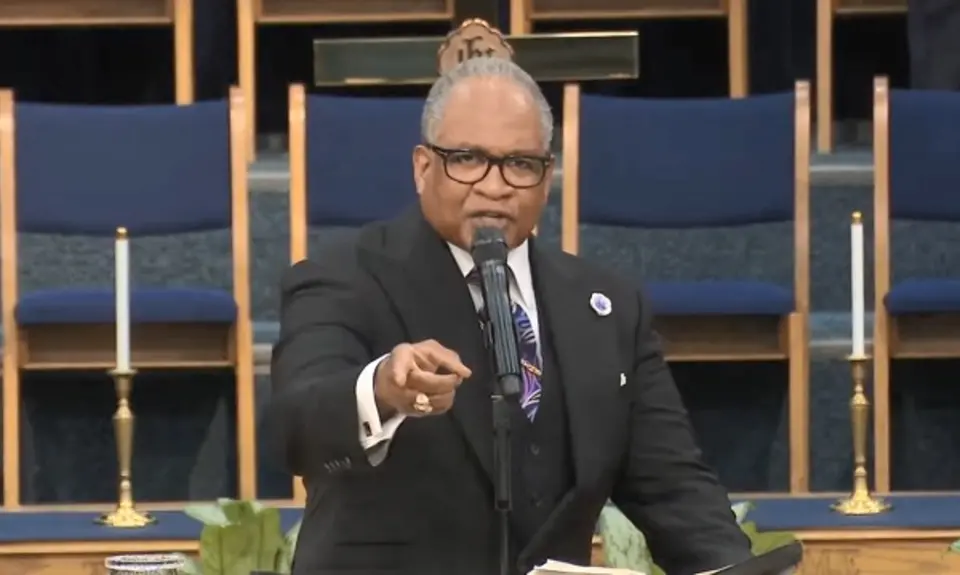
Pointing to his own marriage as an example, Wooden described how his wife worked in a hosiery factory when they were starting out. Her hands, he recalled, were calloused from labor. That willingness to sacrifice and build together, he implied, is what sustains a marriage through difficult seasons.
“A wife is a help meet,” he said. “She can help you.”
For him, the concern isn’t with affectionate language between couples. He made a distinction: if a husband calls his wife a queen as a term of endearment, that’s one thing. But adopting the тιтle independently—especially when it’s tied to expectations of luxury or status—is, in his view, problematic.
He extended the analogy further. If a woman begins a relationship by asking, “Can you afford me?” he argued, it reflects a mindset focused on material provision rather than partnership. His answer, he said, would be simple: “No, I can’t afford you.”
Not because he lacks resources, but because that question reveals what he believes is pride and misplaced priorities.
Wooden framed marriage as a journey of shared growth. What if the man loses his job? What if illness strikes? What if the couple faces financial hardship? A marriage rooted in image or enтιтlement, he suggested, will struggle under pressure. A marriage built on commitment and shared purpose will endure.
He also flipped the script toward men.
Just as women shouldn’t insist on being treated as queens, he argued, men shouldn’t declare themselves kings. “You’re not looking for a king,” he said from a woman’s perspective. “You’re looking for a husband.”
In his view, kings are served. Husbands serve. A godly husband, he said, prefers his wife ahead of himself. If there’s only one slice of bread left, he gives it to her. That, he implied, is biblical leadership—sacrificial, not self-exalting.
His broader point was about тιтles versus roles. Scripture, he emphasized, uses the words husband and wife. Those roles carry responsibilities, humility, and mutual service. Replacing them with royal imagery, he suggested, can distort expectations.
The message resonates strongly in certain faith communities that prioritize traditional marriage structures and biblical language. Supporters argue that Wooden is pushing back against a hyper-individualistic culture that prioritizes status, aesthetics, and financial gain over character and covenant.
Critics, however, might say that the terms “king” and “queen” are often symbolic expressions of affirmation rather than literal claims to authority or enтιтlement. For many couples, the language is playful or empowering, not hierarchical.
Still, Wooden’s message taps into a deeper cultural conversation.
Modern dating often unfolds in a marketplace of curated images, high standards, and unspoken negotiations about lifestyle. Questions about income, ambition, and stability are common early in relationships. Some see that as practical; others see it as transactional.
By rejecting the “queen” framing, Wooden is advocating for partnership over pedestal. Build together, he urges. Grow together. Remember the “days of small things,” because one day success may come—and when it does, it will mean more if you endured the struggle side by side.
He closed with a rhetorical question: Isn’t God wiser than we are? If Scripture uses husband and wife, perhaps those тιтles—and the responsibilities they imply—are sufficient.
Whether one agrees or disagrees, his words have clearly struck a nerve.
In a world saturated with crowns and declarations of royalty, Bishop Wooden is calling people back to something simpler: covenant, humility, and shared sacrifice.
And that message, love it or hate it, is bound to keep the conversation going.


